
 The Reserve Bank and the government have trumpeted the sharp drop in the Official Cash Rate in the last 6 months as putting more cash in the pockets of consumers and businesses, but that hasn't happened much in the short term at least. Retailers and car yards are beginning to wonder if there has been any easing at all and if they will see any of it.
They have a point for a couple of reasons.
Firstly, New Zealand savers have actually been hurt by the 475 basis point drop in the official cash rate to 3.5% much faster and much more than borrowers have benefitted from the drop. Most savers with bank and finance company term deposits are on terms of around 6 to 12 months. New Zealand households currently have around NZ$95.7 billion in savings accounts with banks, finance companies and building societies, Reserve Bank figures show (Quarterly tab in C17).
Our data shows the average 6 month term deposit rate paid by banks has dropped 491 basis points to 3.53% between July last year when the OCR cuts started and this week. People on fixed incomes who rely on the interest from these term deposits have seen significant cuts in their incomes.
The Reserve Bank and the government have trumpeted the sharp drop in the Official Cash Rate in the last 6 months as putting more cash in the pockets of consumers and businesses, but that hasn't happened much in the short term at least. Retailers and car yards are beginning to wonder if there has been any easing at all and if they will see any of it.
They have a point for a couple of reasons.
Firstly, New Zealand savers have actually been hurt by the 475 basis point drop in the official cash rate to 3.5% much faster and much more than borrowers have benefitted from the drop. Most savers with bank and finance company term deposits are on terms of around 6 to 12 months. New Zealand households currently have around NZ$95.7 billion in savings accounts with banks, finance companies and building societies, Reserve Bank figures show (Quarterly tab in C17).
Our data shows the average 6 month term deposit rate paid by banks has dropped 491 basis points to 3.53% between July last year when the OCR cuts started and this week. People on fixed incomes who rely on the interest from these term deposits have seen significant cuts in their incomes.
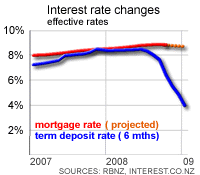 Yet on the other side of the ledger, mortgage and credit card borrowers pay interest on loans worth NZ$174.5 billion and have seen only relatively small cuts in mortgage and credit card rates. Mortgage rates for new borrowers have fallen fast and broadly in line with the cuts in the OCR, but most borrowers are on fixed rates that roll over relatively slowly.
This has been a major factor in the angst over mortgage break fees. Borrowers can see the lower rates in front of their eyes, but can't reach out and grab them. The weighted average rollover period for mortgages has dropped from almost 2 years to 14 months in the last year as many borrowers have moved to shorter terms or floating rates.
But the lag for mortgage borrowers is still about twice as long as for savers. This means the effective mortgage rate, which is the rate paid in total once the various lags are accounted for, has dropped 57 basis points from 8.79% to a projected 8.69% in January, according to the RBNZ's figures in December (Tab 4.4 in this MPS spreadsheet) to 8.22% by the end of January, assuming the fall recorded by the Reserve Bank in December (E5.10) was repeated in January.
I reckon this means about NZ$438 million less was paid by borrowers in interest costs over that six month period on the NZ$153.8 billion mortgage book. That assumes a flat reduction for all the period, which of course isn't the case.
Those reduced mortgage costs compare with the 491 basis point or NZ$2.349 billion drop in interest payments over the same time on the NZ$95.7 billion term deposit book. We don't have a weighted average interest rate for term deposits and I'm using the same flat rate reduction assumption. That means the rate cuts have so far sucked around a net NZ$1.9 billion out of consumers pockets. It also means about NZ$600 million less in tax payments on interest receipts, assuming a 30% tax rate.
Credit card rates have not dropped at all. Interest rates on outstanding card balances are virtually unchanged at just over 20% since July last year. Business base lending rates have dropped around 100 basis points to 13% since July as banks have judged them riskier and increased their margins. All this means is the cash going out of the savers pockets is at least as much, if not more, than the cash going into borrowers pockets.
Yet on the other side of the ledger, mortgage and credit card borrowers pay interest on loans worth NZ$174.5 billion and have seen only relatively small cuts in mortgage and credit card rates. Mortgage rates for new borrowers have fallen fast and broadly in line with the cuts in the OCR, but most borrowers are on fixed rates that roll over relatively slowly.
This has been a major factor in the angst over mortgage break fees. Borrowers can see the lower rates in front of their eyes, but can't reach out and grab them. The weighted average rollover period for mortgages has dropped from almost 2 years to 14 months in the last year as many borrowers have moved to shorter terms or floating rates.
But the lag for mortgage borrowers is still about twice as long as for savers. This means the effective mortgage rate, which is the rate paid in total once the various lags are accounted for, has dropped 57 basis points from 8.79% to a projected 8.69% in January, according to the RBNZ's figures in December (Tab 4.4 in this MPS spreadsheet) to 8.22% by the end of January, assuming the fall recorded by the Reserve Bank in December (E5.10) was repeated in January.
I reckon this means about NZ$438 million less was paid by borrowers in interest costs over that six month period on the NZ$153.8 billion mortgage book. That assumes a flat reduction for all the period, which of course isn't the case.
Those reduced mortgage costs compare with the 491 basis point or NZ$2.349 billion drop in interest payments over the same time on the NZ$95.7 billion term deposit book. We don't have a weighted average interest rate for term deposits and I'm using the same flat rate reduction assumption. That means the rate cuts have so far sucked around a net NZ$1.9 billion out of consumers pockets. It also means about NZ$600 million less in tax payments on interest receipts, assuming a 30% tax rate.
Credit card rates have not dropped at all. Interest rates on outstanding card balances are virtually unchanged at just over 20% since July last year. Business base lending rates have dropped around 100 basis points to 13% since July as banks have judged them riskier and increased their margins. All this means is the cash going out of the savers pockets is at least as much, if not more, than the cash going into borrowers pockets.
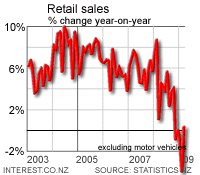 Secondly, much of the extra cash that has gone into borrowers pockets has not been spent in the usual places in the usual ways. Retail sales are flat to falling, depending on the measure used. This is a major turnaround from 2006 and 2007 when retail sales were growing at around 6%. Car sales have slumped sharply. New and used car registrations fell 30% and 41% respectively in December from a year ago.
Consumers are also being much more careful this time with their extra money. They are tending to save it or repay debt. Despite the falling term deposit rates, savers put an extra NZ$4.755 billion into bank savings accounts and finance company debentures in the December quarter. New mortgage lending was very weak in the December quarter, at least partly because mortgage repayment activity is heavy.
Meanwhile, the drop in the New Zealand dollar is also not generating the same boost it might once have because demand for exports and US dollar prices have also dropped.
All this means that the boost from easier monetary policy and the lower New Zealand dollar is taking much longer to come through than some people hoped and many people expected. It will come through though and there is a risk it will come through with a thump.
This is no excuse to cut harder now because it will make the inflationary surge in early 2010 even more dangerous. We all just have to wait a little longer for the surge to come.
Secondly, much of the extra cash that has gone into borrowers pockets has not been spent in the usual places in the usual ways. Retail sales are flat to falling, depending on the measure used. This is a major turnaround from 2006 and 2007 when retail sales were growing at around 6%. Car sales have slumped sharply. New and used car registrations fell 30% and 41% respectively in December from a year ago.
Consumers are also being much more careful this time with their extra money. They are tending to save it or repay debt. Despite the falling term deposit rates, savers put an extra NZ$4.755 billion into bank savings accounts and finance company debentures in the December quarter. New mortgage lending was very weak in the December quarter, at least partly because mortgage repayment activity is heavy.
Meanwhile, the drop in the New Zealand dollar is also not generating the same boost it might once have because demand for exports and US dollar prices have also dropped.
All this means that the boost from easier monetary policy and the lower New Zealand dollar is taking much longer to come through than some people hoped and many people expected. It will come through though and there is a risk it will come through with a thump.
This is no excuse to cut harder now because it will make the inflationary surge in early 2010 even more dangerous. We all just have to wait a little longer for the surge to come.
We welcome your comments below. If you are not already registered, please register to comment
Remember we welcome robust, respectful and insightful debate. We don't welcome abusive or defamatory comments and will de-register those repeatedly making such comments. Our current comment policy is here.