The comment stream
Recent comments
- 1 of 20720
- ››
Editors choice
- 1 of 294
- ››
The news stream
Latest news
Most commented
- Record exodus to Australia in last year 70
- 'Don't sell SOE shares; Borrow from Kiwis' 37
- 'Councils should look at asset sales' 34
- 90 seconds at 9 am: No G8 deal 20
- NZ to borrow more if crisis worsens-Key 19
- Beware of the creeping taxman 19
- Thousands get lower rates; what now? 16
- Monday's Top 10 with NZ Mint 12
- Euro-mess won't change Key on Super 8
- Pastoral Dairy Investments cans public offer 7
Most viewed
What's in and what's out - EQC covers residential property, but not farms, boats, jetties, office buildings and explosives

By John Grant
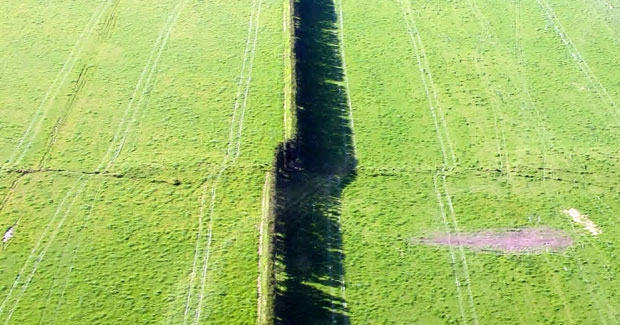
Many Canterbury rural properties have suffered significant damage. Today's New Zealand Herald has an article about farmers being up in arms because they have discovered they have no insurance cover on their rural property. You can see this article here.
However it's not insured by EQC, never has been, and it is unlikely to be covered in the future.
Why? Because the EQC cover applies to residential properties only and does not extend to commercial operations in any way - neither rural nor city. The only exception to this is the cover on a house that is let to tenants.
So why are the owners of rural property expecting the Government or EQC to suddenly come to the party to correct the damage caused by an earthquake?
If they do then there would be an equal expectation that city business operators will seek direct help from EQC or Government as well.
The maximum amount EQC will pay for residential land is either the value of the land destroyed or damaged, or the value of 4,000 square metres (about an acre), or the value of the minimum sized building site allowed in the area in which you live – whichever is the lower.
Note that if the land can be repaired for less than its value at the time of damage, then that is the maximum amount that EQC will pay.
Related Topics
To have cover for land you need to have the building that the land is on insured under a residential policy covering fire where a levy is paid for earthquake cover.
Some of the exclusions and restrictions related to land are as follows;
Excess
If your claim for land damage is for $5,000 or less, EQC will deduct an excess of $500 and pay the rest. If your claim is for more than $5,000, EQC will pay 90% of it, deducting an excess of 10%. However, the maximum excess EQC can deduct is $5,000.
The following are not insured by EQCover:
1. Any items excluded in your home and/or contents fire insurance policies;
2. Intangible property, for example, information stored on a computer;
3. Jewellery, precious stones, money, works of art,securities, documents or stamps;
4. Motor vehicles, or the parts or accessories of a motor vehicle;
5. Trailers, or the parts or accessories of a trailer;
6. Boats, or the parts or accessories of a boat;
7. Aircraft or anything in or on an aircraft;
8. Explosives;
9. Any bush, forest, tree, plant or lawn;
10. Growing crops (including fruit trees and vines) or cut crops in the open fields;
11. Animals, including livestock and pets;
12. Tennis courts, whether inside or outside and whatever the surface;
13. Jetties, wharves or landings;
14. Roads, streets, drives or paths;
15. Retaining walls, bridges or culverts more than 8 metres from your home, or if they are on the main driveway, more than 60 metres from your home;
16. Dams, breakwaters, moles, groynes, fences, poles or walls;
17. Drains, channels, tunnels or cuttings;
18. Reservoirs, swimming pools, baths, spa pools,tanks or water towers;
19. Burglary, theft or vandalism following an earthquake or natural disaster;
20. The costs of staying somewhere else temporarily after an earthquake or natural disaster.
But items 16, 17 and 18 will be insured if they are part of the building which is your home.
7 Comments
That is fair enough, as it is
That is fair enough, as it is for emergency usage, so that people have got a house to live in. However EQC used to also cover those who weren't insured, when it also covered war damage, which is possibily something we need to move back to, as the gov looks like they may help those uninsured people anyway. That is what EQC was originally setup for, so people would still have a house after an EQ.
John, Bernard etc I am
John, Bernard etc
I am amazed that many buildings in Christchurch are being knocked down so quickly. Many look repairable (having lost parapet walls only and maybe some tops of second floor walls) yet have been crushed.
Personally I can't see how the insurance companies could possibly have settled the claims so quickly and why these buildings needed to come down. For instance on the corner of Madras and Salisbury a 2 level brick former shop was demolished yesterday. It had an adjoining single level timber framed house that looked fine - the bulldozers have razed the lot. What insurance assessor in his right mind would agree to total demolition when part demolition and repair was an option.
Am I right in thinking that many of these claims may end up being denied? We had a structural engineer out yesterday inspecting a brick wall on one of our properties, her reaction to the hysteria that she was seeing from building owners and tenants was that lawyers are going to be just as busy as builders in coming months.
There is no point tearing down repairable buildings if the payout is only going to be small. I think a lot of people believe their replacement cover will build them a new building because its a brick building with a few cracks. I don't think they will.
We had full replacement cover on a 4 flat converted 1890s 2 level villa, where one flat was gutted by fire. The property was worth $250-$275k (regional South Island). The assessor determined replacement value as $600k. They had quotes to repair the damage at about $150k which was high because the builder didn't really want the job. The assessor decided it was a writeoff and made an offer of just $80,000 plus the cost to clear the site!
We negotiated and they reoffered $105k total and leaving the house as is (including loss of rent for 6 months at $400pw). Not quite full replacement!! And it took nearly 6 months to come to a settlement. So unless your property had been absolutely totally destroyed (already a pile of rubble) I wouldn't be demolishing whats left, because the payout could be very disappointing. Many have instantly assumed they will get a fantastic payout and be able to move on but most policies clearly state any cash payout will be no more than the market value of the property less the market value of the land - in many cases that may be only in the tens of thousands of dollars!
I asked that question of a
I asked that question of a poster yesterday, ( ie: it could be insurance amount, less land that's paid out) and was roundly told, " It's replacement value, stupid!". So thank you for a point of view with real experience.