
By John Grant The New Zealand general insurance industry turns over $3.2 bil. annually through more than active 25 companies, although the bulk of the market is divided among just a handful of these. This gross turnover gets substantially reduced to $2.75 bil. after buying re-insurance and paying broker commissions. The industry pays claims of around $1.9 bil. with the balance going for operating costs and profit. Nearly all these insurers are owned by giant overseas parents. But a stand-out exception is also one of the major players in the domestic market, AMI is a true mutual and owned entirely by it's policyholders. In addition to the $1.9 bil. of claims paid, New Zealand insurers had running costs of around $0.9 bil. which together exceed their net revenues of $2.75 bil. and therefore they been reliant on investment income to make up the shortfall. The relationship of claims-to-net-premium-earned is known as the 'loss ratio' - and with operating costs averaging 32% of revenues, any loss ratio higher than about 67% represents a financial problem for the industry.
The most profitable class of insurance for them was earthquake cover. This is not surprising as there have been very few major earthquake events recently, which the loss ratio of just over 16% reflects. The least profitable however was domestic buildings and contents. This class recorded a loss ratio of over 83%. There is upward premium pressure in this segment, held in check only by competition from well performing insurers. Another poor performing class was motor vehicles (commercial and domestic) which has a loss ratio of under 74%. On the other hand, general business liability insurance was the next most profitable class after earthquake, with a loss ratio of just over 33%.
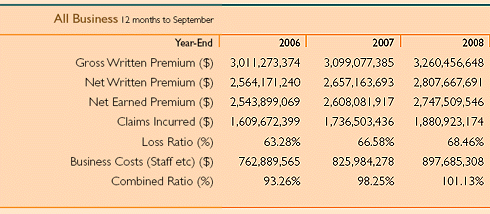
So what does all this indicate? It shows an industry under some considerable pressure to improve the returns from it's domestic home and contents products.
But for competition from efficient insurers, this will flow through in premium hikes and or tighter conditions and excess increases. The profitability of earthquake cover helps mitigate other domestic cost pressures somewhat - some insurers may tolerate lower house and contents returns to get your earthquake cover.
This is an industry that has largely kept doing the same thing for years. Offers are rarely innovative, and policy conditions are at-best only average. One clear example of this is that New Zealand lags far behind most other markets in on-line offers. On the plus side, claims are generally paid with relatively little hassle and generally New Zealand has avoided most of the dodgy aspects of some overseas insurance markets. So here are our bouquets;
- The industry provides the necessities of insurance cover to the New Zealand public,
- They have filled the gaps left by the reorganisation of the Earthquake Commission,
- The direct-to-consumer market is well served by a number of companies aggressively chasing market share,
- The industry has responded to some specific needs like compulsory third party insurance with innovative products and features such as no-fault third party cover.
And now for the brickbats;
- The public still has the perception that insurers' primary role is to find ways of avoiding claims - and here is the brickbat; they have done little to improve that perception,
- Insurance companies are inefficient and expensive to run. The expense ratios have been slowing edging up over the last few years. Moving from 28% in 2004 to 32% in 2008,
- The industry could improve its public image and become more transparent and available. Many of the direct insurers have made good forward steps but those companies dealing through brokers and other intermediaries have a long way to go to become more transparent.
The 2009 figures will be available from the Insurance Council soon and we will be watching to see how the industry has fared in 2009. Any improvement in the results will be good for consumers, any continuation of the poor 2008 result or a deterioration will almost certainly see further unnecessary premium and excess hikes.
We welcome your comments below. If you are not already registered, please register to comment
Remember we welcome robust, respectful and insightful debate. We don't welcome abusive or defamatory comments and will de-register those repeatedly making such comments. Our current comment policy is here.