 By Infometrics economist Andrew Gawith It's almost a year since New Zealand and China signed a ground-breaking free trade agreement. While world trade has contracted by around a third over the last year as a result of financial market turmoil and subsequent economic slump, New Zealand's trade with China has continued to grow. The value of New Zealand's merchandise exports to China over the year ended June 2009 increased by a whopping 61%, and in fact accounted for half the increase in the value of total exports in that year. Over the same period New Zealand's imports from China increased by a more subdued 14%, although again that accounted for half the growth in New Zealand's merchandise imports last year.
On the face of it the free trade agreement has been a resounding success from New Zealand's point of view. The timing and choice of countries could hardly have been more fortunate. China has largely sidestepped the financial meltdown and the massive fiscal and monetary stimulus it gave its economy last year, in the face of wilting world demand, has helped it maintain growth of 7%pa plus. 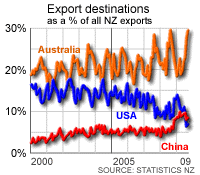 But let's not get carried away yet. Based on the latest annual data China accounts for just 8% of all New Zealand's merchandise exports; up from around 5% over the previous six years. Interestingly that makes it our third most important export market just behind the US but a long way short of Australia at over 20%. Commodities and raw materials account for the vast majority of New Zealand's exports to China and given that country's state of development and pace of growth, these products will remain at the heart of our export trade for some time yet. However, these traditional exports are by no means the only opportunity the trade relationship with China offers. New Zealand can't expect to compete head on in the general manufacturing area, but as the deal between China's Haier and our own Fisher & Paykel suggests, there are opportunities even for traditional manufacturers. As China moves to develop its own global brands it will be looking for clever technology and sharp designs (particularly ones tailored for developed western markets) that it can incorporate into products that it will produce on a scale we can only dream of. For New Zealand entrepreneurs the opportunity to leverage their talents by teaming up with rapidly maturing Chinese businesses focused on the global market is substantial. Consummating such arrangements may be easier said than done because of the immature state of the institutional and business infrastructure that is essential to securing reliable contracts. One area that New Zealand Inc could focus on to strengthen the trading relationship between the two countries, as well as being a potentially very valuable commercial opportunity, is food safety and biosecurity services. New Zealand has a long and trusted track record of certifying food for picky export markets in Europe, US, Australia and Japan. The knowledge and skills built up over many years in this important area would surely be of real value to the Chinese authorities given the relatively underdeveloped state of their food industry standards and safety. The infant milk formula scandal of 2008 was much more widespread than the San Lu/Fonterra headlines we got in New Zealand and by some accounts we gained kudos by blowing the whistle directly with the Chinese central government so that they could be seen to be taking the initiative to "uncover" and fix the problem. By now the New Zealand government should have followed up with an offer to help develop and implement a robust food safety regime. Any involvement by New Zealand officials and consultants in developing the institutions and regulations required to provide Chinese consumers with the assurances they are demanding on food safety could have valuable spinoffs for our food exporters. Tourism and education will be two other important areas of trade growth with China. These industries already have footholds; the challenge will be to expand them on a sustainable basis. In the case of education that may involve investing in schools and universities in China rather than simply bringing more students to New Zealand. The free trade agreement is in its infancy but the continued rapid pace of economic growth in China promises huge opportunities for a small economy like New Zealand. The question is whether the New Zealand government and local businesses can develop the commercial and cultural knowledge, skills and strategic nous to take full advantage of the potential that's on offer. Simply saying this is what we produce, take it or leave it, will result in New Zealand squandering a golden opportunity.
  ________________ * Infometrics is an economic information and forecasting company based in Wellington. To find out more, see its website here. This piece first appeared in the Dominion Post on September 12, 2009.
We welcome your comments below. If you are not already registered, please register to comment
Remember we welcome robust, respectful and insightful debate. We don't welcome abusive or defamatory comments and will de-register those repeatedly making such comments. Our current comment policy is here.