
Offers for readers

The comment stream

Recent comments

Join the Interest community to be a registered commenter so you can:
- Edit your comments
- Avoid the CAPTCHA
- Vote on comments
Register Here

Already registered? log back in here ..

Forgotten your password? No problem! Click here

Reader poll

Who do you think should be appointed Reserve Bank Governor to replace Alan Bollard when he retires in September?

Choices

Wednesday's Top 10 with NZ Mint: US worries about Aussie property bubble; Britain's not so funny money; Dilbert

Posted in Opinion

Here are my Top 10 links from around the Internet at 10 past 11 am brought to you in association with New Zealand Mint for your luncheon reading pleasure.

I welcome your additions and comments below, or please send suggestions for Thursday's Top 10 at 10 via email to bernard.hickey@interest.co.nz.

I'll pop any surplus suggestions I get into the comment stream under the Top 10.

1. Now Forbes is sniffing around - US fund manager Christopher Pavese has written in Forbes about the housing bubble in Australia and the risks for the Australian banks. HT Hugh P via email.

We've had a few of these warning signs lately from foreign observers of Australia's housing market. The Economist has done it, as has Jeremy Grantham.

The Australian powers-that-be simply say it's different in Australia because of a lack of housing supply and land restrictions.

We'll see. Sydney and Melbourne prices are certainly off the planet and the debt is real.

Related Topics

There isn't much margin for errror.

Despite the growing and increasingly obvious risks cited above, Australian banks are still trading at extremely rich multiples, particularly when compared to their US counterparts.

The average price-to-tangible-book values of two major lenders on our radar is roughly 3 times, double that of their American peers. It would appear that the banks are enjoying an undeserved premium, as investors are led to believe that lower charge-off rates and delinquencies are the result of more prudent management teams and more conservative lending standards. More likely, it is simply an issue of timing.

What happens if home prices don’t go up forever? The two banks with the largest exposure to Australia’s housing market have aggressively increased housing loans in recent years, such that residential real estate exposure now represents more than 11 times tangible equity. Not exactly what we’d call a margin of safety.

Our analysis indicates the potential for severe stress should housing prices revert to normal, let alone overshoot. We wonder how the currency would react should Aussie officials be forced to recapitalize the banking system.

2. Chinese demand for logs - This piece in Canada's Globe and Mail on how Canada's logging industry has tripled exports to Mainland China over the last two years is well worth a read.

There's great detail on how it happened and what Canada is now planning for. To convince the Chinese to use lumber rather than steel and concrete in construction, they went as far as setting up a college in China to train carpenters.

Is our logging industry doing the same?

Even optimists acknowledge that right now the hype obscures the extended slog ahead. “The story in China’s being oversold,” says Russ Taylor, president of consultants Wood Markets International in Vancouver.

“It [sounds like] a great story: All you hear is China is short of lumber and B.C. is the solution.”

In fact, China’s overall demand for wood of all kinds has been flat over the past few years. Much of its appetite is for raw logs that go into the country’s factories to produce other goods. Russia is a fierce competitor for those sales, as are China’s own wood producers, who are expanding their plantations.

The great new hope is that China may begin using wood to construct apartment buildings. Last year, Canada Wood and Forest Innovation won approval for a new wood-building code in Shanghai for six-storey apartment buildings. This year, three of the biggest B.C. forest producers – West Fraser Timber Co. Ltd., Canfor and Tolko Industries Ltd. – are coming together with smaller suppliers to construct a demonstration building in Beijing.

3. Tbe hottest debate - As America swelters in a hot summer, the debate ahead of November's congressional elections is focused on whether the government should try to to borrow and spend its way out of trouble or cut and tax its way out of trouble. It's the Keynesians vs the Hawks.

There's no clear winner at this stage. I'm a hawk because in the end consumers and taxpayers know in their bones if the borrowing and spending is affordable in the long term and adjust their spending accordingly.

If they think tax hikes and more recession is inevitable they won't spend any tax or spending windfalls anyway. It's all about confidence and underlying debt levels. A Keynesian attempt to borrow and spend won't fix those problems.

Tne Wall St Journal has a nice summary of the debate here. HT Nicola via email. The research suggests cutting deficits actually boosts growth in the long run.

In 107 periods since 1980 when governments cut deficits, doing so tended to quicken economic growth, not slow it. But this study focused on periods when central banks could offset deficit cutting with lower interest rates. The Fed has exhausted that avenue.

Carmen Reinhart, a University of Maryland economist who has studied the fiscal aftermath of financial crises, says more stimulus could be counterproductive because it could lead the public to expect even higher taxes in the future.

Instead, policy makers now need to convince the public that they are committed to reducing future deficits, without acting on that commitment right away, she says. That could hold interest rates down, without yanking money from an ailing economy too quickly.

"We are not in an easy position," she says. "Credibility is going to be difficult to achieve."

4. Faith in metal money  - There's a lot of talk about money printing undermining faith in Fiat money. But what about conterfeiting. No one thinks about counterfeiting of coins, but it's such a big issue in Britain that the Royal Mint is thinking of scrapping all the one pound coins in existence and starting again, the Daily Mail reports.

One in 36 British pound coins are now thought to be fakes. The problem is the fakes are so good. HT My lovely wife via email

Jonathan Hilder, the chief executive of the Automatic Vending Association of Britain, representing snack and drinks machines which take £1.6billion of coins every year, said: ‘Ironically, the fakes are so good that it isn't yet causing a problem for consumers. Because they don't usually spot them, the trust in the coin is still high.

‘But if fakes continue to rise, reminting will have to become an option.’

5. Why Europe is so important - Tyler Durden points out at Zerohedge why the potential freeze or demise of the European savings banks, in particular the German Landesbanks, is so important in the global financial system.

It turns out they were key component in the shadow banking system that caused so much grief before the Global Financial Crisis hit in 2008, and are still bigger than the actual banks.

As even the New York Fed acknowledges in its recent paper "Shadow Banking", by Zoltan Poszar, in which there is a whole section on the critical Landesbank function in the shadow economy, "As major investors of term structured credits “manufactured” in the U.S., European banks, and their shadow bank offshoots were an important part of the “funding infrastructure” that financed the U.S. current account deficit," the proper functioning of the Landesbanks is crucial to maintaining a stable and efficient market funding structure.

This is actually extremely important, as for years most economists and pundits have considered only the non-shadow banking funding aspect of the massive US current account deficit (a topic most critical now that even the US is embarking on fiscal austerity, and the government sector will be unable to further fund the multi-trillion deleveraging ongoing in the private sector, thus pushing the topic of the current account to the forefront as Goldman did recently). Generically, everyone has always looked at China and Japan as those parties responsible for funding the US Current account deficit. Alas, that is only (less than) half the truth.

As the New York Fed suggests, the shadow banking system is likely a more important economic funding factor than even China and Japan combined when it comes to the CA. Which is why the all time record decline of over $1.3 trillion in shadow banking liabilities should be a far greater warning sign than any month to month change in China's US Treasury purchasing pattern.

6. Now comes the fund raising - The Wall St Journal has a thoughtful piece here on what happens now the European stress tests are finished. Now the European banks have to raise a stack of long term funds, potentially pushing up longer term interest rates.

This reminds us all that our banks face much higher funding costs in years to come, which will be passed on to us in the form of relatively higher interest rates.

HAVING passed the stress tests, most big European banks must now raise billions of dollars in long-term funding to finance new lending. At stake may be Europe's tentative economic recovery. Unlike the situation in the US, a large majority of companies in Europe depend on banks for finance.

Unless the banks can tempt investors in the bond markets, they won't be able to make long-term loans to allow businesses to finance investment. Non-financial businesses in the euro zone depend on bank credit for around 70 per cent of their debt-financing, whereas US businesses do about 80 per cent of their borrowing on capital markets, according to the European Central Bank.Funding shortages also reflect a shift in habits of US money-market funds that is unlikely to be reversed, according to UBS analyst Alastair Ryan.

The funds, historically a steady source of cash for European banks, have lost their appetite for risk and are shying away from them, partly because of new US regulations. And under pending global rules, insurance companies, another common liquidity provider to European banks, will face higher capital requirements for holding bank debt. “Wholesale markets are likely to be both more expensive and less reliable for banks in general for a prolonged period,” Mr Ryan said in a recent report. “In essence, many of the pots of money historically available to banks are either gone or constrained.”

The Bank of England warned last month in its semi-annual Financial Stability Report that banks worldwide - but especially in Europe - face a “substantial challenge” of renewing funding that is set to come due. The bank estimated that lenders worldwide have about $US5 trillion ($5.58 trillion) of funding due to mature in the next three years.

7. Don't waste stuff - This pile of Yellow Pages was left on a pallet in America with a note saying; "Dear Yellow Pages. We have a thing called the Internet. Please stop wasting stuff."

Right now a consortium of banks is trying to sell New Zealand's Yellow Pages and looks like losing upwards of NZ$800 million on a deal done just three years ago.

8. The collapsing US middle class - Michael Snyder writes at Yahoo about the systematic destruction of the US middle class. This is all topical as we head into the US elections.

The 22 statistics detailed here prove beyond a shadow of a doubt that the middle class is being systematically wiped out of existence in America.

The rich are getting richer and the poor are getting poorer at a staggering rate. Once upon a time, the United States had the largest and most prosperous middle class in the history of the world, but now that is changing at a blinding pace.

9. A deeper kind of joblessness - Umair Haque writes at the Harvard Business Review about a deeper kind of joblessness in America where the median duration of unemployment is now the longest it has been in a century.

He talks about the race to the bottom and suggests the quality of jobs (and the size of wages) is dependent on the quality of demand. He's onto something here. He suggests consumers should consume less, more expensive things that individually provide better value and therefore support more people on higher wages.

Low quality demand, then, means that we buy cheap, but the price is invisibly steep: it ignites a global race to the bottom, what a complexity economist might call a dynamic equilibrium of negative consumption externalities, consumption that results not just in joblessness but a loss in the quality of jobs.

The quality of a job is sparked by higher quality demand; or, valuing more than just the dollar price of a thing, but also its human and social impact. When we have low-quality demand, we have low-quality jobs. When we value McDonalds, the result is McJobs. A living wage is a small, halting — and perhaps even thoroughly misguided — step in a great reset of those self-destructive preferences.

Yet a step it nonetheless is. Contrast it, then, with what you might call high-quality demand. Shifting jobs to lower-wage countries is a tremendous boon to the impoverished. But it would be an even bigger boon if it weren't a double whammy: if, sneakily, we didn't also denude jobs of quality as they were shifted overseas; if the wage differential itself was enough, instead of exploiting a lack of governance and legislation as well; if that which makes a job more than just mere work didn't get, ever so conveniently, lost in translation.

Were that not to have happened already, people around the globe might have had more to spend, and more time to invest in spending it, with less risk — and so perhaps the global economy's problem of aggregate quantity of demand might currently be less severe. As Ford presciently saw a century ago: "well-managed business pays high wages and sells at low prices. Its workmen have the leisure to enjoy life and the wherewithal with which to finance that enjoyment." Yet, even that depends on a more fundamental cause: higher quality demand.

Because to generate higher wages, more leisure, better standards, work that affords space for passion, care, and respect — to offer that to, well one another — we might just have to learn to value the human, natural, and social more, first.
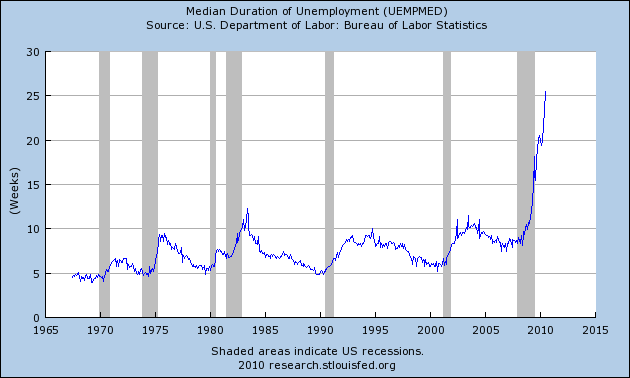
10. Totally relevant Cartoon

We welcome your help to improve our coverage of this issue. Any examples or experiences to relate? Any links to other news, data or research to shed more light on this? Any insight or views on what might happen next or what should happen next? Any errors to correct?

We welcome your comments below. If you are not already registered, please register to comment in the box on the right or click on the "'Register" link at the bottom of the comments. Remember we welcome robust, respectful and insightful debate. We don't welcome abusive or defamatory comments and will de-register those repeatedly making these comments.

93 Comments

 "Is our logging industry

 "Is our logging industry doing the same"...err well ummm no because the carpenters have all left for Aus or Canada!

Bloody good show...the Royal

Bloody good show...the Royal Minties will have to mint new coins and that'll mean the demand for copper will rise one way or the other. Hope they mint 5 pound coins as well.

LOL @ Australia - "it's

LOL @ Australia - "it's different here". Famous last words.

Interesting piece here from

Interesting piece here from Zerohedge comparing the Gold/S&P price now vs the Depression

http://www.zerohedge.com/article/sp-priced-gold-comparison-between-great-depression-and-now

cheers

Bernard

Bernard: >I'm a hawk because

Bernard:

>I'm a hawk because in the end consumers and taxpayers know in their bones if the borrowing and spending is affordable in the long term and adjust their spending accordingly.

So...consumers know "in their bones" when government borrowing and spending is affordable in the long term, yet have no idea when their own borrowing and spending is affordable in the long term, as the consumer debt bubble nicely illustrates!

Is this, along with the invisible bond vigilantes, really as good as the hawk argument gets?

Yep. That's why New

Yep. That's why New Zealanders have stopped borrowing much more personally.

They certainly know in their bones now that they are saturated in debt.

Check out the growth rates here. Fallen off a cliff in the last two years.

http://www.interest.co.nz/charts/credit/housing-credit

cheers

Bernard

More on the European bank

More on the European bank funding crisis from The Economist on British banks being addicted to cheap government funding
The problem is their addiction to government-supported funding: £165 billion of it through a Special Liquidity Scheme, which lets them refinance mortgage securities and other assets at a discount to market rates; and £120 billion more raised through bond issues bearing a government guarantee. These two schemes are due to come to an end in 2012, presenting the country’s big banks with a refinancing mountain. And other wholesale debt is also falling due—perhaps as much as £480 billion over the next three years. At the moment the banks are raising funds of around £12 billion a month, only half the rate they will need when the other bills are presented.

http://www.economist.com/node/16645083?story_id=16645083
cheers
Bernard

I'm a hawk because in the end

I'm a hawk because in the end consumers and taxpayers know in their bones if the borrowing and spending is affordable in the long term and adjust their spending accordingly.

So how does that explain the many millions of consumers and taxpayers who have got themselves into the sh*t by borrowing far more than they can repay?

They were encouraged not to

They were encouraged not to feel it in their bones by the marketers and the polititians.

Now the hard truth can no longer be disguised. Higher interest rates and the sheer saturation of it have convinced NZers to stop increasing their debts.

cheers

Bernard

They were encouraged not to

They were encouraged not to feel it in their bones by the marketers and the polititians.

There must be something wrong with my sympathy gland because right now I'm laughing at those people.

Anybody stupid enough to be conned by marketers and politicians should not be allowed money or access to credit.

John Key says student loans

John Key says student loans are a disaster economically. Only 53c collected for every dollar lent. But he's still backing it because the voters (well some young ones) want it. Just imagine if we all made our decisions via focus group.

Should I take out the rubbish? Let's see what the focus group think...

http://www.stuff.co.nz/national/politics/3963867/11b-student-loan-debt-a-disaster-says-Key

cheers

Bernard

"John Key says student loans

"John Key says student loans are a disaster economically."

Yeah, why can't these free-loading debt-ridden students of today be more like the wealthy and influential students before them who got their tertiary education absolutely free, courtesy of their parent's and grandparent's generations?

The students want student

The students want student loans.
The unemployed want the benefit.
The sick want ACC.
The leaky home owners want a taxpayer bailout.
The investors in failed finance companies want a bailout too.
etc etc

"the problem with socialism is that you eventually run out of other peoples money". M.Thatcher.

You forgot something: The

You forgot something:

The PIs want bubble valuations.

There would be enough for all

There would be enough for all if you took elite sports academies and world cup follies and MP perks out of the pot. 

Yes. Look at the nations who

Yes. Look at the nations who have invested heavily in sport through the years. What has it got them? Some "national pride"? Wowee.

Foreign investors don't contribute to your economy just because you're good at sport and win a few medals at the Olympic games.


Imagine if all the money squandered on sports was invested in education. Think how much better off the nation as a whole would be for that.

Instead we always opt for the boofhead option in the hope that our kids will be someone else's kids at some game or other and then the rest of the world will notice and like us.

I dont recall the banks

I dont recall the banks turning down the handouts....

Sick get  ACC? dont you mean the injured?

Socialism taken to the extreme, yes I agree, on the other hand Global laissez faire taken to the point of now is demonstartably worse.  We now have the worst depression since the last one courtese of 30 years of Reagan wonkynomics ...it may even shape up to be the worst of all three...

We are two years in and I cant see this being over in three, so a decade...at least....probably 2....

Expect higher taxes....

regards


And the corporates want fewer

And the corporates want fewer regulations

The wealthy want to dodge tax

The failed companies want their taxpayer-funded bailout

The problem with capitalists is that they're all hypocrites. They want handouts as much as anyone else.

Parents want their kids paid

Parents want their kids paid for when it was their own decision to breed via 'WFF'. This 'benefit' alone is bankrupting us! Can't afford children? then do us all a favour and DON'T have any!

"Parents want their kids paid

"Parents want their kids paid for when it was their own decision to breed via 'WFF'. This 'benefit' alone is bankrupting us! Can't afford children? then do us all a favour and DON'T have any!"

Good Christ, what a load of infantile trash.

Parents have children no matter what. Your parents chose to have you. One day you may have kids of your own.

John Key is just another

John Key is just another lying scumbag politician, so I expect nothing more than the pandering and double-speak he is showing us. Like or loathe Labour policies - at least they have the balls to their policies in place.

so too did Hitler, Stalin,

so too did Hitler, Stalin, Pol Pot and Mugabe

Bloody National Socialists!

Bloody National Socialists!

The Student Loans disaster is

The Student Loans disaster is a bit more complicated than just not getting back the money that was lent. It is an economic disaster because it is one of the motivating factors driving young, skill kiwis abroad, never to return. The end result/cost to the economy is many multiples the amount lent to that individual.

Just remember that not all of

Just remember that not all of us are born with silver spoons in our mouths, and without student loans would never had been able to attend university. 

And the 53 cent estimate sounds rather pooh pooh to me, and besides, John Key is driving all those young adults with loans out of New Zealand and to greener pastures, so what does he expect?

Are the media stupid? That's

Are the media stupid?

That's right, charge interest on student loans! Then the debt can go from 11 billion to who knows billion!

Might stop 'some' borrowing but I doubt it, the way university is expected in this country just to get an office monkey job.

Do you not think that by doing this, and with students knowing full well that their parents got an education courtesy of the taxpayer with NO repayment at all, that they will either simply say 'yea right' and not come back from Sydney, or - once the interest payments get so big half of them will be more underwater than a Pegasus Bay mortagee - there will simply be mass refusals to pay?

If they put say 5% on my 35 grand I'm out and won't come back till I'm retired. I can't pay it now on 20 bucks an hour let alone with that kind of premium.

Why aren't people looking at why it got so much more expensive?!?! Why do profs who do almost no work and simply recycle the same crap get paid 100 plus grand a year??? Why do we need multi million dollar laser cutters to make plasticene models?!!?!? Everyone barks up the wrong tree on this one and I'm sick of it.

Are the media stupid? Yes,

Are the media stupid?

Yes, pretty much.

And here's another thinkpiece

And here's another thinkpiece on the idea that resource depletion is the real reason for the globe's economic problems. The 1929 Depression was just a preview of what was to come. HT Murray...I think...

http://plausiblefutures.wordpress.com/2007/04/10/overshoot-the-ecological-basis-of-revolutionary-change/

cheers

Bernard

Yes.... Hence why I expect

Yes....

Hence why I expect this one to be worse, we climbed out of the GD on the back of cheap oil and minerals and ramping up for war....we dont have cheap oil or minerals any more...and I'd rather not have a WWIII thanks.  Not that we could wage it anyway....no money.


regards

Indeed, humanity is fast

Indeed, humanity is fast approaching the end of cheap oil, and most other resources are at peak, or soon to peak. Without resources the world economy cant keep growing, and this is the reason for the eventual destruction of western consumerist capitalism. Capitalism is based on exponetial growth using finite resources, the two don't match.

Resource depletion is really the big story that mainstream media just have not reported. Nor have governments. The choices are hard, very hard, and involve a wholesale rethinking of society. Cant say I see any politicians in NZ who grasp this, apart from maybe the greens. Even Lloyds http://www.guardian.co.uk/business/2010/jul/11/peak-oil-energy-disruption has issued a paper on peak oil dangers. So some organisations get it, most however do not.

Item I - Christopher Pavese

Item I - Christopher Pavese Forbes article in the Australian housing bubble - additional points,

My understanding is that the important Urban Technical Advisory Group Report, dealing with local government performance, land supply and infrastructure financing, was finally completed yesterday and delivered to the Minister. It is to be hoped media follow up on this.

This years Demographia Survey found the major metros in Australia and New Zealand had Median Multiples of 6.8 and 5.7 respectively. Australia has inflated since and is now likely in the order of a staggering 7.5 Median Multiple.

Readers are urged to go to the New Geography website and read a recent article by my colleague and co author of the Annual Demographia Surveys Wendell Cox "How Texas avoided the Great Recession" - in particular, the comments that follow by Rick Harrison, a well known development consultant in the US and secondly tx1234 a fellow from the tech industry relocating from California to Texas. The information these two "on the ground" provide is extremely useful and instructive.

The Key Coalition Government must get on now to get in place the appropriate institutional arrangements and legislative changes, to restore housing to affordable levels within a reasonable and realistic time frame.

Hugh Pavletich

www.PerformanceUrbanPlanning.org

Texas has an un-employment of

Texas has an un-employment of 8% right now, not the worst by any means, but not the best either. Avoiding the Great Recession, uh no I dont think so.

We also see a huge amount of the US has homes that may never be occupied....so they have turned their countryside into an un-occupied and un-occupiable wasteland.....and one that requires a lot of petrol to get about in.....hence why its likey such areas are the new gettos....

The paper you refer to is not an academic peer reviewed paper  but  "is indicated in our How Texas Averted the Great Recession report, authored for Houstonians for Responsible Growth."  So as such relying on what on the face of it looks like a highly partisan piece of paper is risky to say the least.

So what  if I accept your idea of un-restricted land use is the damage that would have happend to NZ natural beauty from cheap credit allowing developers to build everywhere...we would in theory have had a building boom which could have led to a huge bust....from over-supply...

regards


is that 8% using which

is that 8% using which figures?  using the pre-1994 definitions of unemployment it might be much higher ... see http://www.shadowstats.com/alternate_data/unemployment-charts 

One of the factors that the

One of the factors that the Australian housing hawks overlook is the net migration rate.  Australia has the highest net migration rate in the developed world.  The following link has the statistics on a global map.

http://www.indexmundi.com/map/?v=27 

That will keep providing good support for Aussie housing for a while yet, together with the minerals boom and regulation driving up the cost of land and restricting supply.  Also, compulsory super is set to be increased, further increasing the supply of capital.

One tiny quiver in their

One tiny quiver in their economy and the Aussie "miracle" will be exposed for the overheated sham much of it is.

Say, if China reduces mineral imports, or Aussie banks tighten up lending practices, even if temporarily, will have an enormous impact.

The first thing to fall apart will be the Australian residential property market.

I agree, thats the point - or

I agree, thats the point - or as Bernard put it in the article "There isn't much margin for errror."

Aren't both parties in the

Aren't both parties in the upcoming Oz election campaigning on dramatically reducing the immigration take?

Bernard: >They certainly

Bernard:

>They certainly know in their bones now that they are saturated in debt.

Yes, but your argument is seemingly a kind of rational expectations one where future government debt affects consumer behaviour in the present. But where were the magic bone-future-debt-detectors back then, when consumer debt was piling up right in front of them, let alone in remote government accounting? This is exactly my point. Your hawkishness seems to be founded on vague psychological speculation about consumer behaviour which the previous bubble seems to directly contradict. Hence it's not a very compelling argument, especially given the seriousness of the situation.

It's very important New Zealand consumers pay down the debt bubble, and we have to figure out the best way to do it. But it seems to me arguments for a hawkish position - for example, rapidly raising interest rates - are more rhetorical than practical.


The only way to encourage

The only way to encourage Kiwis to pay down debt and begin saving is by actively punishing and penalising them if they don't.

The greedy, gullible and naive suckers will happily go back to their borrow-and-spend habits unless it is made too difficult and painful to do so.

You cannot expect them to stop being childish idiots and do what's best for themselves, let-alone what's best for anyone else.

"The only way to encourage

"The only way to encourage Kiwis to pay down debt and begin saving is by actively punishing and penalising them if they don't."

This is very true I think. I said the same thing at the office recently and the replies were all negative. One that was commonly repeated was NZers would all move to Australia if the banks and govt here made saving a priority and compelled people to do it. That may be true in the short term but I think the Australian economy is headed for a fall and most of the NZers who have or will flee to Australia will turn around and come home again when things turn sour over there.

That's as long as they don't

That's as long as they don't have the 'Student Loan' waiting for them at the airport, here!

And if they'll let us in. 

And if they'll let us in.  Plane or boat people - we're on the immigration hit list like any one else. 

And if they'll let us in. 

And if they'll let us in.  Plane or boat people - we're on the immigration hit list like any one else. 

not being a banker, i

not being a banker, i apologise if this is hopelessly naive, but is there no way that govts can incentivise banks to move into areas less destructive than consumer lending? surely investing in business does more societal good than credit cards so can central govt not make that more attractive for banks to be involved in?

SOCIALISM!

SOCIALISM!

One very good way is jingle

One very good way is jingle mail, I reallly like that method....except then of course now the household can safely walk away, there is nothing making them worry about the risk as they know there is no risk for them.  However it does mean that the professional in this transaction bares the brunt, which arguably is fairest they should be able to access it better than the punter.

Otherwise, not really and thats the problem, its"their" money  so it makes the most sense for the banks to invest it where there is the highest return for least risk...

regards


Is that how you teach

Is that how you teach children or animals I wonder?

Yes, the alternative is to

Yes, the alternative is to reward savers, but we know that's not going to happen, and unless you penalise those who opt to borrow-and spend rather than be rewarded saving, the majority of people will go on buying junk because it provides instant gratification (along with delayed pain).

  Ambrose EP. Deflation


Ambrose EP. Deflation Data Drip by Drip

'While 68pc of companies have beaten sales estimates, this is hardly anything to get overly excited about. Back in 2Q08, 69pc of companies had beaten sales estimates. We all know where the economy headed shortly thereafter.

The numbers should be taken with a grain of salt. Below the surface, the earnings reports continue to confirm what we have been saying – that this recovery is anaemic at best.

In the end, the global macro economy will dictate the outcome.

So watch the Chinese banking system. Watch Japanese exports. Watch OPEC as it keeps cutting output to hold up the oil price. Watch Euribor rates and the continued contraction in eurozone lending to companies. Watch French industrial output. Watch Polish sovereign debt (that’s a new one).

Watch the M3 money supply in the US as it contracts at a 10pc annualized rate. And for goodness sake watch the Fed Board.

Then sit in a deep leather arm-chair with a good Calvados, listen to Bach Fugues, and think."

and NZ's M3 is contracting at

and NZ's M3 is contracting at around 3%.....hardly a good indicator of a recovery under way.

regards

re the chinese market for

re the chinese market for timber, it might be too late to get on that bandwagon.....i lived in s.korea in 2001-2 and dealt with people involved in chinese forestry. one project (out of i think about 25 at the time) was an area the size of sweden.

anything we try, it seems the chinese politicians have already though of, and more importantly, acted on.

john key may well end up being a 1 term pm. he might as well grow some cojones and make some decisions. what a wimp.

NZers remind me of the poms

NZers remind me of the poms in one major respect which is that anytime we (or they) develop anything new or interesting instead of capitalising on it and continuing development of it for all we are worth, we sit back and tell ourselves how great that thing is and it will be new and innovative forever. Meanwhile the rest of the world embraces whatever it is and runs off with it and gets rich, leaving NZ in the dust as the world takes our idea and makes it much better.

But I can't see John Key or this govt being a one term thing. No matter how bad they get there is no alternative to them.

Quite probably. But then

Quite probably. But then Kevin Rudd might have had the same thoughts! Who knows what can happen in politics ( fingers crossed!)

Things can change you know

Things can change you know Alan.

'Neville Bennett -

'Neville Bennett - Balances'

 http://www.realeconomy.co.nz/101-neville_bennett_balances.aspx 

'Will the RBNZ halt English’s rebalancing?'

http://www.realeconomy.co.nz/100-will_the_rbnz_halt_englishs_re.aspx

“Continuing to hike the OCR despite the weight of evidence against the move will do significant harm to the tradeable economy. If the Reserve Bank is seriously concerned about controlling domestic inflation it needs to look to other macro-prudential tools to do it. It should be apparent by now that killing returns to the tradeable sector does nothing to solve the problem of domestic inflation.”
 

Enjoy.

Cheers, Les.

www.mea.org.nz

Unfortunately that disarming

Unfortunately that disarming smile, kiwi accent and much touted likeability will prob see him back in govt, voted by those very people who are being screwed by his policies 'cause he's such a nice chap. YAWN.
 

He and his government will be

He and his government will be re-elected easily because there is no one else worth voting for, and I say that as someone who would happily -- gleefully! -- vote for anyone else worth it.


"Disarming smile"? His smirk is reptilian. "Kiwi accent"? Fush un chups, un moolk? No thank you. "Much touted lieability"? Perhaps if you're a wealthy businessman/farmer type. No-one else can justifiably describe him as likable in my opinion. "Nice chap"? So why is his nickname "the smiling assassin"?

National and Key will win the next election, but not because they are the best choice...it's because they aren't the worst choice.

They will be re-elected,

They will be re-elected, because most people haven't yet forgotten that it Labour's mismanagment of the economy that brought us to where we are now.

The main reason this National

The main reason this National govt will be re-elected is due to the weakness of any alternatives.

I think I can whole heartedly

I think I can whole heartedly agree with you...


regards

There ARE others! The problem

There ARE others! The problem is the general NZ public are either too stupid  or too gutless to vote for a 'Citizen Binding Referendum Party' called the "Kiwi Party". If you insist on voting for the same liars then don't expect honesty or integrity during and after each election. Wake up NZ you bunch of mugs!

For those interested in local

For those interested in local government issues, it is worthwhile reading Hon Rodney Hide, Minister of Local Government speech to the Local Government Conference yesterday "Smarter Government - Stronger Communities". The Prime Minister gave the Keynote speech to the Conference Monday.

Just google search "John Key Beehive" and "Rodney Hide Beehive" to access them.

With the Urban TAG Report delivered yesterday as well - it is clear the Central Government focus now it to get the appropriate institutional arrangements and legislative changes in place - to get much better performance in to the Local Government sector.

Hugh Pavletich

www.PerformanceUrbanPlanning.org

"to get much better

"to get much better performance in to the Local Government sector"

Unless there is a wholesale shakeout of the existing LG leadership and workforce this is never going to happen.  They just enjoy spending OPM (other peoples money) too much.  The only way to control LG is to severely limit there ability to spend ratepayers money.

Shadow banking starts with

Shadow banking starts with securitisation and can't exist without it.  Securitisation only works when there is a difference between "wholesale" and "retail" interest rates.  Therefore it must "clip the ticket" on the interest paid by the borrower to the depositer.

The ultimate in securitisation is where every investor in a financial instrument (from a deposit to ... whatever) has a piece of every mortgage over a real asset.  Securitisation takes "near money" from the shadow banking system and converts it to "money" to be loaned to the borrower.

What it also means is that they can't withstand borrowers paying off their loans, they are forced to find someone else to lend this new money to someone.  Growth in lending is locked into the financial system, if there is a systemic trend to pay off loans, the system in "lockstep" falls over.

That's my take on this, anyway.  Ex Hong Kong banker is this right?

http://www.newyorkfed.org/research/staff_reports/sr458.pdf

Check out the chart comparing "traditional" banking to "traditional banking plus securitisation"

What is really telling in

What is really telling in your #8 article about the disappearing US middle-class is the commentary after the article.  There is a nice cross-section there of common US sentiment.  I'll sum up... "Illegal immigrants flood US borders, therefore the US is still the greatest country in the world."; "I think the author is a wanker so this article is wrong."; "Government taxes and inflation are to blame."

The US is doomed.  Not only is the middle-class being wiped out as an economic force, they are being wiped out intellectually as well.  For all the US's much admired educational systems, they fail to teach global economics--in fact they fail to teach global anything.

No, just

No, just anything...


regards

"Illegal immigrants flood US

"Illegal immigrants flood US borders, therefore the US is still the greatest country in the world."

"Immigrants flood Australia, therefore Australia is still the luckiest country in the world."

Hmmm.

Here's one for the gold bugs

Here's one for the gold bugs - and maybe for the commodities chaps and chapesses too - eras on, Wally?   Perhaps the storal of the mory is, as for ChocFinger, to get physical delivery.....

Growth in lending is locked

Growth in lending is locked into the financial system, if there is a systemic trend to pay off loans, the system falls.

Is this not true for the entire debt based money system?

Since money is debt, debt can only be repaid by more debt - yours or somebody elses - and that's why the governments are all adding to their debt in a desperate attempt to keep the whole shebang from collapsing.  A reduction in the overall level or amount of debt is indeed an impossability.

Widespread default or writedown  on the other hand would solve or reduce the problem - at great cost to the banks and depositors generally. But in the end what can't be repaid won't be repaid so best to get it over with.

"the system falls" I hope

"the system falls" I hope not, but it appears likely...certianly falters...

Hair cuts would be on the banks, yes, not sure about depositors, the hedge funds, yes...badly they seem to be under-writing the huge debt....personally I need convincing that not letting this happen is a good thing, or at least the best of otherwise bad options...and only do it if you can avoid default, im mostly convinced that it cant be....


regards

A reduction in the overall

A reduction in the overall level or amount of debt is indeed an impossability.

Should read.

A reduction in the overall level or amount of debt BY REPAYMENT is indeed an impossability.

A reduction in the overall

A reduction in the overall level or amount of debt is indeed an impossability.

Should read.

A reduction in the overall level or amount of debt BY REPAYMENT is indeed an impossability.

In which case, with debt

In which case, with debt standing at

$bn

47  Rural

73  Business

169  Housing mortgages

12  Consumer

5.2 Credit cards

306 bn Total

at 10% interest, the interest bill alone is 30bn pa what % is that of GDP, how does it compare with the total tax take?

And this is not including Govt debt increasing at 12bn pa.

Why increase the OCR now, it just gives the banks the excuse to gouge the economy.


What happened to the edit :)

What happened to the edit :) Govt debt at 5.2 bn pa isn't it?   Whatever it is anyway
 

"Central banking is

"Central banking is price-fixing pure and simple."

http://www.thedailybell.com/1238/The-Impossibility-of-Modern-Capitalism....

And an article well worth the read, with great comments.

For christsake NZ, WAKE UP!

For christsake NZ, WAKE UP! If you continually vote every election for same liars, and con artists via MMP with the 'list MP' con included with their hidden agenda's then you should not be  complaining! You got what you voted for!

If however you want a REAL democracy and a REAL vote that counts on National issues, then VOTE for those Parties that offer Citizen Binding Referendums!. THOSE PARTY'S DO EXIST.

Yee gods - you mean just like

Yee gods - you mean just like the samcking referendum?

Let's all vote to retain the right to legally beat our kids to within an inch of their lives!!!!

How many referenda have ever

How many referenda have ever succeeded?

Remember the Fire Service Restructuring referendum? Something like 90%+ of respondents voted "No", yet the government of the day just laughed and went ahead and did it anyway.

Yet another reason not to

Yet another reason not to vote for the morons of National...

http://www.nzherald.co.nz/nz/news/article.cfm?c_id=1&objectid=10661894

To be fair, National's

To be fair, National's current populism is close to governing by referendum.

One wonders if it is a viable long term strategy? It's certainly working a treat right now for them!

"To be fair, National's

"To be fair, National's current populism is close to governing by referendum."

But if much of that support is simply the result of an almost total lack of alternatives, is it really "popular"?

The US has some of those,

The US has some of those, California for instance has similar(?) Colarado Springs?, its driving/driven the State(s) into bankruptcy. All you do by limiting the work in such a manner is destroy the support for your society, sure it needs to be well spent but handing the power to the ppl at every small opportunity just destroys...and/or run up massive debt to pay off later....

regards


You could easily serve

You could easily serve tricked enthusiasm knowledge you are receiving a discount on a coach bag when realistically you are prosperous more than corporeal is profit adapted just to how void the coach handbags is.When buying discount Coach handbags express unmistakable to reproduce well-informed of the lodge you are buying sincere form. Come and grab liberate Coach Outlet Coupons available at Coach purses Outlet.
http://www.coachworlds.com 

GHD Hair Care Products

GHD Hair Care Products Replenish Rejuvenate And Condition For Long-Term Protection. GHD Hair Care Products Contain The Finest Ingredients And Natural Solutions Such As Dead Sea Mud Essential Oils And Herbs.The cheap GHD Straighteners is one of the most popular flat irons in the world.
http://www.ghdhairoutlet-au.com
 

Item 1 is interesting. The

Item 1 is interesting. The Aussies seem even more deluded than us. Mind you their delusion is kind of understandable as they have avoided (so far) a property crash in light of almost all of the rest of the world crashing.

One can't help but think though that the bigger their bubble has grown, the bigger the crash will be.

I guess time will tell 

If China continues to buy up

If China continues to buy up all the minerals Oz digs out of the ground, and the Aussie banks don't start going conservative, then things may just trundle along alright, but if even a minor financial event were to occur it's likely to snowball out of control.

As you said, the bigger the bubble, the louder the pop.

Looking at the debt ratio now

Looking at the debt ratio now and during the GD, yes this time we are a lot bigger, ergo if we fall its going to be a lot further....

The argument is around "if"......problem is we are on an expotential expansion curve....so really its when...

regards

A real estate agent called me

A real estate agent called me last night to try to convince me that house prices are on the rise again. She had sold houses to Chinese via telephone, without even viewing. It seems that many Chinese are trying to buy houses before the Chinese government impose stricter rules on loans.

Or move the money out of

Or move the money out of china if they think there is a crash coming there....


regards

I wonder if anyone properly

I wonder if anyone properly accounts timber.

 Nobody I know of fertilises forestry, but there can't be much left in the soil after three rotations of cropping. We're just exporting the soil. I know that on our own block, even trying hard, we can't keep pace with the (trees) demand.

Same as water, really, and just about any resource. Marilyn Waring wrote a book about (among other things) not accounting properly for natural capital - particularly the finite kind.

For instance, if you value in the desertification, pollution, degredation, water-table reduction, China probably has zero real growth.

Hugh P - even if Local Govt was removed entirely, it wouldn't change things at this point. The moves of '84 in this country and elsewhere, signalled the pending end of unfettered growth - they simply were forced to eye-off communally-owned assets, there weren't enough opportunities anymore. What you seem to be asking for, amounts to unlimited opportunities.

Too late for that, Boyo. Take a look at the second graph on my blog (latest post, today). With one planet, it turns to custard about now. Run double (as if we hat two planets) it only goes out to 2030. Don't worry, there are more than enough houses for the population in 2050.

China, I think there was a

China, I think there was a study recently that said China's magical 10% growth is mostly due to 5%+ damage to the environment which is un-costed.....so when you look at China v say NZ there is little difference....in growth...That 5%+ damage is sucking out a lot of the intrinisic good in China's land to support itself.....how many times does 5% go into 100%?  oh ohhhh

Even if its only say 2.5%, for how many years have they had 10% growth figures already?  so how many do they have left?  it looks bad....

Ive lost your blog URL.

2050, yes looks nasty....9Billion, yeah right looks more like 2 billion....assuming we dont have a really nasty overshoort...in which case maybe 1.

We are on the peak oil plateau, oil at $147 a barrel saw ppl starving and almost riots because developing world farmers couldnt get or afford fertilizer...now we bump along at $70~$80US a barrel.....thats whats stopping the world recovering....and will stop it going forward and start to push it down.

regards


Steven - sometimes these

Steven - sometimes these discussions remind me of the Emperor's Clothes. Nobody is prepared to state the obvious, in case they look silly in front of their peers.

Or they've got a mortgage and aspirations, and don't want to know.

Blog is powerdownkiwi.wordpress.com

Yes, I think there might still be 3 billion around in 2020, but somewhere between Mad Max and Planet of the Apes.

cheers,,,,

Ha ha ha. New Zealand is

Ha ha ha. New Zealand is borrowing $360 million a week, thats oh lets see 1.5 billion a month to pay its bills. Imagine you as a home owner borrowing $1,000 or even $500  per week to pay your bills! For  F*#@ sake Mr Key alarm bells are RINGING!!!!