
 It's often hard to tell what China's central bank is up to, given it doesn't necessarily have the same reporting requirements and is not as independent as other central banks. But it's view is becoming ever more important.
China is New Zealand's second largest provider of imports and our fourth largest export destination. Chinese economic growth is now one of the three big engines for global growth besides Europe and North America. China has become the factory for the world. Its low production costs and the transfer of manufacturing capacity from high cost Europe and America to China was a factor keeping inflation relatively low between 2000 and 2005.
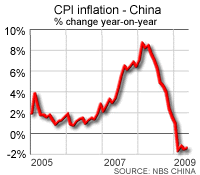
China's economy has been racing along on an inflationary surge over the last 18 months to 2 years. Rising food and fuel prices, along with fast-rising wages, threatened to reduce China's cost advantage and 'export' inflation around the world. Until recent weeks Chinese authorities were focused on tightening policy and allowing the yuan currency to rise against the US dollar to control that inflation.
But figures released last week show Chinese industrial output growth slowed in July to a 17 month low and authorities are worried about GDP growth dropping back to 8-9%, which is deemed not enough to employ masses of new workers coming into the market and not enough to keep incomes growing.
Strong growth is a key part of the Faustian bargain between China's government and its people. The people will agree to live in a restrictive and undemocratic society in exchange for strong economic growth and a stable political landscape.
It appears that tightening phase has now ended. An excellent blog post on the Wall St Journal explains how China is now easing policy and the Yuan's rise has slowed down.
It's often hard to tell what China's central bank is up to, given it doesn't necessarily have the same reporting requirements and is not as independent as other central banks. But it's view is becoming ever more important.
China is New Zealand's second largest provider of imports and our fourth largest export destination. Chinese economic growth is now one of the three big engines for global growth besides Europe and North America. China has become the factory for the world. Its low production costs and the transfer of manufacturing capacity from high cost Europe and America to China was a factor keeping inflation relatively low between 2000 and 2005.
China's economy has been racing along on an inflationary surge over the last 18 months to 2 years. Rising food and fuel prices, along with fast-rising wages, threatened to reduce China's cost advantage and 'export' inflation around the world. Until recent weeks Chinese authorities were focused on tightening policy and allowing the yuan currency to rise against the US dollar to control that inflation.
But figures released last week show Chinese industrial output growth slowed in July to a 17 month low and authorities are worried about GDP growth dropping back to 8-9%, which is deemed not enough to employ masses of new workers coming into the market and not enough to keep incomes growing.
Strong growth is a key part of the Faustian bargain between China's government and its people. The people will agree to live in a restrictive and undemocratic society in exchange for strong economic growth and a stable political landscape.
It appears that tightening phase has now ended. An excellent blog post on the Wall St Journal explains how China is now easing policy and the Yuan's rise has slowed down.
The Chinese central bank is no longer referring to its monetary policy as tight. The last quarterly report, in May, said the central bank would "place a higher priority on containing price rises and curbing inflation, and implement a tight monetary policy." This report omits the reference to a tight policy, and says the bank will "make its top macroeconomic priorities maintaining stable and relatively fast economic growth and preventing an excessively fast rise in prices, with curbing inflation put in a prominent position." The new language is identical to the phrasing other government outlets have been using for the last few weeks, and confirms the policy shift made when the central bank raised lending quotas for the year.And what might it mean for us here in New Zealand? Slower Chinese economic growth is helping to reduce demand for the oil needed for its energy intensive industrialisation, which is helping drag down the oil price. It may also reduce demand for the iron ore, coal and other metals that its factories and construction industries use. That may suck some of the air out of the commodity driven export boom in Australia, which is our largest export destination. Signs of slowing inflationary pressures coming out of China might also reassure the Reserve Bank here that inflationary pressures globally are easing, making it easier for it to keep cuting the OCR. So there's a couple of positives and one negative. I welcome other views on how a slower China might affect New Zealand.
We welcome your comments below. If you are not already registered, please register to comment
Remember we welcome robust, respectful and insightful debate. We don't welcome abusive or defamatory comments and will de-register those repeatedly making such comments. Our current comment policy is here.