

Here's my Top 10 links from around the Internet at 10:00 am today in association with NZ Mint.
Bernard will be back with his version tomorrow.
As always, we welcome your additions in the comments below or via email to bernard.hickey@interest.co.nz.
See all previous Top 10s here.

1. 'Curb King Kong banks'
Banks are too big and should be broken up or shrunk to curb the risks that “King Kong” lenders still pose to the economy, a senior Bank of England policymaker has said very recently.
The original Haldane speech is here ».
As a point of reference, the biggest bank in these parts is the Commonwealth Bank (owners of the ASB) and their total assets are AU$718 bln, with capital of AU$42 bln. Haldane's US$100 bln limit refers to total bank assets.
Is he saying CBA should be broken up into seven parts?
ANZ NZ has assets of NZ$119 bln or US$98 bln, about the maximum 'Haldane' limit.
Or, does this suggest the NZ divisions of the Aussie banks should be separated off as independent entities?
To address properly the “too-big-to-fail” problem, he said regulators should consider doubling banks’ loss-absorbing capital buffers to around 20pc, “placing limits on bank size”, or imposing a “full separation of investment and commercial banking” rather than a ring-fence.
He added that the evidence pointed to the optimal size for a bank to be as small as US$100bn (£62bn). However, the “big banks are even bigger” than before the crisis, he noted.
Although banks claim to be more efficient the larger they are, Mr Haldane said the analysis ignored the cost of the implicit taxpayer guarantee that he calculated was worth US$70bn a year for the world’s largest banks between 2002 and 2007, and US$300 bln a year now.
Without the subsidy, “there is no longer evidence of economies of scale at bank sizes above US$100bn. If anything, there is now evidence of dis-economies which rise with bank size, consistent with big banks becoming ‘too big to manage’,” he said.
2. To big to handle
It turns out Haldane is following an intensive debate in the US. Senior Fed officials are worried. What is interesting is the shift in thinking by regulators. Until now, they seemed to have been captured by the banks they regulate, but the tide is turning - perhaps. If they act of this 'new thinking' the financial landscape could be radically changed. The US$100 bln limit is an idea regulators and voters can readily understand. Simon Johnson explains:
More broadly, we have lost sight of what banking is supposed to do. Banks play an essential role in all modern economies, but that role is not to assume a huge amount of risk, with the downside losses covered by society.
Ross got it right again this week, when he said:
“I think that the real purpose and the real need that we have in this country for banks is to make loans particularly to small business and to individuals. I think that’s the hard part to fill.”
He continued, “Our capital markets are sufficiently sophisticated and sufficiently deep that most large corporations have plenty of alternative ways to find capital. Smaller companies and private individuals don’t have really the option of public markets. They’re the ones that most severely need the banks. I think they’ve kind of lost track of that purpose.”
Hoenig and Fisher have the right vision. Tarullo is heading down the right path. Ross and many others in the private sector fully understand what needs to be done. Those who oppose their proposed reforms are most likely insiders – people who have received payments from big banks over the past year or two.
3. Brixit ?
Is Britain getting ready to leave the EU? The NY Times thinks it is looking likely. They cite the "awkward silence" over the Peace Prize, withdrawals from "police and judicial cooperation" and refusal to deny that plans are underway.
All of which has fueled concerns that Britain is laying plans for what political and financial pundits have dubbed “Brixit,” a variant on “Grexit” — the shorthand for Greece’s much predicted if currently forestalled departure from the euro zone.
Britain has always been ambivalent about the European project. Unlike the founding six nations, all of them defeated or occupied in World War II, Britain was a victor. In national mythology, the war was neither a moment of disgrace nor a humiliation. On the contrary, it was widely considered the country’s finest hour, when it stood alone against fascism.
So the idea of reconciliation through integration never had the appeal in Britain that it did on the Continent. Unlike many other member countries, Britain always paid more into the union in contributions than it received in subsidies.
Now, with the euro zone almost three years in crisis, British public opinion has hardened. The overwhelming majority of Conservative lawmakers are euro skeptics, and many privately favor withdrawal.

4. Doubling their bet
The Australian government is setting out an updated strategy for what they see as the Asian Century.
The Asian Century white paper will highlight the need for the country to have a highly skilled, high wage economy.
It sets a goal for one-in-three board members of the top 200 listed companies and one-third of the senior leadership of the public service to have a deep understanding of Asia.
The scant detail that has been released shows the paper will highlight Ms Gillard's position that China, India, Indonesia, Japan, South Korea and the United States are the six countries that matter the most to Australia.
5. Taxes pour in, wealth equality sprinkles out
Ross Gittins of the SMH has written a piece that may surprise those on the left. He says an ABS detailed study of Australian household income shows that a surprisingly effective level of income redistribution is going on in Australia by their government(s). The tax system may not be doing it all, but it is happening anyway. I wonder if a similar study has been done for New Zealand?
In a capitalist economy such as ours, the rich have loads of money, the poor have next to none and the government does little about it.
Is that what you suspect? It's a long way from the truth. While some (including me) may argue they could be doing more, between them our governments - federal and state - are doing a lot more to redistribute income from the rich to the poor than many people imagine.
The reason so few people realise this is the system that brings it about is very complex. To see what's going on requires a special study - which is just what the Bureau of Statistics does every six years.
Although few people realise it, most of the redistribution done by the budget comes not from its tax side but from its spending side.
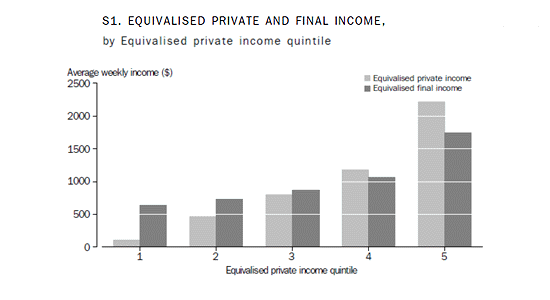
That's particularly the case with cash benefits which, after all, are tightly means-tested. The cash benefits received by households in the lowest quintile are equivalent to 47 per cent of their private income.
But that proportion falls sharply until you get to the highest quintile, whose cash benefits add just 2 per cent to their private income. Mental note for all lefties: means-testing makes the cash benefits system highly progressive.
By contrast, most benefits in kind are provided on a universal basis - that is, without means-testing. That's true of healthcare and education spending. So you wouldn't expect their distribution to be particularly progressive.
You wouldn't expect it, but for some reason it is. The in-kind benefits received by the lowest quintile are equivalent to 53 per cent of private income. But that proportion falls sharply to reach just 12 per cent of the highest quintile's private income.
All told, the whole tax and benefits system adds an average of AU$241 a week to the incomes of the bottom 20 per cent of households but subtracts an average of AU$484 a week from the incomes of the top 20 per cent. That's quite a redistribution.
6. Only in China
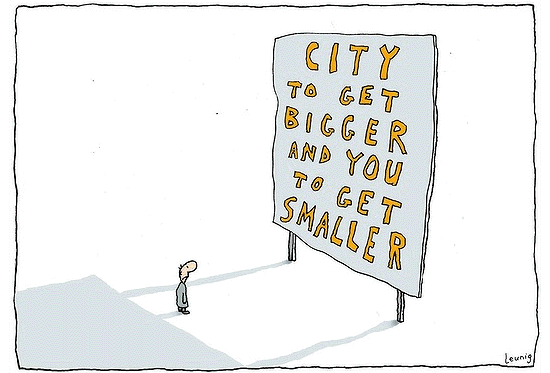
People love the idea of urban density as a solution to the housing/affordability crisis. They don't want it for themselves of course, but they want everyone else to put up with it. It's good for the planners and city bureaucrats. Well, got a spare 320 acres? You can build a city on that for 80,000 people - and you can get rid of cars, even the mad cyclists. Pedestrian heaven. Designed in Chicago, to be built in China.
Another day, another proposal for a new Chinese city. The 1.3 square-kilometer Great City, designed by Adrian Smith and Gordon Gill will be a massive new development that is completely sustainable, affordable, and, most strikingly, car-less. The masterplan, which has been planned for 80,000 people, will be built around a massive transit hub at its center, with all destinations to be within a few minutes walk, a planning innovation that would make “Great City” China’s (and the world’s?) first pedestrian-only city.
The project, expected to be finished by 2021, will hopefully become home to about 30,000 families, totaling 80,000 people. "Great City will demonstrate that high-density living doesn’t have to be polluted and alienated from nature," says AS+GG partner Gordon Gill, "Everything within the built environment of Great City is considered to enhance the quality of life of its residents. Quite simply, it offers a great place to live, work and raise a family."
7. Basic economics
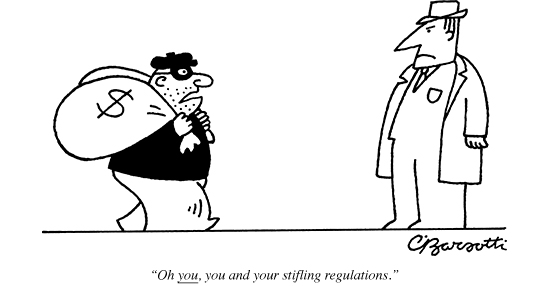
Stephen Gordon makes the case for market mechanisms over regulatory approaches to dealing with climate change. The deadweight costs of achieving any arbitrary level of greenhouse gas reduction are lower either under emissions trading or a carbon tax as compared to using regulations like "You must use Technology X" or "You may not use Technology Y.". HT Eric Crampton.
There is no way to eliminate all the costs associated from an effective policy for reducing greenhouse gas emissions. The reason why economists overwhelmingly prefer market-based mechanisms is that they reduce these costs to a minimum, and they also provide the government with revenues that can be used to compensate people for those losses and/or to advance other policy goals.
The regulatory approach preferred by the Conservatives is more—not less—costly because it doesn’t generate tax revenues. By refusing to adopt a market-based strategy to deal with climate change, we get the worst of both worlds: all the loss in economic surplus and none of the offsetting public revenue.
8. Market share vs milk prices
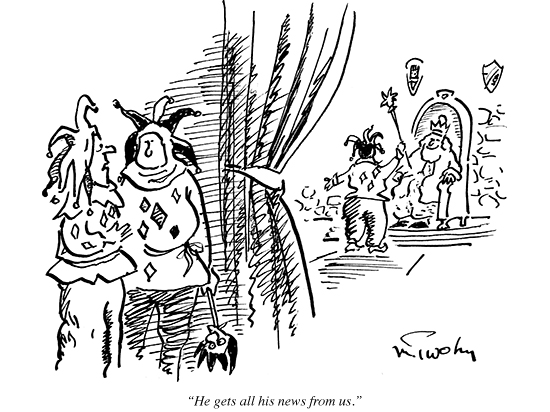
Some very big lawsuits are brewing in the US dairy industry as some fundamental tensions between 'managers' and 'suppliers' come to a head. The 'suppliers' think they have been stitched up. More from the NY Times:
By normal rhythms of the industry, Mr. Engles and Gary Hanman, 78, a former chief executive of the D.F.A., would be financial adversaries. That’s because bottlers try to buy raw milk as cheaply as possible. Many farmers joined cooperatives in the hope they could leverage their numbers for higher prices.
But according to the lawsuit, the deal that Mr. Engles made with Mr. Hanman went against normal economics. Mr. Engles promised that the D.F.A. would be the exclusive supplier to Dean’s milk plants. The D.F.A., in turn, promised a reliable supply of Dean’s main ingredient, raw milk, at the lowest prices, plus rebates and credits so Dean could acquire more milk plants, the suit says.
It all resulted in a small group of men making enormous sums of money, according to files in the Southeast lawsuit that recently became public. One business partner of Mr. Hanman was paid $100 million by Dean’s predecessor and the D.F.A. for his stake in milk plants; the partner had paid $6.9 million for it two years earlier. A business partner of Mr. Engles was paid more than $80 million for his investment in milk plants; that partner had paid little more than $5 million.
Mr. Hanman was paid $31.6 million during his seven-year tenure as chief executive, including bonuses for increasing the cooperative’s market share, according to court records.
As for Mr. Engles, his compensation over the last decade comes to $156 million, according to Equilar, a firm that tracks executive pay.
Dairy farmers say they didn’t share in the riches. Instead, they say that they were paid suppressed prices for raw milk, and that the fallout continues. They are seeking more than $1 billion, including penalties, in the Southeast; the damage estimate for Northeast farmers remains under seal.
9. Economic winner
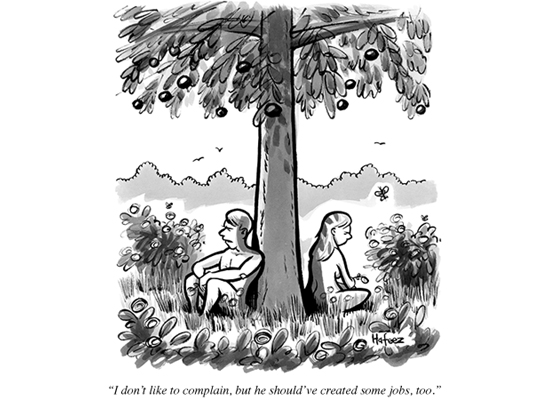
Brian Gaynor says borrowing has been used wisely in farming and has made a positive contribution. He thinks it worryingly odd that many New Zealanders can't distinguish between debt taken on for a worthwhile purpose, and 'bad debt' taken on for consumption. Even government departments can't make the distinction:
New Zealand has a strange attitude towards debt. We criticise the agriculture sector for having too much debt even though it generates the bulk of the country's export earnings. Meanwhile individuals are encouraged to take on more and more debt albeit this generates little economic activity and makes residential property less and less affordable for new home buyers.
The Primary Industries Ministry's Farm Monitoring 2012 Reports look at the outlook for the dairy, beef and sheep sectors. It believes "the main concern going into 2012/13 is the drop in the expected [dairy] payout". The ministry concludes: "While many farmers have paid off debt over the past two years, aggregate debt remains high, and there are a small number [20 per cent] of dairy farms with high debt that are vulnerable to a drop in payout".
These are strange comments as debt can be used for sound investment purposes, as it has been by most agriculture sector participants.
Dairy and meat now represent 37.5 per cent of total exports compared with 34.5 per cent a decade ago. Total agriculture exports, which also include wool, horticulture, grain and seeds, represent over 55 per cent of the country's exports.
It is clear from the agriculture export and production figures that farming debt, which is modest compared with business and individual debt, has been used wisely and has made a positive contribution to the economy.
10. Unexpected consequence
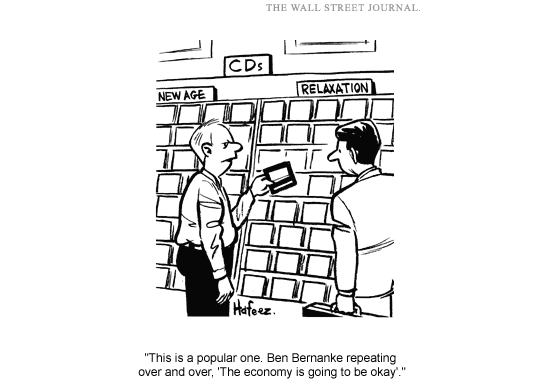
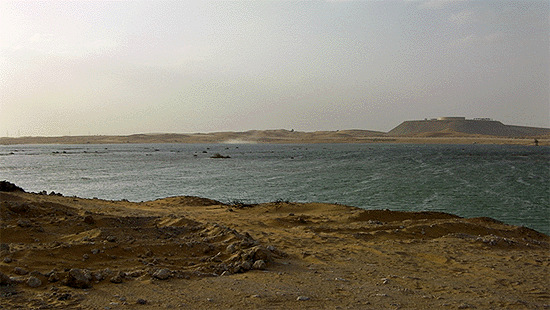
One place you don't expect to see waves lapping against the shore is in the middle of a desert. But that's exactly what's happening deep inside the United Arab Emirates, where a recently formed lake is nestled into the sand dunes, and a new ecosystem is emerging. NPR.org has the story:
Here's how this lake got here: A desalination plant right on the coast pulls in saltwater from the Persian Gulf and makes that water drinkable and usable. The water is then pumped 150 miles inland to the city of Al Ain. The residents there drink it up, bathe with it and then flush it down their drains.
"It goes to the sewage treatment plant, and they treat it, and they bring it back into town. And they water the parks and the gardens and things like that, and that percolates down into the groundwater," Clark says.
And then it ends up in the desert, a short distance from Al Ain, by percolating back up from the ground. This water's clean. But still, it comes as a shock to some in the desert.
We welcome your comments below. If you are not already registered, please register to comment
Remember we welcome robust, respectful and insightful debate. We don't welcome abusive or defamatory comments and will de-register those repeatedly making such comments. Our current comment policy is here.