
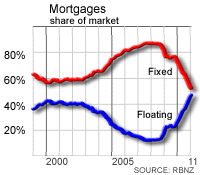
 The Reserve Bank of New Zealand's monetary policy, or its ability to control consumer spending and inflation through hikes or cuts in the Official Cash Rate (OCR), gained more potency throughout 2009 as the proportion of home loan borrowers on floating mortgage rates hit its highest level in almost five years.
Figures released by the Reserve Bank (RBNZ) show the proportion of home loan borrowers on floating mortgages reached 24.4% in November 2009, its highest level since February 2005, and up from a low of 12.5% in August 2007.
The Official Cash Rate's biggest influence is on short term interest rates in New Zealand, meaning a hike or cut in the OCR quickly flows through to variable and shorter term fixed interest rates. A borrower on a floating mortgage rate would generally be hit by a 25 basis point (0.25%) hike in the OCR with the same increase to their floating rate.
In turn, this would mean the borrower would be forced to spend more on interest payments on the loan, which would (desirably for the RBNZ) have a negative impact on the borrower's other spending. The RBNZ's number one mandate is to keep inflation between a specified target range over the medium term. Effectively, if a borrower is forced to spend more on their mortgage (or other forms of borrowing) and less on other items, this would reduce their demand for these items, dampening inflationary (upward) pressure on prices.
The proportion of borrowers on floating mortgages in New Zealand began a sharp rise around October 2008, following the bankruptcy of investment bank Lehman Brothers in the United States in September. This threw the world economy into a tailspin, with central banks worldwide slashing official interest rates as the supply of credit on financial markets dried up.
In New Zealand, the RBNZ had begun cutting the OCR from its record high 8.25% in July 2008 as the housing market cooled and wider economic activity continued to contract (the New Zealand economy was in recession, or negative growth, from the beginning of 2008 through to mid-2009).
The RBNZ stopped its easing cycle for the OCR after April 2009, once it had reached a record low of 2.5%, and has left the rate there since. At the time, the RBNZ also said that it expected to keep the OCR "at or below its current level until the latter part of 2010," although this wording had changed in its latest monetary policy statement to "around the middle of 2010," as economic growth prospects for New Zealand gradually recovered.
Before the RBNZ began cutting the OCR in 2008, variable mortgage rates offered by banks in New Zealand sat above fixed rates, encouraging borrowers to lock in fixed rate home loans. However, as the OCR was cut, variable mortgage rates became cheaper and more inviting to those purchasing new property and those rolling off fixed terms.
The Reserve Bank of New Zealand's monetary policy, or its ability to control consumer spending and inflation through hikes or cuts in the Official Cash Rate (OCR), gained more potency throughout 2009 as the proportion of home loan borrowers on floating mortgage rates hit its highest level in almost five years.
Figures released by the Reserve Bank (RBNZ) show the proportion of home loan borrowers on floating mortgages reached 24.4% in November 2009, its highest level since February 2005, and up from a low of 12.5% in August 2007.
The Official Cash Rate's biggest influence is on short term interest rates in New Zealand, meaning a hike or cut in the OCR quickly flows through to variable and shorter term fixed interest rates. A borrower on a floating mortgage rate would generally be hit by a 25 basis point (0.25%) hike in the OCR with the same increase to their floating rate.
In turn, this would mean the borrower would be forced to spend more on interest payments on the loan, which would (desirably for the RBNZ) have a negative impact on the borrower's other spending. The RBNZ's number one mandate is to keep inflation between a specified target range over the medium term. Effectively, if a borrower is forced to spend more on their mortgage (or other forms of borrowing) and less on other items, this would reduce their demand for these items, dampening inflationary (upward) pressure on prices.
The proportion of borrowers on floating mortgages in New Zealand began a sharp rise around October 2008, following the bankruptcy of investment bank Lehman Brothers in the United States in September. This threw the world economy into a tailspin, with central banks worldwide slashing official interest rates as the supply of credit on financial markets dried up.
In New Zealand, the RBNZ had begun cutting the OCR from its record high 8.25% in July 2008 as the housing market cooled and wider economic activity continued to contract (the New Zealand economy was in recession, or negative growth, from the beginning of 2008 through to mid-2009).
The RBNZ stopped its easing cycle for the OCR after April 2009, once it had reached a record low of 2.5%, and has left the rate there since. At the time, the RBNZ also said that it expected to keep the OCR "at or below its current level until the latter part of 2010," although this wording had changed in its latest monetary policy statement to "around the middle of 2010," as economic growth prospects for New Zealand gradually recovered.
Before the RBNZ began cutting the OCR in 2008, variable mortgage rates offered by banks in New Zealand sat above fixed rates, encouraging borrowers to lock in fixed rate home loans. However, as the OCR was cut, variable mortgage rates became cheaper and more inviting to those purchasing new property and those rolling off fixed terms.
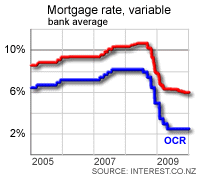 Despite cuts in the OCR from July 2008, the average bank variable mortgage rate remained as high as 10.64% until the first week of September, when banks began to pass on the OCR cuts to borrowers. Meanwhile, at the start of September 2008, average bank fixed rates ranged from 9.05% (three years) to 9.72% (six months).
The average bank variable rate is now 6.01%, with only the average six month rate below it (5.82%). Longer term fixed rate averages range from 6.2% (one year) to 8.68% (five years).
The Reserve Bank's 'expectation' that it will keep the OCR at 2.5% until the middle of 2010 has given borrowers a degree of certainty that variable mortgage rates will not begin to rise until around the same time as the OCR does, although when this will be is drawing some debate. Wholesale money markets are expecting the RBNZ may have to hike the OCR as early as March or April.
This Credit Suisse/Bloomberg index (link here) shows markets pricing the OCR at 207 basis points (2.07%) above where it is now in a year's time. This should take the average bank variable rate above 8% in a year's time.
By opting for a variable mortgage rate (or by having part of a mortgage on a variable rate), borrowers now are experiencing lower rates than those who have fixed. Having a loan on a variable rate also means a borrower can pay back more than what would be allowed on a fixed rate, giving them the ability to pay the loan off faster.
But while variable rates may stay low for a few months yet, fixed mortgage rates (including six month rates) have been on an upward trend in recent months. The danger here for borrowers is that when variable rates do rise and a decision is made to fix for a term, fixed rates may have risen further from where they are now.
An overview of Monetary Policy in New Zealand can be found here on the Reserve Bank's website.
Despite cuts in the OCR from July 2008, the average bank variable mortgage rate remained as high as 10.64% until the first week of September, when banks began to pass on the OCR cuts to borrowers. Meanwhile, at the start of September 2008, average bank fixed rates ranged from 9.05% (three years) to 9.72% (six months).
The average bank variable rate is now 6.01%, with only the average six month rate below it (5.82%). Longer term fixed rate averages range from 6.2% (one year) to 8.68% (five years).
The Reserve Bank's 'expectation' that it will keep the OCR at 2.5% until the middle of 2010 has given borrowers a degree of certainty that variable mortgage rates will not begin to rise until around the same time as the OCR does, although when this will be is drawing some debate. Wholesale money markets are expecting the RBNZ may have to hike the OCR as early as March or April.
This Credit Suisse/Bloomberg index (link here) shows markets pricing the OCR at 207 basis points (2.07%) above where it is now in a year's time. This should take the average bank variable rate above 8% in a year's time.
By opting for a variable mortgage rate (or by having part of a mortgage on a variable rate), borrowers now are experiencing lower rates than those who have fixed. Having a loan on a variable rate also means a borrower can pay back more than what would be allowed on a fixed rate, giving them the ability to pay the loan off faster.
But while variable rates may stay low for a few months yet, fixed mortgage rates (including six month rates) have been on an upward trend in recent months. The danger here for borrowers is that when variable rates do rise and a decision is made to fix for a term, fixed rates may have risen further from where they are now.
An overview of Monetary Policy in New Zealand can be found here on the Reserve Bank's website.
We welcome your comments below. If you are not already registered, please register to comment
Remember we welcome robust, respectful and insightful debate. We don't welcome abusive or defamatory comments and will de-register those repeatedly making such comments. Our current comment policy is here.