
 By Roger J Kerr
The chart below shows the relationship between New Zealand and Australian two-year swap rates over the past two years.
There is no strong reason as to why our short-term swap interest rates should follow Australia's as closely as we have different GDP growth profiles, different CPI inflation trends, different export commodities, massive differences in domestic savings pools and separate/independent central banks controlling monetary policy.
One explanation for the close linkage is the common banks with dealing rooms that spend most of the day talking to one another and perhaps do not understand the fundamental differences between the two economies as mentioned above.
By Roger J Kerr
The chart below shows the relationship between New Zealand and Australian two-year swap rates over the past two years.
There is no strong reason as to why our short-term swap interest rates should follow Australia's as closely as we have different GDP growth profiles, different CPI inflation trends, different export commodities, massive differences in domestic savings pools and separate/independent central banks controlling monetary policy.
One explanation for the close linkage is the common banks with dealing rooms that spend most of the day talking to one another and perhaps do not understand the fundamental differences between the two economies as mentioned above.
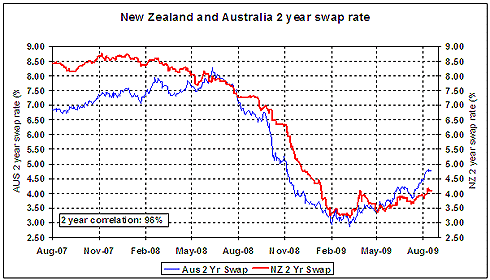 - From August 2007 to August 2008 NZ rates were falling as the economy was moving into recession due to the excessively tight monetary conditions implemented by the RBNZ in 2006/2007. Inflation risks were reducing here. Australian two-year swap rates were doing the opposite as the economy was still booming along with associated inflation risks.
- After the global investment and banking markets imploded in September 2008 the RBA moved quickly to slash interest rates, the RBNZ followed the Aussie lead and did the same.
- The New Zealand two-year swap rates remained above Australia's until May 2009 when it was realised by the markets that NZ was experiencing a protracted economic recession and Australia had dodged the bullet as hard commodity prices rallied upwards.
- Today the Aussie markets are pricing two-year money sharply higher at 4.80% as the RBA signal an ending of the very accommodative monetary stance.
- New Zealand two-year rates have increased (following the Aussie lead) to 4.10%, however our economic outlook has changed for the worse in recent months. By contrast the Australian commodity price increases will deliver positive GDP growth for their economy. Both currencies have gone up against the USD, however our export commodity prices have not increased. Our economy will now stay in recession for longer and thus future inflation risks are much reduced.
In my view there is no justification for NZ two-year interest rates following the Australian rates any higher.
Arguably our two-year rates have increased too far above the OCR and 90-rates already.
"”"”"”"”"”-
* Roger J Kerr runs Asia Pacific Risk Management. He specialises in fixed interest securities and is a commentator on economics and markets. More commentary and useful information on fixed interest investing can be found at rogeradvice.com
- From August 2007 to August 2008 NZ rates were falling as the economy was moving into recession due to the excessively tight monetary conditions implemented by the RBNZ in 2006/2007. Inflation risks were reducing here. Australian two-year swap rates were doing the opposite as the economy was still booming along with associated inflation risks.
- After the global investment and banking markets imploded in September 2008 the RBA moved quickly to slash interest rates, the RBNZ followed the Aussie lead and did the same.
- The New Zealand two-year swap rates remained above Australia's until May 2009 when it was realised by the markets that NZ was experiencing a protracted economic recession and Australia had dodged the bullet as hard commodity prices rallied upwards.
- Today the Aussie markets are pricing two-year money sharply higher at 4.80% as the RBA signal an ending of the very accommodative monetary stance.
- New Zealand two-year rates have increased (following the Aussie lead) to 4.10%, however our economic outlook has changed for the worse in recent months. By contrast the Australian commodity price increases will deliver positive GDP growth for their economy. Both currencies have gone up against the USD, however our export commodity prices have not increased. Our economy will now stay in recession for longer and thus future inflation risks are much reduced.
In my view there is no justification for NZ two-year interest rates following the Australian rates any higher.
Arguably our two-year rates have increased too far above the OCR and 90-rates already.
"”"”"”"”"”-
* Roger J Kerr runs Asia Pacific Risk Management. He specialises in fixed interest securities and is a commentator on economics and markets. More commentary and useful information on fixed interest investing can be found at rogeradvice.com
We welcome your comments below. If you are not already registered, please register to comment
Remember we welcome robust, respectful and insightful debate. We don't welcome abusive or defamatory comments and will de-register those repeatedly making such comments. Our current comment policy is here.