

By David Hargreaves
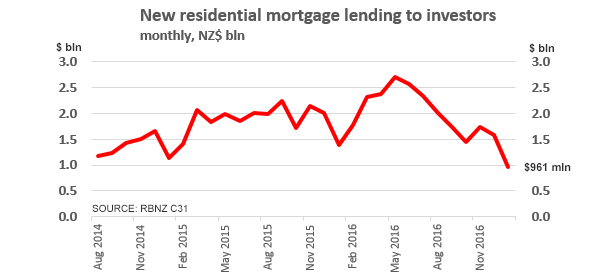
The sharp backing off of investors from the housing market after the announcement last year of the Reserve Bank's new 40% deposit rules intensified over the slow summer month of January.
According to the latest lending by borrower type figures from the RBNZ, housing investors borrowed 31.1% less - dollar terms over $400 million less - than in January 2016.
They accounted for most of the over $550 million (14.2%) overall drop in borrowing last month compared with January 2016.
Investors accounted for little more than 27% of the total borrowed last month.
Before the new RBNZ rules were announced in July 2016 investors were borrowing about 38% of the total.
Meanwhile though, the belief that the backing off of the investors may leave more room for first home buyers (FHBs) appears to be coming to pass.
The $462 million borrowed by FHBs in January actually beat the $459 million FHBs borrowed in the same month a year ago.
Borrowing by owner occupiers was at lower levels than in January 2016, but the 7.2% drop was much more subdued than the one seen among investors.
In Auckland the share of investor action was still considerably higher than in the rest of the country, at about 40% ($685 million) of the the $1.71 billion borrowed for houses there.
This, however, was well down on the 48% share investors were taking prior to the RBNZ rule announcement.
The Reserve Bank has been reluctant to talk up the success or otherwise of its lending restrictions so far, and will be waiting for the February/March housing figures before reaching firm conclusions.
It will, however, be happy with the way the steam has come out of the market in recent months.
The debate will continue though as to just how much of the easing in conditions is due to the new rules and how much is down to the fact that banks have been 'rationing' credit and pushing up borrowing rates as they face a squeeze caused by deposits growing at a slower rate to lending.
The RBNZ has been very keen to back up the latest restrictions by getting permission from the Government to incorporate debt-to-income ratios into its 'macro-prudential toolkit', although it has promised it would not use them right now.
However, the Government's now effectively kicked that into touch until after the election by insisting the RBNZ publicly consult on DTIs before going back to the Government and seeking approval for them.
We welcome your comments below. If you are not already registered, please register to comment
Remember we welcome robust, respectful and insightful debate. We don't welcome abusive or defamatory comments and will de-register those repeatedly making such comments. Our current comment policy is here.