
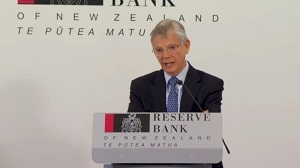
The New Zealand Institute of Economic Research (NZIER) is bucking the trend of the big banks, with its expectations the Reserve Bank (RBNZ) will keep interest rates on hold until at least half way through next year.
It acknowledges the RBNZ remains between a rock and hard place, as it risks sending Auckland house prices further through the roof if it cuts the Official Cash Rate (OCR) to spur inflation throughout the rest of the economy.
Yet it notes in its Quarterly Predictions released today, “The Reserve Bank is becoming increasingly mindful of the consequences of excessively loose monetary policy on asset prices and financial stability.
“Its more recent communications indicate it will draw on the flexibility in its Policy Targets Agreement when setting monetary policy.”
Looking at the bigger picture, the NZIER says the key issue is whether the New Zealand economy has enough momentum to ride out the uncertainly in the global outlook.
“The supports for growth in the New Zealand economy remains intact, but the offshore volatility present downside risks. Balancing all these factors, we expect the Reserve Bank will leave the OCR on hold at 2.5% over 2016 and much of 2017.”
The NZIER says non-dairy sectors bolstered the economy in the second half of last year. It expects strong population growth, construction and tourism to keep being “key driving forces behind solid growth for the next few years”.
While it recognises low petrol prices are keeping inflation down, it notes reduced costs for households and businesses are encouraging spending.
“The decline in petrol prices from a year ago represents a $200 annual boost to each household’s wallet,” it says.
“Although wage growth is subdued, it is still outpacing consumer price inflation, resulting in real wage growth for many households.”
It expects annual GDP growth to recover from where it’s at now at 2.5%, to around 3% over 2016, averaging back at around 2.5% for the following years.
Yet it warns, “Current volatility in global financial markets is a reminder of how quickly sentiment can change.
“Financial markets are adjusting to the realisation that the Federal Reserve will gradually normalise interest rates in the world’s largest economy. This has raised fears about the durability of the recovery in the global economy.”
Banks less optimistic
ANZ and Kiwibank economists have this week changed their tunes, joining Westpac and ASB in forecasting OCR cuts to an all-time low of 2.0% this year.
Kiwibank yesterday announced, “We have officially changed our OCR view and now expect the RBNZ will cut interest rates by 25bps in March and June, taking the OCR down to 2% by the middle of 2016.
“The global outlook has weakened at the same time as dairy prices continue to fall and the NZ dollar remains elevated – reducing NZ’s growth and inflation outlook.
“Inflation has been pressured lower by external shocks (oil and the NZ dollar) and inflation expectations have also quickly turned lower – something the RBNZ will be cognisant of.
“The OIS (overnight index swap) market is pricing about a 30% chance of an OCR cut in March, with 25bps of rate cuts fully priced by June.”
Kiwibank followed ANZ, which on Monday said it was possible for the first cut to come in April.
ANZ economists said while there were several contributing factors (stubbornly high NZ dollar, lower inflation expectations, receding export prices, dairy payout prospects) three themes have been "enough to tip us into the rate cut camp":
1. A moderation in economic momentum now looks to be around the corner at a time when inflation is already low;
2. Global unease – China has problems and they will be exported; and
3. Structural shift in funding costs, which, if not compensated for by monetary policy, will accentuate decelerating economic momentum.
We welcome your comments below. If you are not already registered, please register to comment
Remember we welcome robust, respectful and insightful debate. We don't welcome abusive or defamatory comments and will de-register those repeatedly making such comments. Our current comment policy is here.