
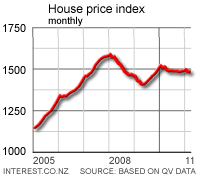
 Average national property values fell 6.8% in the year ended November 2008, with values falling by larger margins in the main urban areas, figures from Quotable Value (QV) show. The fall in the year to November was the same as the October year-on-year fall.
The tightening of lending criteria by banks may be dampening the impact lower interest rates are having on the housing market, with the 20% deposits demanded by some banks making some home buyers uneasy about entering the market, QV said.
"While interest rates continue to fall sharply tighter lending criteria may be dampening any immediate impact on the property market," QV spokesman Blue Hancock said.
"The strength of the Christmas retail season will be a good indicator of public sentiment and how hard the recession is hitting. Many businesses are currently feeling the pinch, and uncertainty over job security will be a major factor in whether people buy or sell property," Hancock said.
Average values in the Auckland region fell 7.7%, with values in the central city falling 8.7%.
"The news in the wider Auckland market is a mix of good and not so good," QV spokeswoman Glenda Whitehead said.
"In Waitakere City, our valuers are noting a few more sold signs around, and that recent sale prices appear to be at similar levels to those achieved in October and early November. This could be a sign of the market levelling off, but until we see a couple more months of similar activity, it is too early to call. The average sales price is now well down from the peak which occurred in the third quarter of 2007, with some properties down 7 to 10%," Whitehead said.
In Hamilton, the average value fell 8.5% year on year. The year to October had seen a 9% fall.
"Even though interest rates are falling, there is still a lack of confidence in the market which is stifling demand, QV's Hamilton spokesman Richard Allen said.
"There is plenty of anecdotal evidence to suggest that the market continues to strongly favour buyers. This is reinforced by the average sale price for the city which retreated from NZ$349,253 in October to NZ$345,785 in November," Allen said.
The average Wellington City sale price fell 6.1% to NZ$453,612 in the year ended November, with the average price in the wider Wellington area falling to NZ$411,922.
"The highest average sale price is in the Western Suburbs at NZ$540,000, a level last seen in June 2007," QV spokesman Max Meyers said.
"The area with the lowest average sales price was Upper Hutt at NZ$317,000, back to the February 2007 level. Overall, the average sale price in the region has declined NZ$13,507 compared to the same period last for the year," Meyers said.
In the South Island, the average sale price in Christchurch fell 7.4% in the November year, although the average sale price for the month of November rose slightly from the October average to NZ$355,828.
"There is a common sentiment that any recovery in the property market will be tempered by job insecurity and the availability of funding over the coming year," QV spokesman Mark Dow said.
"It will also take time for the market to recover from recent turmoil. The downward momentum of the property market will have a bearing on the timing of any future recovery," Dow said.
The average sale price in Dunedin for the month of November also increased slightly from October to NZ$258,671, although the year-on-year average value fell 7.6% from November 2007.
Queenstown Lakes was one of the hardest hit areas, with values in the year to November falling 12.5%. The average sale price was NZ$612,527.
Average national property values fell 6.8% in the year ended November 2008, with values falling by larger margins in the main urban areas, figures from Quotable Value (QV) show. The fall in the year to November was the same as the October year-on-year fall.
The tightening of lending criteria by banks may be dampening the impact lower interest rates are having on the housing market, with the 20% deposits demanded by some banks making some home buyers uneasy about entering the market, QV said.
"While interest rates continue to fall sharply tighter lending criteria may be dampening any immediate impact on the property market," QV spokesman Blue Hancock said.
"The strength of the Christmas retail season will be a good indicator of public sentiment and how hard the recession is hitting. Many businesses are currently feeling the pinch, and uncertainty over job security will be a major factor in whether people buy or sell property," Hancock said.
Average values in the Auckland region fell 7.7%, with values in the central city falling 8.7%.
"The news in the wider Auckland market is a mix of good and not so good," QV spokeswoman Glenda Whitehead said.
"In Waitakere City, our valuers are noting a few more sold signs around, and that recent sale prices appear to be at similar levels to those achieved in October and early November. This could be a sign of the market levelling off, but until we see a couple more months of similar activity, it is too early to call. The average sales price is now well down from the peak which occurred in the third quarter of 2007, with some properties down 7 to 10%," Whitehead said.
In Hamilton, the average value fell 8.5% year on year. The year to October had seen a 9% fall.
"Even though interest rates are falling, there is still a lack of confidence in the market which is stifling demand, QV's Hamilton spokesman Richard Allen said.
"There is plenty of anecdotal evidence to suggest that the market continues to strongly favour buyers. This is reinforced by the average sale price for the city which retreated from NZ$349,253 in October to NZ$345,785 in November," Allen said.
The average Wellington City sale price fell 6.1% to NZ$453,612 in the year ended November, with the average price in the wider Wellington area falling to NZ$411,922.
"The highest average sale price is in the Western Suburbs at NZ$540,000, a level last seen in June 2007," QV spokesman Max Meyers said.
"The area with the lowest average sales price was Upper Hutt at NZ$317,000, back to the February 2007 level. Overall, the average sale price in the region has declined NZ$13,507 compared to the same period last for the year," Meyers said.
In the South Island, the average sale price in Christchurch fell 7.4% in the November year, although the average sale price for the month of November rose slightly from the October average to NZ$355,828.
"There is a common sentiment that any recovery in the property market will be tempered by job insecurity and the availability of funding over the coming year," QV spokesman Mark Dow said.
"It will also take time for the market to recover from recent turmoil. The downward momentum of the property market will have a bearing on the timing of any future recovery," Dow said.
The average sale price in Dunedin for the month of November also increased slightly from October to NZ$258,671, although the year-on-year average value fell 7.6% from November 2007.
Queenstown Lakes was one of the hardest hit areas, with values in the year to November falling 12.5%. The average sale price was NZ$612,527.
We welcome your comments below. If you are not already registered, please register to comment
Remember we welcome robust, respectful and insightful debate. We don't welcome abusive or defamatory comments and will de-register those repeatedly making such comments. Our current comment policy is here.