
In this section
Offers for readers
The comment stream
Recent comments
- 1 of 19105
- ››
Editors choice
- 1 of 276
- ››
Finance sector jobs
Successful applicants will have the opportunity to work with this leading Australian Advis...more
Australia
Think Global Recruitment is working with this exceptionally respected Australian Boutique ...more
Australia
Sought after opportunity to move to one of the most beautiful westernised countries in the...more
Australia

The news stream
Latest news
Most commented
- 90 seconds at 9 am with BNZ 116
- Wednesday's Top 10 with NZ Mint 78
- Friday's Top 10 with NZ Mint 28
- Amanda's Take Five for Wednesday 19
- The problems with NZ's energy use 18
- More bank mortgage rate cuts 16
- Govt lifts minimum wage 50 cts to $13.50 an hour 16
- Thursday's Top 10 with NZ Mint 15
- 90 seconds at 9 am with BNZ 14
- Full time jobs fall 13,000 in Dec qtr 14
Most viewed
Interest on Twitter
NZ house prices flat in July, but Auckland down 3.2%
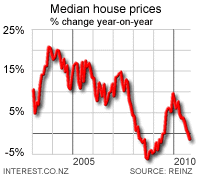
The national median house price was flat at NZ$340,000 in July from June, the Real Estate Institute of New Zealand (REINZ) reported, arguing this was a sign of a recovery in the market. However, Auckland house prices fell 3.2% in July from June and are now down 8.5% from their December 2007 peak, while the national median price remains 3.4% off its November peak. "The New Zealand residential property market staged an unexpected recovery in July "“ with the notable exception of Auckland," the REINZ said. "There is an unmistakeable degree of recovery in July, which is surprising given that it is generally regarded as the worst winter month, with good improvement in median prices around the country despite continued low sales volumes," said REINZ President Murray Cleland.
Nine of the 12 regions surveyed reported increases in median prices, he said, noting however that Auckland was the exception where the median price fell to NZ$421,000 from NZ$435,000 in June. Cleland said further falls in apartment prices and few sales for over NZ$1 million were factors in the Auckland weakness. "Its not surprising that Auckland is finding itself very much at the epicentre of the current economic recession and in particular the continued fallout from the finance sector collapses, and it's therefore understandable that confidence in the Auckland residential market at this point is pretty low," Cleland said. "However the fact is that for the market nationally to achieve an unchanged median price against the pressure of the declining Auckland market is a remarkably good result in the circumstances and it is beginning to look like the June month's figures may have given a poor reading of the market's health," he said.
Cleland referred to statistics for July from Quoteable Value which showed an acceleration of the fall in prices. "Those statistics are based on property settlements, whereas ours are based on unconditional contracts, so inevitably the earlier statistics relate to June sales, reported in July. Ours are for July sales made in the same month and therefore will always give a more current picture of the market," he said. The REINZ figures showed a 1.44% fall in house prices from a year ago, which was a slight improvement from the 2.15% fall in June from a year ago, it said. "If you regard the annual percentage change as a yardstick, then you would have to say, at best, the trendline is certainly not deteriorating as much as some would have you believe, and on a month to month basis, a slight improvement can be detected," Cleland said.
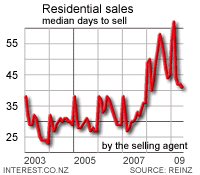
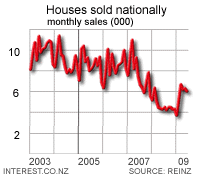
"As for the long term prognosis, there are plenty of people talking about a 10 per cent decline in values, but based on today's figures, a decline of that magnitude is not evident yet," he said. "If this is as bad as it gets, then perhaps the market is in better shape than we thought." Cleland said sales in June were often due to those sellers being forced to sell, while sellers were holding to their prices in July. The number of days to sell nationally rose to 58 in July from 53 in June and is above the 31 seen a year ago. The volume of sales rose to 4,489 in July from 4,305, but remained below the 6,660 seen in July a year ago. Here is REINZ's commentary on the various individual regions.
Northland In total, 119 houses sold in Northland in July (June 2008: 108; July 2007: 222). The median price rose to $315,000 from $302,750 in June (July 2007: $316,500). 14 houses sold in the Whangarei County area in July (June 2008: 13; July 2007: 31). The median price rose to $454,000 from $427,500 in June (July 2007: $420,000). 61 houses sold in Whangarei City in July (June 2008: 52; July 2007: 118). The median price rose to $304,000 in July, from $301,000 in June (July 2007: $310,000). Auckland The median house price in Auckland eased to $421,000 in July, from $435,000 in June (July 2007: $445,000). In total, 1,411 houses sold, down on the 1,466 sold in June (July 2007: 2,446). The median sales price for a North Shore City home eased to $483,500 in July, from $510,000 in June (July 2007: 555). 230 houses sold, down on the 271 sold in June (July 2007: 395). Sales volume rose in Waitakere City in July with 188 houses sold (June 2008: 169; July 2007: 311). The median price increased, reaching $355,000 in July (June 2008: $337,000; July 2007: $396,125). The median price for an Auckland City house eased to $443,000 in July (June 2008: $472,100; July 2007: $496,600). 532 houses sold in July, 10 less than the 542 sold in June (July 2007: 778). 276 houses sold in Manukau City in July (June 2008: 265; July 2007: 570). The median price fell to $426,250 from $442,000 in June (July 2007: $385,000). Sales eased in Papakura with 38 houses sold (June 2008: 51; July 2007: 93). The median price also eased to $302,500 in July from $320,000 in June (July 2007: $320,000). The median price for a Metropolitan Auckland house eased to $425,000 in July (June 2008: $440,000; July 2007: $442,500). In total, 1,264 houses sold, down on the 1,298 sold in June (July 2007: 2,147). 68 houses sold in Rodney District, down on the 77 sold in June (July 2007: 160). The median price dipped to $455,000 from $470,000 in June (July 2007: $488,250). The median price for a Franklin District home rose to $379,000 in July (June 2008: $368,000; July 2007: $388,000). 50 houses sold, one more than the 49 sold in June (July 2007: 85). 29 houses sold in the Thames/Coromandel region in July, down on the 42 sold in June (July 2007: 54). The median price eased to $352,500 from $377,500 in June (July 2007: $433,000). The median price for an Outer Auckland home reached $410,000 in July, up from $407,500 in June (July 2007: $450,000). 147 houses sold (June 2008: 168; July 2007: 299). Waikato/Bay of Plenty/Gisborne The median price for a house in the Waikato/Bay of Plenty/Gisborne region rose to $325,000 in July (June 2008: $316,000; July 2007: $320,000). 637 houses sold (June 2008: 581; July 2007: 949). Sales rose in Waikato Country in July with 115 houses sold (June 2008: 112; July 2007: 194). The median price also rose, to $275,000 in July (June 2008: $244,250; July 2007: $247,500). The median price for a Hamilton City house reached $335,000 in July, from $323,000 in June (July 2007: $350,000). 146 houses sold in July, down on the 158 sold in June (July 2007: 232). Sales volume rose in Western Bay of Plenty Country in July with 47 houses sold (June 2008: 33; July 2007: 71). The median price reached $400,000 in July (June 2008: $382,500; July 2007: $339,000). The median price for a house in Mt Maunganui/Papamoa reached $412,500 in July (June 2008: $398,000; July 2007: $420,000). 51 houses sold, five more than the 46 sold in June (July 2007: 61). 97 houses sold in Tauranga in July, up on the 75 sold in June (July 2007: 126). The median price eased to $350,000 in July (June 2008: $363,000; July 2007: $372,750). Rotorua's median price rose to $271,250 in July, from $255,000 in June (July 2007: $261,400). 71 houses sold in July, up on the 37 sold in June (July 2007: 104). 24 houses sold in Taupo in July, down on the 30 sold in June (July 2007: 51). The median price increased to $361,250 from $360,500 in June (July 2007: $350,000). The median price for a King Country home rose substantially in July, reaching $162,500 (June 2008: $97,500; July 2007: $105,000). 14 houses sold during the month (June 2008: 12; July 2007: 13). The median price for a Gisborne City home eased to $212,000 in July, from $220,000 in June and $302,000 in July 2007. 31 houses sold, three more than the 28 sold in June (July 2007: 35). Just one house sold in Gisborne Country in July, down on the four sold in June and the three sold in July 2007. The median price achieved was $67,000 (June 2008: $275,000; July 2007: $290,000). Sales eased in Eastern Bay of Plenty Country with 40 houses sold in July (June 2008: 46; July 2007: 59). The median price decreased to $257,500 in July, from $288,750 in June (July 2007: $289,000). Hawkes Bay Sales volume increased in the Hawkes Bay in July with 167 houses sold (June 2008: 136; July 2007: 239). The median price also rose to $282,000 (June 2008: $261,000; July 2007: $287,000). The median price for a house in Napier City reached $312,000 in July, up from $292,500 in June and $311,000 in July 2007. 83 houses sold, 31 more than the 52 sold in June (July 2007: 102). 56 houses sold in Hastings City in July 2008 (June 2008: 57; July 2007: 98). The median price rose to $270,000 in July, up from $250,000 in June (July 2007: $279,000). Hawkes Bay Country's median price improved to reach $430,000 in July, from $395,000 in June and $365,000 in July 2007. Ten houses again sold during the month (June 2008: ten; July 2007: 13). Manawatu/Wanganui The median price for a house in the Manawatu/Wanganui region rose to $233,750 in July, from $213,750 in June and $230,000 in July. 230 houses sold (June 2008: 196; July 2007: 351). The median sales price for a house in Palmerston North City increased to $272,500 in July, from $240,000 in June (July 2007: $287,094). 112 houses sold (June 2008: 88; July 2007: 134). Sales increased slightly in Manawatu Country with 25 houses sold (June 2008: 16; July 2007: 37). The median price also improved, reaching $235,000 from $162,500 in June (July 2007: $197,500). The median price in the Manawatu Region rose to $260,000 in July, from $222,500 in June and $247,500 in July 2007. 165 houses sold (June 2008: 141; July 2007: 247). 44 houses sold in Wanganui City in July, two more than the 42 sold in June (July 2007: 75). The median price rose to $187,500 in July, up from $155,000 in June and $171,000 in July 2007. The median price in the Wanganui Region rose to $185,000 in July from $166,000 in June (July 2007: $173,500). 65 houses sold in July (June 2008: 55; July 2007: 104). Taranaki The median price for a house in Taranaki rose to $265,000 in July, up from $255,000 in both June 2008 and July 2007. 155 houses sold (June 2008: 135; July 2007: 151). 28 houses sold in the Taranaki Country region in July (June 2008: 18; July 2007: 19). The median price eased from $222,500 in June to $190,000 in July (July 2007: $190,000). The median sales price for a New Plymouth City house remained steady at $285,000 in both June and July 2008 (July 2007: $310,000). 76 houses sold in July (June 2008: 69; July 2007: 67). Wellington Wellington's median price increased to $371,000 in July, from $366,500 in June and $360,000 in July 2007. In total, 503 houses sold, up on the 458 sold in June (July 2007: 652). 39 houses sold in the Wairarapa in July (June 2008: 45; July 2007: 67). The median price rose to $252,500 from $247,000 in June (July 2007: $250,000). The median price for an Upper Hutt house eased slightly to $315,000 from $325,000 in June (July 2007: $342,500). 57 houses sold, 20 more than the 37 sold in June (July 2007: 62). 98 houses sold in the Hutt Valley, up on the 91 sold in June and down on the 140 sold in July 2007. The median price rose from $305,500 in June to $337,250 in July (July 2007: $340,000). The median price for a house in Otaki/Paekakariki eased to $303,000 in July, from $332,500 in June and $351,300 in July 2007. 65 houses sold, five more than the 60 sold in June (July 2007: 100). Sales rose slightly in Pukerua Bay/Tawa in July, with 46 houses sold (June 2008: 43; July 2007: 54). The median price also fell to $337,800 in July from $367,000 in June (July 2007: $345,000). 47 houses sold in Central Wellington in July, up on the 40 sold in June (July 2007: 84). The median price increased to $420,000 in July, from $387,500 in June and $337,000 in July 2007. Nelson/Marlborough The median price for a Nelson/Marlborough house eased to $330,000 in July, from $335,000 in June (July 2007: $320,000). 177 houses sold, up on the 169 sold in June (July 2007: 224). 61 houses sold in Nelson City in July, down from 67 in June (July 2007: 89). The median price eased to $310,000 from $345,000 in June and $319,000 in July 2007. The median price for a Nelson Council zone house eased to $330,000 in July, from $345,000 in June and $320,000 in July 2007. 107 houses sold during the month (June 2008: 108; July 2007: 140). 70 houses sold in Marlborough in July (June 2008: 61; July 2007: 84). The median price increased to $324,000 from $315,000 in June and $319,500 in July 2007. Canterbury/Westland 675 houses sold in Canterbury/Westland in July, up on the 666 sold in June (July 2007: 886). The median price also rose to $300,000 from $299,000 in June (July 2007: $310,000). The median price for a house in Christchurch City reached $316,500 in July, up from $315,000 in June (July 2007: $330,000). 481 houses sold, up on the 479 sold in June (July 2007: 589). The median price for a home in Rangiora eased to $290,000 in July, from $318,750 in June (July 2007: $318,000). 20 houses sold, two less than the 22 sold in June (July 2007: 29). 14 houses sold in North Canterbury in July (June 2008: 16; July 2007: 34). The median price achieved eased however to $247,500 from $290,000 in June (July 2007: $285,000). The median price for a Canterbury Country home dipped to $335,000 in July from $365,000 in June (July 2007: $389,000). 47 houses sold, up on the 22 sold in June 2008 (July 2007: 32). 29 houses sold in Mid Canterbury in both June and July 2008 (July 2007: 42). The median price rose to $257,000 in July, from $248,000 in June (July 2007: $264,500). Sales fell slightly in Timaru in July, with 29 houses sold (June 2008: 33; July 2007: 62). The median price rose to $230,000 in July, well up on June's median price of $195,000 (July 2007: $228,000). The median price for a house on the West Coast rose to $191,500 in July, from $185,000 in June and $162,500 in July 2007. 30 houses sold, up on the 25 sold in June (July 2007: 32). 194 houses sold in Outer Canterbury in July (June 2008: 187; July 2007: 297). The median price increased to $263,000 in July from $250,000 in June and $262,000 in July 2007. Central Otago Lakes 69 houses sold in July, eight more than the 61 sold in June (July 2007: 84). The median price reached $565,000 in July, up from $514,000 in June (July 2007: $452,500). The median price for a house in Central Otago rose to $497,500 in July, from $440,000 in June (July 2007: $364,750). 26 houses sold (June 2008: 22; July 2007: 48). Sales volume rose slightly in Queenstown with 43 houses sold in July (June 2008: 39; July 2007: 36). The median price rose to $586,667 from $580,000 in June (July 2007: $592,500). Otago 217 houses sold in Otago in July, up on the 177 sold in June (July 2007: 238). The median price rose to $240,000 from $225,000 in June and $227,875 in July 2007. Sales volume dipped in North Otago with 23 houses sold (June 2008: 27; July 2007: 30). The median price rose to $205,000 in July, from $200,000 in June (July 2007: $208,250). The median price for a house in Dunedin City increased to $249,500 in July, from $244,600 in June and $247,000 in July 2007. 180 houses sold (June 2008: 131; July 2007: 170). Sales volume eased in South Otago with 11 houses sold (June 2008: 16; July 2007: 31). The median price eased to $130,000, from $151,000 in June (July 2007: $165,000). Three houses sold in East Otago in June and July 2008 (July 2007: seven). The median price eased to $135,000 in July from $233,000 in June and $187,000 in July 2007. Southland Sales volume fell in Southland with 129 houses sold (June 2008: 152; July 2007: 218). The median price eased to $172,000 in July, from $182,500 in June and $185,000 in July 2007. Sales volume eased in Invercargill in July with 87 houses sold (June 2008: 101; July 2007: 157). The median price eased also to $183,000 from $185,000 in June and $197,000 in July 2007. The median price for a house in Gore eased to $147,500 in July, from $158,000 in June (July 2007: $115,000). 20 houses sold, six less than the 26 sold in June (July 2007: 29).
55 Comments
Auckland City sales figures will
Auckland City sales figures will have been impacted by a large group of almost 90 apartments at 426 Broadway, Newmarket which ranged in price from $245,000 upwards.
This unusually high number of apartments for a single month made up 17% of the total 542 sales in Auckland City therefore will have had a major impact on the median price for Auckland City in July.
Hold on a minute Ross.
Hold on a minute Ross. These are the apartments B+T sold are they not? Even they went out of their way to say that those apartments 'SKEWED SLIGHTLY' their data, no more no less. If B+T could have pinned more of the blame on those apartments, they surely would have.
Quote:' Mr Thompson says while prices clearly eased during the month, the average was skewed slightly by a package of 87 apartments going unconditional during the month...'
They must be but 87
They must be but 87 of them in one hit comprising 17% of total Auckland sales - how could that not have an impact - we will only know when August results are out in a month time!
Looking forward to a massive
Looking forward to a massive retraction and apology from Mr Bernard Hickey seeing as his prediciton in regard to a 30% drop in house prices looks to be well wide of the mark and in fact a load of crap (REINZ Figures July 08). I can tell you as a Real Estate Agent working in Wellington (and i can only comment on the Wellington market) there will NOT be much more of a drop, if any as people will just not sell, they would rather rent the place out or stay put and those that NEED to sell are few and far between. Keeping in mind that approx 80% or so of our customers are buying and selling in the same market making price irrelevant. I know this because I actually work fulltime in the industry and I actually know what is happening from a coal face perspective, dealing with the real people who are actually in the market NOW, not a spreadsheet or a chart or however you came up with your constant waffle and nonsense.
Perhaps you will contact the papers, radio stations and television tomorrow Bernard and sort out your appology/retraction and I look forward to the pictures of you scoffing lots of humble pie....I will not hold my breath though I bet the chances of you admitting you are WRONG are as good as your 30% PRICE DROP prediction coming true.
Glenn ... and being such
Glenn
... and being such a good natured chap you will have no problem when the time comes to admit you were wrong.
I think Glenn may be
I think Glenn may be right, judging by the small number of articles on the Worldwide housing bubble on Patricks website for examle. NZ could just about be immune.
Hardly worth reading any of these articles- maybe just a scan of the headlines would be enough to see that NZ will be OK.
http://patrick.net/housing/crash.html
http://patrick.net/housing/more.html
Sorry real estate agents New
Sorry real estate agents New Zealand is definitely not immune we are exposed.I used to be in a business I lived in it, boy was that mistake. I got cooked get out and look around NZ's income earners ie exporters are struggling,its hard to see when you are in it but from the outside we are in for some rough years
Hahahaha - the fall improves
Hahahaha - the fall improves marginally over a one month period and all the cheerleaders decide it's game over - property wins! Sheeesh.
I am sorry ..but who
I am sorry ..but who would you trust; an Estate Agent with his Industry self promoting blur (picks oneself off the floor from laughing) or the respected Bernard Hickey !!!?
Glenn have a read through
Glenn have a read through this thread
Guys, I find the squabbling
Guys,
I find the squabbling amusing on the state of the housing market.
Surely everyone must appreciate that trends are not confirmed or denied by one months data.
Clearly we are all avidly looking at signals that indicate to us the state of the nation. My personal preference at this stage is to look at what is happening overseas as one possibility that will happen here in New Zealand.
The kiwi is just a small bird in the global economy
At least Bernard has now
At least Bernard has now admitted in another thread that if interest rates continue to drop then he may be wrong - he says "You're right about interest rates being a key component. If they fall very sharply then my forecast will be wrong. We'll see"
"his prediciton in regard to
"his prediciton in regard to a 30% drop in house prices looks to be well wide of the mark and in fact a load of crap (REINZ Figures July 08)."
This is a bit silly. The market rose year on year for seven years. It's been barely six months since the market started to cool and a flattening one month does not make a trend. Any of the REINZ sourced graphs above show heaps of little peaks and troughs, an uptick one month (and we haven't even had that) doesn't show a recovery.
It's also interesting that you think that BH should apologise for making a dud prediction (not that he's been proven wrong yet). Who this apology to? The Real Estate industry's showed quite a double standard in unashamedly constantly talking up the market but have been extremely defensive when others talk it down.
Real house prices will have
Real house prices will have to fall dramatically in NZ. There has been an unsustainable house price boom, housing affordability is appalling, and we are at the beginning of a recession.
I have family in the US and the UK, and the stories there will undoubtably repeat themselves in the NZ housing market (which is about 12 months behind the UK and 2-3 years behind the US). This sort of desperate attempt to talk up the housing market by the REINZ is precisely what the Royal Institute of Chartered Surveyors (RICS) does in the UK.
It comes down to fundamentals of value. In major cities, renting typically costs around 60% of the cost of an interest-only mortgage for a similar property. This is a no-brainer as far as I'm concerned - there is just no point in buying until house prices have fallen substantially.
Rob Comparisons are odious (or
Rob
Comparisons are odious (or is that onerous), The US now have a new class of house "those that will never be lived in", 100+k commute exurbs, that are being abandoned.
The UK's folly is that life was good (whilst we had oil riches) and they slowly forgot about producing anything (more profit in shuffling paper in London).
The NZ market would only require a few thousand rich immigrants to push it up again, Especially since there will be little building activity in the next 12 months, the sad thing is that this state of affairs has been promoted by an ostensibly left wing government that has disenfranchised NZers from owning a home, or indeed any part of their own country. Earn 60K in this country and you are classed as rich and taxed horribly, have 1 million in funds and they throw the door open.
Neven
House prices are purely adjusting
House prices are purely adjusting to match supply and demand. Supply of unsold houses is high due to speculative investment by developers and mom&pop for years. Demand is low due to stable/declining buying populations of aging baby boomers or moneyed immigrants, lack of savings and lack of income to service high leverage at high interest rates. Average/medium prices are slow to reflect this and hence the fallacy of suggesting prices holding up. The sold volumes down 50% tell the story. The average/medium and days to sell statistics only reflects houses that did sell not the huge number unsold and withdrawn. At current listing levels 6 month+ supply increasing daily. Motivated vendors are accepting huge discounts below listing prices already significantly below CV. The D factors "“ Divorce, Death, De bank, re Dundancy, Departure will increase motivated vendors and prices will adjust down to usual income multiples and low annual increases. Suggestions of prices dropping 19, 22+ percent are valid in current overseas experience and NZ history. More if you believe current NZ employment trends and the RBNZ 2011 unemployment forecast. This is no bad thing as it will enable the younger generations into realistically valued housing. It will also alleviate the myth of seeing your house as a money generator rather than a home. NZ'rs may invest instead in productive assets such as businesses and savings capital.
The comment above about 80%
The comment above about 80% of sales being in the same market seems to indicate first home buyers and speculators are few and far between, maybe a sign that the sentiment in the market has changed? Given that tax-avoiding neg-geared speculators have been so rampant, I would have thought this would be very bearish for house prices.
I think NZers still believe deep down that house prices always go up, and that the current falls are a temporary anomaly. However as unemployment continues to rise putting downward pressure on wages and therefore rents, and prices continue to drift down due to sellers cutting their losses, they might just think again....?
All this debate based on
All this debate based on one month's data? The fact that some of it supports the ever-optimistic REINZ and its members should make us all wary.
Spend 14 minutes watching this
Spend 14 minutes watching this on Bubbles.
http://www.chrismartenson.com/bubbles
Symmetry. What goes up, comes back down.
It seems that the whole
It seems that the whole focus is on house price, but look at the average days, inventory and most importantly the volume of houses being sold - this is crucial for the industry and the economy and at the moment if feels very un-healthy.
The impact on the economy, people employed in the industry (not just RE agents, but surveyors, plumbers, electricians, etc) will be quite significant and be felt through the whole economy for quite some time.
It's time to stop being euphoric/depressed about any change of $1k in the house price and let the market adjust itself with the time. I believe that gradually it will come to its senses (yes, at lower price equilibrium) and it will be much healthier to (almost) everyone once affordability will return to more sustained level.
Think about it as partial reversal of the wealth transfer from the young generation to the old generation that occurred in the last 6-7 years.
How many months ago did
How many months ago did Bernard predict a 30% decline in house prices? it's dropped nearly 10% already, Alan Bollard also made a similiar prediction in his monetary policy statement about house prices being over valued and the need for some correction. I have also heard Garath Morgan say similiar things about the inflated and unsustainable state of the housing market. Listen to REINZ if you want to, but i see no driving forces in the NZ economy capable of bucking a global property trend. I doubt a BLOCK OF CHEESE tax cut will make a difference. Why would immigration pick up when we have an international reputation for being mean to immigrants and a violent society to boot. Any wage increases are just matching inflation if you are lucky. Interest rates influence property cycles but are not a key driver.
re Andrew - Bernard says
re Andrew - Bernard says on another thread with regard to the housing market and the recently falling interest rates that they are a key component -
You're right about interest rates being a key component. If they fall very sharply then my forecast (in the housing won't recover till 2018 thread) will be WRONG. We'll see." cheers Bernard
South Africans have bars on their windows and razor wire fences around their homes (compounds) - so they certainly feel safer there and that's why around 6,500 of them attended an immigration expo held in Johannesburg all interested in migrating to NZ, particularly to Howick and the North Shore to join about 25,000 who have already settled in Auckland.
If the housing market does
If the housing market does drop 30% as many are predicting and yes I agree that in many areas it has already dropped 10% or more from the peak, then there will be a hell of a lot more for people to worry about than the value of their home. Jobs will be lost in all of the following areas:
Mortgage brokers and bank workers in general
Builders, electricians, plumbers, roofers and all sub trades
Registered Valuers and House inspection companies
Carpet, appliance and building supply manufacturers and retailers
Surveyors, planners, architects and engineers
Interior designers and textile/home furnishings industry
Advertising industry related to house sales
Law firms especially those focussed on conveyancing
Real estate salespeople, home staging companies
Council workers due to lower volume of consents and LIM reports
and plenty more to add
Those pushing for a housing crash may live to regret it - there will be side effects they hadn't counted on which may come back to bite them. Housing is a key component of the whole economy and confidence levels of the public go hand in hand with it.
So I say be careful what you wish for!
Ross mate, one minute your
Ross mate, one minute your trying to cajole us, the next minute you are trying to threaten us!
For God sake don't you have any work to do - you have been posting all day when most people are busy at their day jobs.
Oops sorry, yes I forgot your an estate agent in the Auckland market, plenty of free time..........
Andy, see comment about playing ball not man below.
Thanks
Bryan Spondre
Blog Producer
Minus the ones who have
Minus the ones who have left our fine shores, ie. net migration.
I agree with all of the above which is why it is important to take a pragmatic view as it enables people to strategise for unpleasant circumstances if necessary, rather than being caught by surprise.
The likelyhood of interest rates falling sharply are looking more uncertain everyday due to the problem of imported inflation and cost of credit for banks.
First home buyers need a sharp correction in order to get into the market to enable them to generate some long term wealth, it's a bit counter productive if they lose there job as a consequence.
Ross, how do you push
Ross, how do you push for a housing crash? Does the media have that sort of influence on the market?
Well housing shouldn't be a
Well housing shouldn't be a key component its an unproductive asset this is the root of the problem. This is going to be an expensive lesson Steve Netwriter is correct look at chrismartensons video above.. It was daft for us to be so heavily invested in housing the damage has been done, now our choices are limited ,now we have to pay for our excesses. Its going to be a painful lesson and its inescapable. Real estate agents produce nothing for the economy and nor does the product they sell.
'Real estate agents produce nothing
'Real estate agents produce nothing for the economy and nor does the product they sell'.
Bullseye. Commentators scratching around for the terrible productivity performance of the NZ economy need look no further than this country's obsession with housing.
www.factsinrealestate.co.nz/assets/price-trend-graph.pdf
As a matter of fact
As a matter of fact Andy I've been running an experiment and posting on several sites - the whole real estate sales/marketing business is moving into a new mode. Social networking sites, blogs, forums, online video, email databasing, RSS feeds etc all reducing the time spent on what were previously long winded and time consuming tasks.
At the invitation of Alistair Helm I attended a dinner where Stefan Swanapoel was the guest speaker - a leading expert from the USA on real estate trends. Very interesting stuff.
Combine this with these incredible new phones that have made it so easy to throw a few lines onto a blog site, send emails etc while you are on the run and you almost don't need to go into the office.
I'm sure you would agree that the advent of blogs/forums etc has taken off at a rapid pace and made it so much easier to communicate a message to a very wide range of people rapidly and all around the globe. Look how quickly interest.co.nz has gained a following - it must have a huge number of page views! I wonder if Bryan Spondre could give us some numbers on it?
So I have been posting on various sites to see how that would alter traffic generated to my own blog and personal website and it has been quite incredible.
The result of my experiment is that I have had 2292 hits on my own blog site in the last few days - and a huge 16,120 hits on my personal website in one week - more than I would normally get in a couple of months.
So that's it from me - experiment over no more need to waste any time in here!
As an added bonus a couple of improvements have come out of this for interest.co.nz - ability to edit posts on the site and better identification of the author of each new post!
Ross you should seek medical
Ross you should seek medical help, before you wreck anymore lives.
Andrew: play the ball not the man.
Bryan Spondre
Blog Producer
The fundamentals of why the
The fundamentals of why the bubble started bursting are still in place, maybe slightly improved but still very ugly.
Namely, affordability(still in the high 70% from a peak of 82%), and return on investment. That rules out many first or second home buyers and investors.
Add into that the very much tighter credit from banks and virtually no immigration.
By my way of thinking, that makes it pretty straightforward to deduce that things have a long way to go yet, and Bernards predictions of 30% are still thereabouts.
As for real estate agents saying the market has bottomed out, what a joke. Do these people have any credibility left.
Read the data and make your own conclusions, it's not hard
There are some interesting points
There are some interesting points and I would be happy to appologise if need be but lets clear a few things up...
Yes it was only one months data but my point was more that I am working in the industry NOW, actually seeing what is happening (in Wellington) and it is nowhere near as horrific the media and nay sayers would have you believe it just isn't. The data is dated and the market is dynamic, slower yes, but dying and about to drop 30%....not a chance.
Not everybody bought their house last year, or the year before or even the year before that and if anyone serioulsy thinks that prices are going to drop by 30% they are just dreaming. We get paid a percentage of the sale price so even in a "BH worst case" scenario my income will only fall 30%, dissapointing but not the end of the world.
Furhtermore if you think we (RE Agents) do not contribute to the NZ economy so be it, the same argument could probably be made for loads of industries, I note you did not mention your oh so productive job. We certainly contribute to the massive tax take in NZ, does that count at all?, probably not as we are just scum right.
On a further note I would like to point out that it is a very brave soul who tries to pick the bottom of any market, brave indeed. In NZ like it or not we are mad about houses, this will never change, get over it. We are a very small as a country but that goes both ways so sorry to say that could mean upwards also. I would and do put my money into housing over a finance company anytime.
Nice debating this with you all.
Ross Brader: the online promotional
Ross Brader: the online promotional activities you outlined in your post above (7:03 pm) are a big part of my daily routine at interest.co.nz and yes they appear to work. I use Google Analytics to measure the outcome of my making comments on other sites and to determine where best to spend my time. It's good to hear it has worked for you also.
We have experienced significant traffic growth here at interest.co.nz, often as the result of making small incremental improvements in response to a regular careful analysis of trends using Google Analytics i.e. if you can't measure it you can't manage it.
I subscribe to Alastair Helms blog and have picked up some very useful tips from his blog posts on online marketing.
Byran Point taken Yes Im
Byran Point taken
Yes Im an exporter and a tax payer, not all are.
Sorry Bryan it was tongue
Sorry Bryan it was tongue in cheek (and I think Ross probably knows that, if not apologies)
Glenn Stewart - your industry's
Glenn Stewart - your industry's income depends on house value AND number of sales. Values are down a bit, but number of sales has halved.
Agreed but as I have
Agreed but as I have said I am only commenting on what I see and do, FYI my income has risen this year as all the dead wood and useless agents leave due to simply not being good enough. In tough times the cream always rises to the top in any business so yes there are plenty of agents struggling and leaving but not me and none of my colleauges, we were well prepared for the slowdown by Tommy about the middle of last year so we have the jump on all of them, not one agent has left Tommy's city office...BTW our office has gained significant market share (up 18%) as those who do not know how to negotiate or actually work hard bound to fail, and blame the market.
Quick note to Hesi...What exactly is a "Bubble" and as for "lack of credibility" I always believe when people lower themselves to insults they have already lost the argument. Just what is it you do that makes you such an expert ? and why are you afraid of using your real name?, any reason. If you are so clever then step up and tell us all YOUR qualifications to comment and who you are....waiting but not holding my breath.
Glenn Stewart: while I personally
Glenn Stewart: while I personally prefer people to blog & comment under there own names we do respect the right of people to comment anonymously on this blog.
Hesi: we prefer to keep the discussion on the topic and off the personal.
Thanks
Bryan Spondre
Blog Producer
Glen Stewart, I have a
Glen Stewart,
I have a house in Wellington. Prices have doubled in a few years. Even a 50% decline seems fairly conservative in that context as the price rise is still a massive 50%.
The Wellington market is obviously unusual at the moment with many properties marked 'by negotiation'. What does that mean? If people want buyers they should indicate a price. No doubt it is a phase. I dont even look at details that are marked 'by negotiation'.
Leaders Wellington now has a 'PRICE REDUCED - HOT LIST' page with around 130 properties there. This page only has about 12 on it the last time i looked last month.
Real estate income is determined as much by volume as it is by price. You can imagine that many more mobile Wellington owners were able to see this coming and get out quicker than others.
Also commission levels tend to be negotiated down more when houses dont sell. So what exactly is the worst case scenario for agent income here? -100% is quite possible.
Keep your hair on Glenn
I'm just an ordinary NZ'er, who like many others, has become tired of reading the non-objective, self serving and slanted comment from banks, financial people, media, and real estate workers. Ask the many people who invested in finance companies, about their view of supposed financial advisors. Lack of credibility, may well be one of the kinder descriiptions.
Anyway I have chosen to read as widely as possible, gather as many views and facts and figures as possible, such that I can form my own conclusions.
I'm sure many others wished they had researced things out alot more, rather than rely on the opinions of others, with a self interest.
Unlike you, I have nothing to gain or lose from the housing market crashing, as I am neither an investor or potential first home buyer.
My interest is in seeing houses in NZ return to more affordable levels, such that young people(my son included) can purchase their own properties, to live in, without stretching themselves to the insane extent we have seen.
Cheers Alan Heslop (happy now)
I have never posted a
I have never posted a comment on a 'blog site' before today. So here goes:
We arrived from the UK several months ago and are currently renting in the Bays. Having waited 18 months to sell our home in the UK (in a falling market, although it's now crashing, so we were lucky enough to get out in time), we came here with jobs, permanent residency and a reasonable deposit. In the UK, we pay around 1 to 1.5% of the property value to the agents (which most Brits think is too high), whereas here I've been told it's around $30,000 NZD for a home of around $750,000 (is this correct or have I been misinformed?). This is a huge amount of money, for what has been in the last several years, very little work - just my opinion of course...). I was told before we arrived that there would be a real estate agent amongst every group of shops, however small, even if it was only 1 street in a whole suburb/village - I thought this was a joke, but now I know it's a fact. Real estate overkill, I think.
I have read everything with extreme interest as we were undecided whether to continue to rent or buy in the next few weeks. We are now 95% certain we'll still rent as the majority of arguments are suggesting a further decline in house prices and I believe this will happen. I have thought, for the last several years at least, that house prices in the UK were going way beyond the affordability of first time buyers, therefore removing the necessary foundation for subsequent purchases in the upwards chain. The situation here is much worse as the average salary is much less, therefore the multiples required to reach an asking price are impossible to acheive. The 'Bubble' video goes back to the basics - sustainability - yes there are wealthy buyers out there who can afford top dollar, but the majority of any population cannot, so a correction is necessary and long overdue (globally). Also, the wealthy are so because they invest where the best returns are to be found, this will probably shift away from property if the profits continue to dwindle.
I have spent hours and days, since we arrived, with real estate agents and they are your best friend (as an overseas, or any buyer, for that matter) as long as you are in the market - this is my personal experience, but also the experience of many others (and I'm very sociable) who I have spoken to over the last few months. We have attempted to buy two homes recently (before I started reading this blog and others on the subject), only to have both 'die a death' as we wouldn't pay over inflated prices and they wouldn't be realistic. I was horrified by the running around agents have to do to secure a sale/negotiate a price - not too bad if the purchasers/vendors are close to each other, but what about a 45 minute drive? Has no one considered wasted petrol or the damage to the environment/ozone layer? What a complete waste of effort - why does a piece of paper and a few initials have more credence? I realise 'gazumping' doesn't exist here, but it's not that big a deal in th UK either, and think of the poor planet.
I'm writing this as I've just let some of these agents know that we are probably going to rent, and to say the reception was frosty from all but a couple, is an understatement. It's interesting to note that the positive spin on the property market always comes from an agent/related party....
Andrew Ngaio: I could not
Andrew Ngaio:
I could not agree more in regard to the frustration faced by buyers when the company selling a house does not place a price on it. Even more frustrating for people is whe the RV (rateable value) is used as this is about as usefull as a chocolate teapot. We (Tommy's) always use a "Buyer Enquiry Welcome From" price to give a fair guide of the vendors expectations and these are based on lots of reasearch and experience. Your point re income dropping 50% (or 100%) is only possible if the agnent is not able to sell, work hard and have the ability to negotiate. The good news for us is that good agents are actually woth more in the current climate and i am always weary of any agent who is prepared to give their income away (ie Drop Commission rates), it is a short trip to giving the vendors money away just to get paid (it also shows a huge lack of ability to negotiate). Thankfully people will alway buy and sell houses for many reasons and this will never change, they get married, divorced, have families, families grow up, they change jobs, cities (Wgtn is especially transient) retire, start working, invest, sell up etc etc so if the agent is worth their salt they will ride these tougher times out and as we are already seeing a lift in activity in August and many buyers are commenting on the next impending RBNZ drop, looking to buy and settle after that date so when spring finally rolls around we will no doubt see the expected lift in number of houses coming to the market and the increase in business that goes with it. This is the type of "coalface data" that we have that will not appear in the media for a month or so and as such will only be revealed after the fact. As I have said it is not nearly as bad as people are making out, mainly based on Media speculation and rhetoric that is not only misgiuded but very unhelpfull for all concerned.
Hesi: Always have been happy and will continue to be, be wary of believing all you read as the mainstream media is very good at making news and not letting facts get in the way of a good headline.
Are you the same Hesi
Are you the same Hesi that thinks house prices will drop 100%?
sorry I don't believe you.
sorry I don't believe you. its worse than you think. Don't fall into the trap of believing whats in your best interest or what you want to. Ive been there, you cannot set house prices. credit is going to get a lot tougher for people with out good deposits. houses will not be a good investment for some time they may however be a great home. The govt soon will alter tax law regarding houses especially second dwellings. Also I think its time we biffed out the whole idea of commission agents, it creates to many agent with an incentive to sail way to close to the wind and encourages almost blatant dishonesty. Where agents tell vendors what they want to hear and selling skills are more important than truth and honesty.
I dont think you would find it hard to find sellers and buyers of houses that agree with me.
shaun we are meant to pay the ball not the player.
Shaun, no I am not,
Shaun, no I am not, besides which it would be impossible for houses to drop 100%, that would make them free.
Glenn, I am well aware of the spin media put on, but nothing is greater than the spin the real estate industry puts on.
Yes, people will buy and sell for many reasons, but what really drives the NZ real estate market, is that houses are seen as the number one investment commodity.
Call me old fashioned but
Call me old fashioned but I preferred it when houses were for living in and people only played monopoly.
Andrewj: The chances of the
Andrewj:
The chances of the Govt changing the rules on Investment properties is even less than ZERO, The next Govt is National and they will not even think about it (even at a cocktail party). I could not agree less re commission agents and would even go as far as saying more industries should move to commission sales as you only get paid if you get results. There are always examples of bad apples in each industry so that is a little bit of a generalisation but hopefully the new legislation re REINZ will actually sort that out and that is long overdue. I am sick of being painted with the same brush as the type of agents you refer to.
However the best example of how paying agents by salary works (not) was "The Joneses" what a joke that was, they came in spent $10 million, working for $8000 per house, slagging agents, slagging the industry and promising the world but could not sell houses because they attracted all the wrong agents. They ended up with all the losers who starved on commission as they were crap, what enticed them, they offered a salary. If you think the level of service is crap now I can only imagine how bad it would be if it were a salary job. The good news is most of them are dropping like flies at the moment.
Onto credit, yes it is tough now but the banks will want to feed themselves sooner rather than later so borrowing is not a major issue for long i am willing to bet, interest rates are coming down so i dissagree again and just once more for the record so we are perfect;ly clear "IT IS NOT AS BAD AS YOU ARE BEING TOLD" and that is not what I think I know it mate as i am actually doing it every day, the only rider I put on that is that i am only able to comment on the Wellington City market I am sure there is more pain to come in other areas but we are unique and will be fine. Thanks for your concern though Andrewj but i will stick to my knitting and suggest you do the same with all due respect.
Glenn the credit crunch so
Glenn the credit crunch so far has had very little impact on NZ. This will probably change and when it does borrowing will become very constrained. The relationship between OCR and bank mortgage rates will also become very stretched in this climate. There is very little that governments can do about this other than rattling sabres in the banks direction (and this is largely done to soothe voter outrage). No person in their right mind would purchase property until the fallout from this has cleared or they can be certain that NZ will avoid the crunch all together. That point has not arrived. Keep knitting - there is a perfect storm brewing and I think it's going to get very cold indeed.
sharon v Ever heard of
sharon v
Ever heard of Kiwibank, no overseas influence, no problem lending to kiwi's as they join in their droves and heaps of deposits coming in from kiwi's. If the crunch is not here yet have you asked yourself why not, I would like to know. There must be loads of people "not in their right mind" then as houses continue to sell.
You also seem to miss the point that well over 50% of people have NO MORTGAGE at all so are not affected by this crisis you all speak of, then add in peoples love affair with housing in NZ...say no more.
While you all explain to dumb old me why the Credit crunch has not "yet" arrived on these fair shores I also want to know if the worlds money powers, (whoever they may be but they seem to have you all petrified) are going to send everyone broke and have a similar situation to the 1940's where people just walked away from their land, houses etc and never pay them back.....methinks not as when you talk about greed surely there is nothing to compare with their's (?how many billion dollars does one need?). I hold no fear for the financial future but once again it is interesting to see plenty of those who I would describe as "not in their right minds" as they believe everything they read and run around telling everyone the sky is falling - just not yet but it is falling, it amazes me no end.
Glenn, asset prices globally are
Glenn, asset prices globally are readjusting most particularly housing
NZ has just started this process and it will continue over the next 1-2 years.
Why will it continue for
Why will it continue for the next 1-2 years ?
What fundamental drivers determine this timeframe?
As far as I can see we have been readjusting since late last year.
Here's my observations: Gold is
Here's my observations:
Gold is dropping in value more than the USD is increasing.
Share prices are still falling, most have dropped over 25% since last year.
Bank profits are being downgraded and huge loan rightoffs are being made, causing further drops in their share price and causing general lack of confidence in the banks as investments.
Banks are making it harder & harder to borrow, & at the same time trying to build up reserves in case of a run on their deposits.
Majority of "new" loans are actually refinance of loans coming off fixed terms.
Banks are having to pay more for overseas funding.
Fewer people are wanting to take out loans due to high rates or lack of interest in housing due to general scare mongering.
The house sales taking place are mostly those changing in the same market, ie no new loans required.
People are looking for a safe place to put any money they have left & don't trust the big banks, especially as they have announced big profit downgrades & loan writedowns in Aus.
At some point the banks have to start lending again or they have no business.
Despite the scare mongering, those that don't get drawn into financial problems still have their property that still has some value, even if it may be 5% less than its "Book value" last year.
Those that believe in property and have finance behind them are running around picking up some real bargains from developers (70% discounts), but not so much from the general housing market (maybe 10 - 20 % if lucky)
(How can a 70% discount NOT pay off in a few years- even if the market didn't rise in that time & according to Bernard it is 30% overvalued ! - theres a 40% difference to start with )
House sale volume is very small as the investors have stopped buying, either from lack of interest or inability to get funds.
Houses have not droped enough to provide any Bargains that allow the first home buyers to get into the market, & anyway they, along with everyone else, are so scared that prices will drop further they won't commit in case they "Loose Money".
The property on the market is the stuff that "Has to sell" due to financial difficulty.
People with property to sell, that dont currently have financial difficulty, have by now taken it off the market & put tenants in, waiting for the "Spring Upturn" and the reserve banks next cut.
This is putting them under considerable financial strain & causes a stop in spending elsewhere, along with the rest of the population who are struggling to make ends meet due to high petrol, food & interest rates.
Businesses(the things we need in order for the country to recover) are closing down due to the stop in spending and the lack of borrowing ability from the banks.
There is no investment in business or their shares as it is too risky and too easily wiped out to nothing.
Finance companies (the alternative funding source for business) are collapsing and stealing millions from small investors.
In addition they call in loans from existing borrowers that were perfectly viable, but are now forced to try to refinance in a market that is not interested in lending. Thus businesses and individuals that were not at all high risk suddenly get put into impossible situations forcing business or property onto the market at firesale prices .
So where should I put my money ?
Well I don't have any money because it's all been wiped out by so called "Safe investments" Therefore I use other peoples money (Bank) to invest in Property, as it is the only thing that has physical assets behind the investment.
If the value drops, it is only an issue if I have to sell.
It is the Bank that is creating the issue with negative equity, so it is them that should carry the risk.
They have the ability to turn the market around onto an even keel simply by giving up their hard nosed attitude & trying to work with borrowers to keep them viable.
Lets see if the Highly paid CEO's of these banks have the sense to look after their customers, in order that the bank stays in business, to pay their ridiculous bonuses.
Alastair Helm over at realestate.co.nz
Alastair Helm over at realestate.co.nz has an interesting post on a New Zealand mortgage broker targeting ex-pat Kiwi's: see here.
Global growth is falling reducing
Global growth is falling reducing demand for most things and asset classes. Housing being one, housing trends in NZ seem to be running about 12 months behind the US and 6 months behind the UK. New Zealand has only just started the downward trend in houseprices. The US has been through a lot of it while the UK is seeing the real falls starting now, NZ is seeing the tip of the iceberg, so far. On the basis & that the chair of citigroup reckoned there was another 2 years before we saw an upswing.
Thats my take on it Keith, hth's.