

Here's my Top 10 links from around the Internet at 10:00 am today in association with NZ Mint.
Bernard will be back with his version tomorrow.
We welcome your additions in the comments below or via email to bernard.hickey@interest.co.nz.
See all previous Top 10s here.
1. Prepared
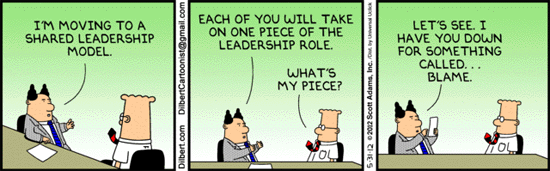
Apparently, banks have been planning for 'Grexit' for quite a while. And one thing they are worried about is that the Greeks could exact some major revenge of the banking system in the transition. Lebanon is one place that would be badly affected by a Greek collapse and The Daily Star has been following the issue:
If Greece forced an exchange rate of, say, one euro to one new drachma, this could impose huge losses on foreign banks because such a rate would not hold on the markets.
Controls on the movement of capital could be a nightmare for banks with loans in Greece, potentially making it illegal for companies to repay debt in euros.
Banks have studied several options to protect themselves as best they can, including switching to U.S. law for new derivative transactions or loans. So far few have taken such steps due to doubts about how effective they would be, and also because they are afraid to add to market concerns. "Banks are very, very reluctant to start shouting 'fire!'. They know what happens and what panic looks like," said one London-based lawyer advising financial firms.
Instead, most are simply checking the governing law of their contracts, hedging against defaults and running through every legal argument a Greek euro exit could throw up.
With such questions unanswered, stuffing cash machines with enough drachma banknotes is almost an afterthought. For Greece itself, it certainly won't pose a problem. The country's national bank has its own banknote printing press and mint and has continued to print euro banknotes ever since joining the single currency in 2001.
2. 220 year record
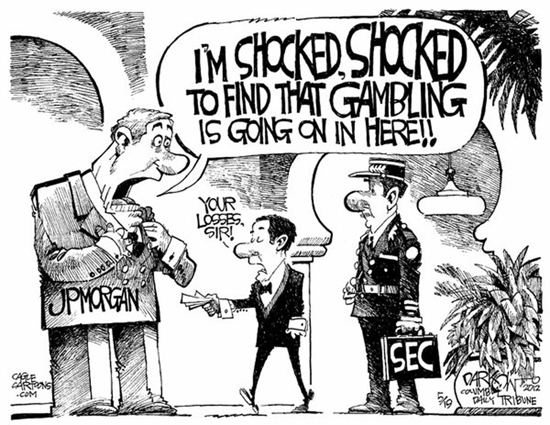
One of these days, the bond vigilantes will show up. Today was not that day though. Tomorrow's not looking good either. The chart below shows the nominal yield on 10-year US Treasury bonds the past ten+ years. Thursday's midday 1.54% yield was the lowest it's been over that period. That was also the lowest it's been the past 50 years. Actually, 100 years. No, 220 years. The lowest ever.
US Treasury Bonds
Select chart tabs
3. Bearish on Brazil
We think we know what the impact on Australia will be if Chinese growth stalls (and it looks like it is doing just that). But the impact will be even harder on Brazil. Brazil is big and a global player. It has a US2.2 trillion economy, two and a half times larger than Australia. Ruchir Sharma looks at what might happen there.
Until recently, there seemed plenty of reasons to be bullish on Brazil. Having posted record growth for a decade and weathered the financial crisis well, the country looked poised to become a global economic leader. But the would-be giant stands on feet of clay. The economy depends too much on high commodity prices, and as demand falls, so may Brazil.
4. Steve Jobs speaks; Apple squirms
Steve Jobs gave a lot of juicy quotes before he died, and Apple has failed to keep some of them out of an upcoming patent trial against Google's Motorola Mobility unit, according to a court ruling. Apple and Motorola are scheduled for a high profile patent trial in a Chicago federal court this month, one of several intellectual property cases between tech giants over smartphones and tablets using Google's Android operating system.
Apple also has said it would ask a California federal judge to keep Isaacson's book out of its upcoming patent trial against Samsung Electronics, scheduled for July.
In a separate order on Thursday, Posner forbid Apple from arguing that jurors should be predisposed to favor Apple over Motorola if they like Apple products, or admire Jobs. "I forbid Apple to insinuate to the jury that this case is a popularity contest," Posner wrote.
5. Low and stable is good
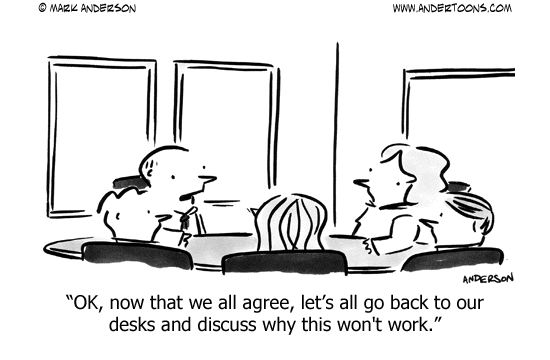
House prices are low and staying down in the US. What's not to like, asks Edward Glaeser.
I see no reason to think that this period of housing-price stagnation will be shorter than the six-year stagnation of the 1990s. I hope that housing prices continue to be modest for decades so that ordinary Americans can afford to buy, and I see little good in government policies, like the homebuyer tax credit, intended to artificially boost housing prices.
My greatest hope, however, is that prospective buyers have learned the lesson of the past decade: Housing prices go down as well as up. The right reason to buy a home is not as an investment, but as a place to live a fulfilling life.
6. One the one hand ...
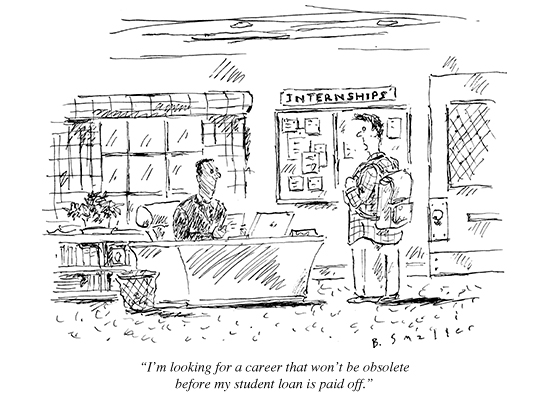
Stephen Franks is worried our lawyers are vying to become the new high priests of morality.
One of the Law Society reps gave orthodox lawyerly analysis. The other offered worthy sentiment couched as economics and legal theory. If it was either it was from schools unknown to me. I think I heard Rajan Prasad cited as an economic sage, but I must have been mistaken. And it must have been hard for the other lawyer to sit politely when the committee was told that they should over-ride freedom of contract by competent adults because "law should mimic what a perfect system would produce if everyone was acting fairly and in each other's best interests".
That is theology not law. It could only be administered by priests, with god-derived powers to know more than the parties to contracts. Perhaps that is the point. Now we have no priests there are plenty of candidates to fill their supple shoes.
7. Slipping
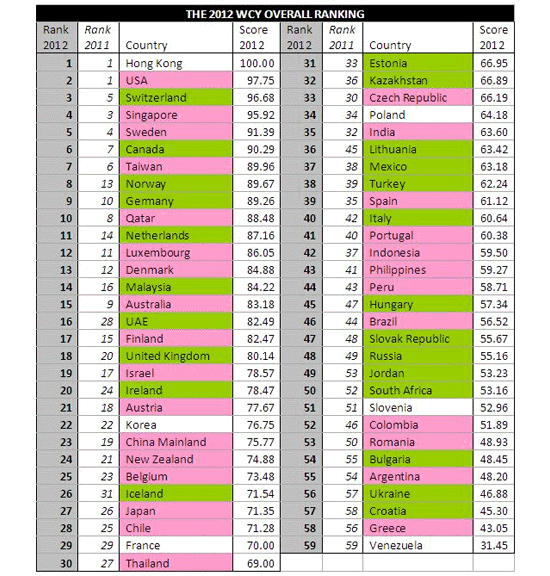
The latest measure of relative international competitiveness from the IMD has New Zealand falling from 21st to 24th - a drop of three places. Australia fell faster, from ninth to fifteenth. Improving five places is Iceland, improving four places is Ireland. Greece just pipped Venezuela for last place in the 59 nation survey.
8. The flaws of finance
James Montier is on to it. This paper is worth the time to read especially if you have a finance background. And he includes the chart below tracking UK bank leverage over a long period. Observant readers will be able to see that when leverage is allowed to rise to ridiculous levels, bad things happen to the economy - and it has happened over and over again. Not a lot of learning going on here. (HT DanH.)
The US National Rifle Association is well-known for its slogan "Guns don’t kill people; people kill people." This sentiment has a long history and echoes the words of Seneca the Younger that "A sword never kills anybody; it is a tool in the killer’s hand." I have often heard fans of financial modeling use a similar line of defence. However, one of my favourite comedians, Eddie Izzard, has a rebuttal that I find most compelling. He points out that "Guns don’t kill people; people kill people, but so do monkeys if you give them guns." This is akin to my view of financial models. Give a monkey a value at risk (VaR) model or the capital asset pricing model (CAPM) and you’ve got a potential financial disaster on your hands.
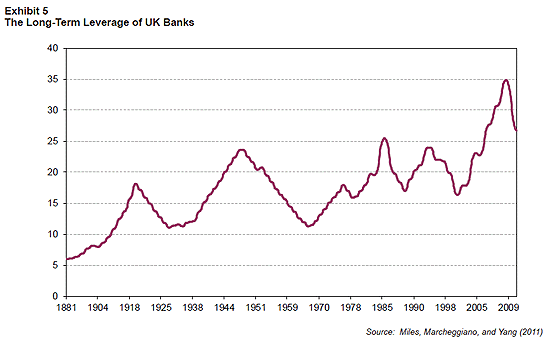
That bank leverage was allowed to get this high is just appalling in my view. In New Zealand, our banks are leveraged about 13 times and that is way more conservative than what you see in the chart. But I still reckon that 13 times is still dangerous; see my earlier opinion piece here ».
9. 'Trade'll get hit'
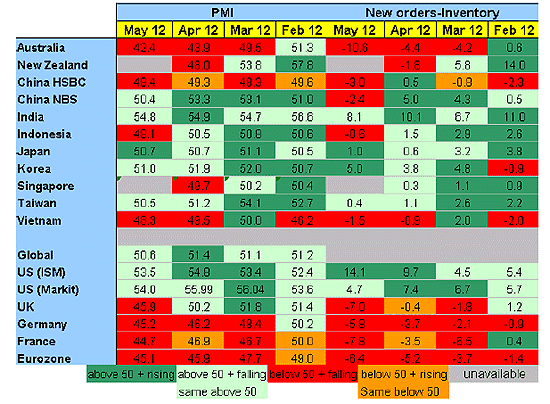
For most readers, the PMI index is a technical thing. But its relevance to New Zealand just got more important because this same index is tracking southward in most countries now. That is not a good thing. HSBC has been tracking the trends. (This opens a .pdf) (HT SelwynP)
Data is turning. Hard. The latest round of PMIs, whether from Asia or the West, provides a sobering picture. The economic impact of Europe's financial turmoil is now spreading far and wide. China, too, is slowing again rapidly after a quiet uptick earlier in the year. Two things. First, the trade cycle is about to take a hit. Globally, new export orders have started to contract for the first time since December. Second, and more encouragingly, inflation pressures are easing. The latter will help cushion local demand and may provide a bit - though not necessarily much - more room for officials to ease. Bumpy summer.
10. The last laugh
'We're all poor now'
We welcome your comments below. If you are not already registered, please register to comment
Remember we welcome robust, respectful and insightful debate. We don't welcome abusive or defamatory comments and will de-register those repeatedly making such comments. Our current comment policy is here.