

By Bernard Hickey
Finally, Auckland's Generation Rent have found someone who is actually talking about the elephant in the room of New Zealand's political economy - rampant speculative demand for housing by landlords.
Reserve Bank Deputy Governor Grant Spencer gave a speech in Rotorua this week that everyone who has ever worried or debated the thorny issue of Auckland's astonishing house prices should read.
He spelt out in the plainest language yet that rental property investors were taking advantage of the tax incentives available to leverage up with cheap debt to buy as many houses as they can get their hands on.
These investors can see that the powers-that-be have allowed or created an opportunity for extraordinary leveraged tax-free gains.
Every grown-up in town -- the banks, almost all the politicians, the land bankers and reality television show producers - are telling them to borrow against the pumped up equity in their homes to buy more rental property.
They can see net migration at record highs, strong economic growth and a shortage of 25,000 dwellings that is not being whittled away.
They can see that voters, for whatever reason, decided against a capital gains tax and limits on foreign buyers at last year's election. They can even see the Labour Opposition leader Andrew Little is going soft on the idea of taxing their capital gains and New Zealand First Leader Winston Peters has never been keen on the idea.
They've seen the median house price in Auckland rise 20.1% in the year to March, once adjusted for the skewing effects of all the million dollar-plus house sales.
They can see the Reserve Bank's hands are tied by inflation being below its 1-3% target and therefore can't put up interest rates.
They can see banks continually passing on record low interest rates in Europe and the United States to them in the form of falling fixed mortgage rates.
They can see banks ramping up competition for their business through mortgage brokers, now that BNZ has rejoined the market after a decade-long hiatus.
They know they are on the biggest investment free kick in New Zealand history. And even better, they know no one is going to stop them.
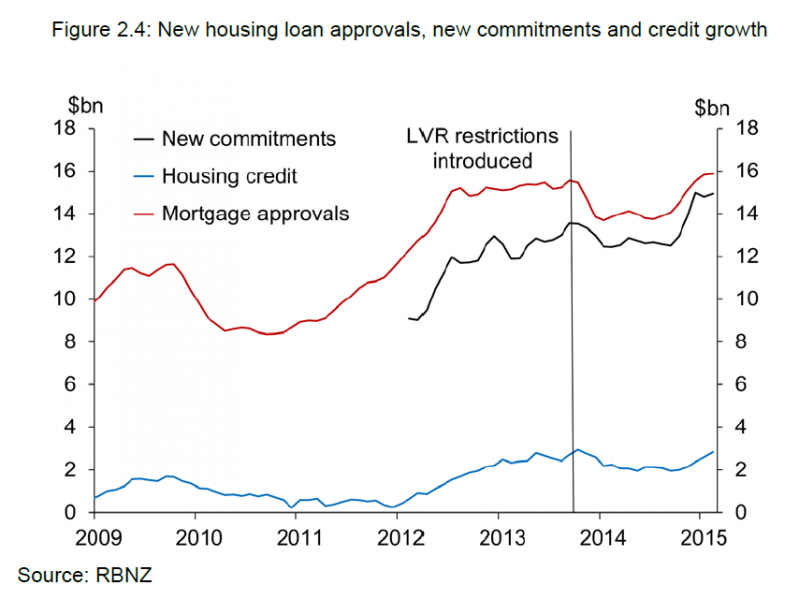
Mr Spencer pointed out in his speech that new mortgage lending was growing at an annual rate of 20%, with borrowing by landlords in Auckland the biggest and fastest contributor.
Over the last three months, more than NZ$15 billion of new mortgages were pumped into the market, with more than half of that going into Auckland.
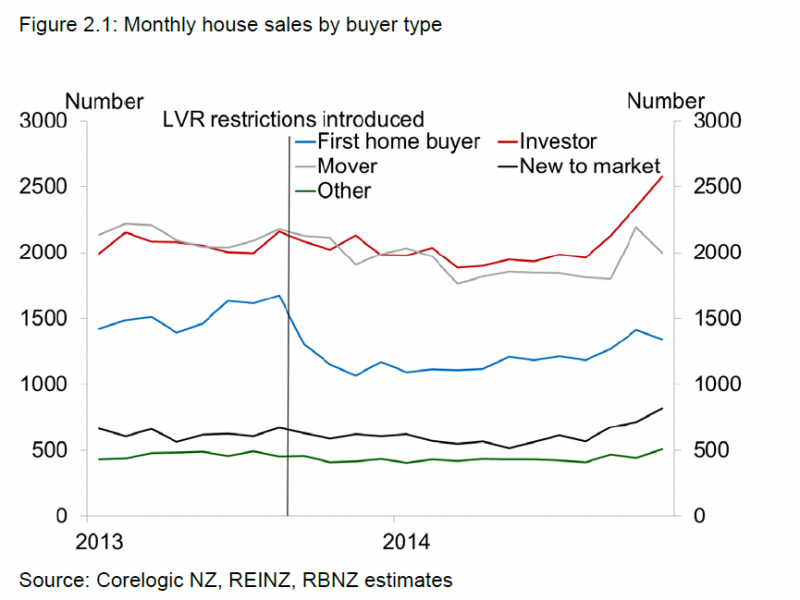
More than 2,500 houses a month are now being bought by landlords, more than any other category of buyer, including first home buyers and owner-occupiers moving from one home to the next. That's up 25% in less than a year.
The Reserve Bank has exhausted its toolkit, having put up interest rates and introduced limits on high Loan to Value Ratio (LVR) lending. It is also looking to increase capital requirements for mortgages to landlords, but it knows it's not enough.
Exasperated by yet another explosion in Auckland house prices, the Reserve Bank has asked for some 'mates' to help it control the risks to New Zealand's banking system, which relies on house values to back 60% of its loans.
Mr Spencer called for the Government to revisit the tax incentives for landlords.
"Housing is the most tax preferred form of investment, particularly when it is highly leveraged," he spelt out.
"Indicators point to an increasing presence of investors in the Auckland market and this trend is no doubt being reinforced by the expectation of high rates of return based on untaxed capital gains."
He also suggested new tax measures to encourage land bankers to put houses on undeveloped land.
The Government's response was to essentially say: 'Talk to the hand."
Housing and Construction Minister Nick Smith described the Deputy Governor's comments as vague, and repeated the Government's opposition to a Capital Gains Tax, saying other officials at the Productivity Commission were not in favour and it had not worked in Sydney and Melbourne.
"He (Spencer) has been non-specific about his tax proposals and we are not satisfied that the tax system is at the core of the problem," Mr Smith said.
The Government is now ignoring the crisis of demand and supply in Auckland by refusing to consider taxing landlords' property, refusing to slow inward migration, refusing to limit foreign buyers, refusing to build large numbers of new affordable houses itself and refusing to fund the infrastructure needed to underpin those new houses.
Generation Rent can now see the issue clearly. The Government's top economic advisor has said the tax incentives for landlords should be reduced and apartments in central Auckland should be built in defiance of the NIMBYs controlling Auckland politics.
The politicians in the Government and the Council are refusing to take that advice. Landlords are celebrating because nothing will change.
At what point does Generation Rent start using their votes to change those politicians?
----------------
A version of this article was also published in the Herald on Sunday. It is here with permission.
We welcome your comments below. If you are not already registered, please register to comment
Remember we welcome robust, respectful and insightful debate. We don't welcome abusive or defamatory comments and will de-register those repeatedly making such comments. Our current comment policy is here.