
Investors have no shortage of reasons to diversify away from the United States. America’s public debt is rising, political polarization is deepening, trade policy has become unpredictable, the rule of law is now in doubt, and financial sanctions have encouraged other governments to seek alternatives to the dollar. Yet there has been no great exodus from US markets. The dollar still accounted for 56.8% of allocated foreign-exchange reserves at the end of 2025, and was used in 89.2% of all foreign-exchange trades surveyed by the Bank for International Settlements.
These figures are usually explained by America’s economic size, legal protections, innovative companies, deep capital markets, and the network effects created by the dollar’s roles in trade, credit, payments, and reserves. But the main constraint is hiding in plain sight: Even if the world wanted to move several trillion dollars out of the US, where would the money go? The problem is not a shortage of promising economies or assets. It is that other financial systems have only so much capacity to receive a large and rapid reallocation without destabilizing themselves.
We can think of this system-wide financial absorptive capacity as a market’s ability to receive, price, hedge, and settle enormous capital flows without causing extreme movements in asset prices, yields, or exchange rates. Absorptive capacity depends not only on the volume of securities available, but also on exchanges, banks, dealers, clearinghouses, custodians, regulators, courts, auditors, lawyers, data providers, and central-bank backstops.
This distinction matters because diversification is usually considered from the viewpoint of an individual investor. A pension fund can sell US Treasuries and buy European bonds; a central bank can add gold or another currency to its reserves. Such moves are straightforward at the margin. But what happens when thousands of large institutions try to do the same thing at the same time?
Prices in destination markets would surge, yields would fall, and currencies would appreciate. High-quality bonds of suitable maturity would become scarce, hedging costs would rise, and prudential or benchmark limits would start to bind. Markets that look deep in normal times might prove shallow in the face of exceptional inflows. What is sensible for one investor might be impossible for all investors together. To assume otherwise is to commit a classic fallacy of composition.
This is where the US has a formidable advantage. In July 2026, the US Treasury market had US$31.5 trillion of securities outstanding and an average daily trading volume above $1.2 trillion. Treasuries are not merely investments but liquid stores of value, collateral, pricing benchmarks, and instruments for meeting regulatory requirements. Surrounding them is an unmatched institutional infrastructure that can price, finance, hedge, and settle huge transactions. Investors value the ability to exit quickly almost as much as the promise of repayment.
Now consider the alternatives. Europe has sophisticated institutions and vast savings, but its capital markets remain fragmented, and it lacks a common safe asset comparable in scale to US Treasuries. (That is why the EU Savings and Investments Union is not merely a program for financing European firms, but also a geopolitically important vehicle.)
Similarly, China has an enormous bond market, but capital controls, managed convertibility, state influence, and uncertainty about investor rights limit its ability to absorb global portfolios freely. And emerging markets face an even sharper tradeoff: large inflows can cause their currencies to appreciate, inflate asset prices, and undermine the returns that attracted investors in the first place.
These constraints help to explain why geopolitical multipolarity is advancing faster than financial multipolarity. Production and trade can be redirected comparatively quickly, whereas financial ecosystems are cumulative. Scale attracts issuers, investors, and intermediaries; their presence then creates liquidity, and that liquidity attracts still more activity. The dollar’s centrality is sustained not only by incumbency or confidence, but also by a constructed comparative advantage.
Still, that advantage is not an immutable law. It can be eroded by fiscal irresponsibility, attacks on institutional independence, arbitrary sanctions, recurrent market disruptions, and fears of governmental corruption. The volatility that followed US tariff announcements in April 2025 showed that investors may hedge their dollar exposure rather than reflexively run toward it. But the desire to leave and the ability to do so remain very different things.
For countries seeking a more multipolar financial order, the policy lesson is clear. Alternative payment systems or reserve currencies are not enough. Europe needs deeper integration, more common issuance, and harmonized supervision and insolvency rules. Emerging economies must build local-currency yield curves, derivatives, clearing and settlement infrastructure, and a larger supply of standardized assets. Multilateral development banks can help aggregate projects—including green industrial, infrastructure, and natural-capital investments—into instruments that global institutions can actually buy at scale.
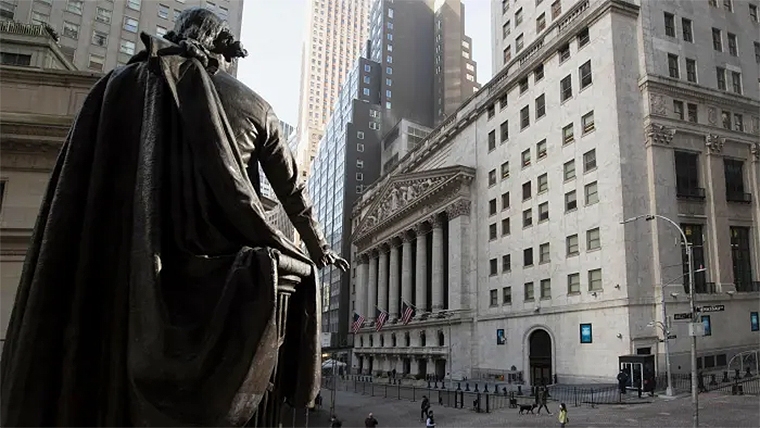
Wall Street’s power ultimately rests on a form of productive capacity: the ability to transform an immense volume of global savings into liquid, tradable, and hedgeable claims. A genuinely multipolar financial system cannot simply be proclaimed: Until rival markets can perform these functions at comparable scale, the world may want to leave Wall Street faster than it is able to do so.
Jorge Arbache, Professor of Economics at the University of Brasília, is a former deputy minister and chief economist at Brazil’s Ministry of Planning, vice president for the private sector at the Development Bank of Latin America and the Caribbean, board member at BNDES, and senior economist at the World Bank. Copyright: Project Syndicate, 2026, and published here with permission.
We welcome your comments below. If you are not already registered, please register to comment
Remember we welcome robust, respectful and insightful debate. We don't welcome abusive or defamatory comments and will de-register those repeatedly making such comments. Our current comment policy is here.