
sign up log in
Want to go ad-free? Find out how, here.

Jim O'Neill see a growing need for international coordination to address growing global imbalances

Bonds / opinion
Jim O'Neill see a growing need for international coordination to address growing global imbalances
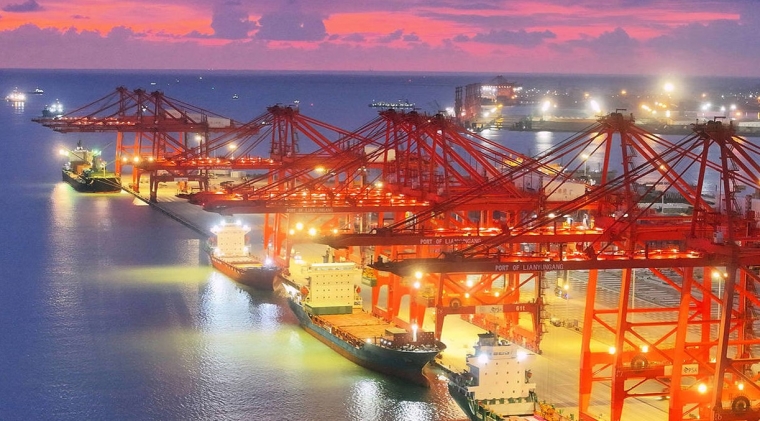
loading container ship

In keeping with the adage that history never repeats itself but often rhymes, I suspect that we could soon see developments in international macroeconomic policy for which there are clear precedents. As with the Plaza Accord in 1985, when the United States and four of its major trading partners agreed to coordinate policies to weaken the US dollar, a new agreement to address today’s global imbalances has become increasingly necessary.

The reason can be found in China’s trade data for August, which shows a whopping 25% year-on-year rise in exports, up from the 23.9% increase recorded in July. Despite similarly strong import growth (from a smaller base), China has delivered another huge monthly trade surplus, this time totaling $119.1 billion. So much for the idea that globalization has peaked.

Like other major trading powers, China’s trade has been dominated by rapid growth in AI-related products. But many of its other exports have also continued to grow. There has even been a 34.3% year-on-year increase in exports to the US, though this partly reflects the low base from last year’s trade war. And even before that, all the rhetoric and punditry about deglobalization missed what was really going on. China has been boosting its exports to many other parts of the world, and many of these importers are in turn exporting more to the US. That is why there has been so little change in global trade imbalances.

China’s still-weakening domestic demand means that its imports are not growing on the same scale as its exports (in monetary terms). As a result, its trade and current-account surpluses are rising sharply—quite a feat for a $20 trillion economy. But while many see China’s export performance as a sign of its industrial prowess, it should be ringing alarm bells in Beijing. If Chinese policymakers are happy about the situation, that is only because stronger exports could allow them to hit their annual GDP target. But they should be careful what they wish for, because such large imbalances cannot be sustained indefinitely.

The recent figures also pour cold water on the idea that tariffs can influence trade balances. A country’s external trade and current-account balances mirror its capital account, and both are quantitative reflections of the country’s balance of savings relative to investment. If you have a shortage of savings, as the US does, you will need more capital from overseas, and this will show up as a current-account deficit. But if you have high domestic savings and weakening consumer confidence, as China does, the result will be even stronger exports.

Moreover, recent monthly data suggest that domestic economic activity in China is weakening—a trend that shows up more clearly in the data on retail sales and second-quarter GDP. Of course, this weakening owes something to China’s soft property market, where policymakers allowed a massive bubble to form before bursting it in 2021. They arguably deserve some credit for preventing a wholesale financial collapse of the kind we saw in the US in 2008, and in Japan in the late 1980s.

The upshot, however, is that many previously aspirational Chinese families no longer have as much confidence in the future. They have lost the optimism that drives social mobility, and this change comes on top of the already high savings rate among rural-born Chinese who cannot count on a strong social safety net.

Meanwhile, China’s annualized real (inflation-adjusted) GDP growth rate slowed to 4.3% in the second quarter (down from 5% in January–March). Unless there is a trend reversal, the government’s chances of hitting its 4.5–5% target for 2026 look slim. Unless domestic demand picks up, improving the GDP figure will require even stronger growth in exports.

After accounting for the August trade figures, China’s year-to-date cumulative surplus is now around $805 billion, and there is a good chance that it will exceed last year’s massive $1.2 trillion surplus (around 6% of GDP). Such a massive imbalance is in no one’s long-term interest, including China’s. Even countries that have enjoyed the benefits of dramatically increased trade with China—from Germany and Mexico to many others—now find themselves on a one-way street. As China’s exports have grown, their own exports to China have slowed in line with the softening in Chinese domestic demand.

Finally, all of this is happening at a time when the Chinese renminbi appears to be around 20% undervalued (if not more) on a trade-weighted basis. A stronger currency would make Chinese consumers feel richer, perhaps leading them to spend, and therefore import, more. And if accompanied by a serious fiscal stimulus, a properly valued renminbi could even put China back on the path toward doubling its GDP per capita by 2035 (from 2020 levels).

As the host of the G20 in 2027, could the United Kingdom help orchestrate a new monetary accord? If so, it will have provided a sorely needed corrective to an increasingly imbalanced global economy.


Jim O’Neill is a former UK Treasury minister and a former chairman of Goldman Sachs Asset Management. Copyright: Project Syndicate, 2026. www.project-syndicate.org

We welcome your comments below. If you are not already registered, please register to comment

Remember we welcome robust, respectful and insightful debate. We don't welcome abusive or defamatory comments and will de-register those repeatedly making such comments. Our current comment policy is here.

7 Comments

This is a terrible take. A China-specific Plaza Accord is not in China’s interests because it would front-load the costs of adjustment onto China and expose it to political leverage from rival powers. A Chinese-led adjustment - gradual currency flexibility paired with stronger household income, pensions and health coverage, less precautionary saving, and more consumption - could be in China’s long-run interests.

As we saw with the Plaza Accord, it was not necessarily in Japan's interests. In fact you could argue it was devastating. 

Up
0

I agree that a Chinese led adjustment is the better way to go. The fact that Western economies can't compete on price with China for many products is our problem and a good proportion of adjustments needed are therefore ours, either by incomes lowering or by improved efficiencies so as to maintain our standard of living because isn't this a free market Capitalist thing to do?

Up
1

The way I see it is that the likes of Japan and Germany had to buckle to the U.S. given WWII shaped the bargaining environment, not that it created a legal obligation to obey Washington. The postwar order increased US leverage, particularly over Japan, but the most immediate mechanism was the credible threat that US domestic politics could turn protectionist.

Countries like China and Vietnam are expected to adhere to U.S. / Western hegemony on global monetary and trading systems. They are sovereign states, and both operate managed exchange-rate systems that reflect domestic goals - growth, inflation control, financial stability, export competitiveness, and reserve management.

Up
1

Gradualism is not going to happen

Up
0

The Question Jim O’Neill Forgot to Ask

The article is a remarkable example of the Western establishment identifying the symptom whilst it steadfastly ignores the disease.

He acknowledges China’s extraordinary savings, investment and trade surpluses, but then asks how the world should persuade China to “rebalance”, rather than confronting the far more important question:

Why has China accumulated such an enormous pool of domestic capital and become one of the world’s great creditor nations in the first place?

The answer begins with something the Western establishment seems remarkably reluctant to discuss - the ownership and purpose of the monetary system itself.

China’s banking system is overwhelmingly organised as a public utility, rather than simply as a mechanism for maximising private financial rents. 

Credit creation and allocation are consequently much more closely integrated with national economic development. And banking is not an isolated example. China has retained substantial public ownership and control across many of the strategic utilities and infrastructure systems upon which the economy depends.

That is the polar opposite of the Western neoliberal model.

The West has systematically privatised essential economic functions and transferred them into increasingly concentrated, rent-extracting private monopolies and oligopolies -  precisely the areas where society cannot realistically do without the service.

The consequences are profound.

China has tended to treat essential economic infrastructure as something to build and utilise for the benefit of the wider economy. The West has increasingly treated it as something from which private capital can extract rents.

That difference matters enormously in the financial system.

A banking system operating primarily as a public economic utility can direct credit towards productive activity, infrastructure and strategic development rather than allowing a huge proportion of the economic return from money and credit creation to become private financial income.

Combine that with China’s extraordinary savings culture and you get a powerful virtuous circle - saving creates capital - capital finances production - production generates income - income generates further savings - and those savings finance still more productive investment.

China then used that accumulated credit-based capital to build ports, railways, power generation, telecommunications, logistics networks, industrial capacity and manufacturing infrastructure on a scale without precedent.

China didn't simply accumulate financial wealth. It converted savings and credit into productive capacity.

And that productive capacity is a major reason China has become such a formidable creditor and trading nation.

Meanwhile, the Western model increasingly converted credit into consumption, financial assets, debt servicing and rent extraction, while Washington consumed extraordinary resources maintaining its global military apparatus and fighting successive wars. The post-9/11 military commitments alone have cost the United States trillions.

So perhaps the question isn't how to force China to reduce its surplus.

Perhaps the real question are...

(i) Why did China invest in the productive sector, infrastructure, and sustainable societal wealth, while the West financialised. 

(ii) Why did China retain public control over so much of the infrastructure required to support its economy, while the West increasingly privatised essential utilities and turned them into rent-extracting monopolies?

(iii) Why did China use its financial system to build productive capacity, while the West allowed its financial system to become increasingly dominated by the extraction of rents from an ever-expanding mountain of debt?

Those are just some of the  inconvenient question O’Neill avoids.

The West increasingly created financial claims on future production. China increasingly created the productive capacity needed to generate that production. And now the consequences are becoming impossible to ignore.

China's enormous savings, creditor position and net international asset position did not appear by magic. They are the accumulated consequence of saving, productive credit allocation, public infrastructure, strategic investment and the building of real economic capacity.

As the West's bond markets begin to implode, and by extension the entire fiat currency experiment, shouldn't we be studying other models rather than demanding that China change its behaviour?

China isn't the problem that needs fixing - the broken Western-centric, neoliberal, private monopoly, debt-based model is.

Up
3

Covering all the bases there

Up
3

Can people encourage globalization and then complain when countries with a cheaper manufacturing base are operating better than you?  I doubt western owned companies which offshored manufacturing to China to maximise their profits were overly concerned about trade imbalances. That started in the 1980’s and China’s economic development has only increased leading to these complaints by apparent western financial luminaries.

Up
1