
By Kenneth Rogoff*
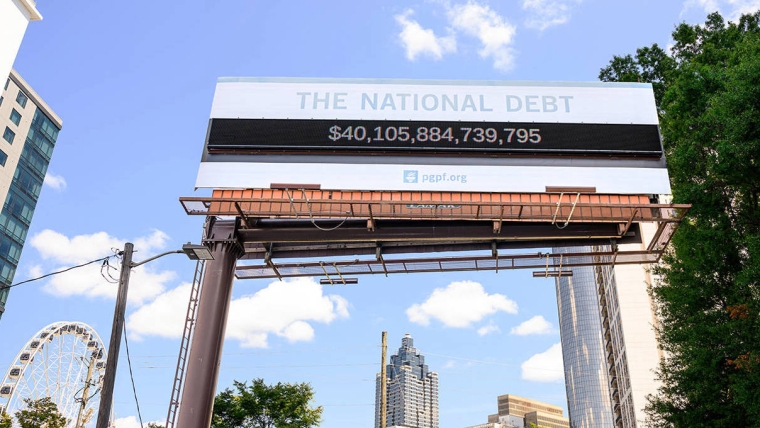
America’s fiscal position is increasingly looking like a train hurtling along a twisting mountain track. No one seems willing to slow down for fear of falling behind schedule and losing their job. Even if the train doesn’t crash, it is worth asking: Why keep pushing it? Despite solid growth, the federal deficit is about 6% of GDP. Yet the option of slowing down does not appear to be in President Donald Trump’s playbook.
The start of a public-debt crisis is usually pretty straightforward. The end is much harder to predict. A crisis can erupt when a country’s debt is historically high but has remained manageable thanks to low interest rates. Then, for whatever reason, rates begin to rise. It might be because of global forces, a change of government, or simply because memories of previous financial crises have faded.
This is roughly where the United States finds itself today. Rising borrowing costs would be less of a problem if the government had locked in cheap long-term financing, but it didn’t. Most homeowners, by contrast, did. They are still enjoying low monthly payments even though rates on new mortgages have soared above 7%.
As a result, US interest payments have gone from being something of a nuisance to the second-largest item in the federal budget in just six years, and they are bound to become the largest before long. As high interest rates add to the deficit, the government has three choices. It can raise taxes, cut spending, or borrow more. For the most part, the US government has chosen borrowing.
If the US is lucky, the market will remain reasonably forgiving and assume the government will eventually get its debt problem under control. Unfortunately, bond investors are growing wary of the global debt glut. It is a fair bet that, at some point, the government will respond with modest deficit reductions and hope that buys it time. That strategy often works, but after many years of this, the market may need to see more.
So far, the Trump administration has preferred to remind everyone how great the economy is, or at least how great the stock market thinks the economy is. Treasury Secretary Scott Bessent has leaned heavily on faster growth as the answer to America’s fiscal problems. Trump, for his part, seems to have little interest in dealing with the deficit, judging by his promise to give every American a $5,000 “dividend” if Republicans maintain control of Congress in the upcoming midterm elections.
Bessent might be right that US growth will exceed expectations. But as I have argued before, there are good reasons to think that even if growth remains robust, the extra tax revenues from AI will be disappointing.
The US is nowhere near a debt crisis, but what would it take to trigger one? For starters, interest rates would have to keep rising. That is not hard to imagine. If the Iran war drags on, and political dysfunction worsens, the ten-year Treasury could rise by another percentage point, pushing the federal deficit higher. And if the government still fails to respond, things could start to snowball. Eventually, its choices could narrow to some combination of high inflation, financial repression, default, or austerity. Even a serious scare would limit how aggressively policymakers could respond to future recessions and financial crises. High debt could also weigh on growth, as it has in other advanced economies.
How bad things get will depend above all on whether the administration can regain bondholders’ confidence without paying an enormous political price. The trouble is that debt crises tend to erupt precisely when governments are already stretched thin, both economically and politically.
The US has the resources to deal with its fiscal issues. What it lacks is the political appetite to make the necessary painful choices. And that may not change until a debt crisis forces voters to rethink their priorities. On its current trajectory, however, the country has no room for anything to go wrong, whether it’s a war, an environmental catastrophe, or a large-scale cyberattack requiring a massive increase in government spending.
Most advanced economies face some version of the same debt problem, without the benefit of issuing the world’s reserve currency. The United Kingdom is particularly exposed. Unlike debt-challenged France, it cannot fall back on economically stronger Germany. Canada is in much better shape, which is good, because who knows what the Trump administration might ask for in return if Canada sought financial help. As for the US, it has no one to turn to, except perhaps the International Monetary Fund—and even then, mostly for moral support.
*Kenneth Rogoff, a former chief economist of the International Monetary Fund, is Professor of Economics and Public Policy at Harvard University and the recipient of the 2011 Deutsche Bank Prize in Financial Economics. He is the co-author (with Carmen M. Reinhart) of This Time is Different: Eight Centuries of Financial Folly (Princeton University Press, 2011) and the author of Our Dollar, Your Problem (Yale University Press, 2025). Copyright: Project Syndicate, 2026. www.project-syndicate.org
We welcome your comments below. If you are not already registered, please register to comment
Remember we welcome robust, respectful and insightful debate. We don't welcome abusive or defamatory comments and will de-register those repeatedly making such comments. Our current comment policy is here.