
The Commerce Commission has found the retail fuel market “is not as competitive as it could be” as New Zealand lacks an active wholesale market.
Releasing the draft findings of the market study the Government asked it to do in December 2018, the Commission said the $10 billion households and businesses pay at the pump every year is more than it should be.
“Our preliminary findings suggest that many fuel companies are earning returns on investment that are higher than what we would consider a reasonable return to be. In our view, the problem is the lack of an active wholesale market in New Zealand,” it explained.
“Z Energy, BP and Mobil (the majors) currently have a series of infrastructure sharing arrangements that date back to before the fuel market was deregulated in 1988. This includes allocated use of the Marsden oil refinery, a fuel pipeline to Auckland and a coastal shipping operation, with supporting logistics, which transports refined fuel to a network of storage terminals at regional ports.
“These same firms use this joint network to supply 90% of the nation’s petrol and diesel, either through their own branded service stations or via other distributors or resellers on exclusive long-term wholesale supply contracts.
“Without access to the majors’ shared network or the wholesale market, any new importer faces the challenge of establishing its own stand-alone supply chain, at considerable expense. The alternative is to convince existing distributors to switch from a major to their supply.
“The majors’ joint network gives them a significant advantage over any other potential rival importers, as their costs to deliver fuel are lower. They also have long-term supply relationships with their resellers, most of whom have only ever had the same supplier, which has made it very difficult for competitors to enter or compete more vigorously in the market.
“Not only have other fuel importers been unable to access the wholesale market, but the majors themselves have limited incentive to compete with each other during the terms of their supply contracts. As a result, competitive pressure does not appear to be driving down wholesale prices in New Zealand.
“This then flows through to retail pricing where competition is inconsistent and often constrained by the wholesale price resellers pay the majors that supply them. While Gull has had a positive impact in reducing prices for consumers in areas it operates, it is also incentivised to maximise its own profits and can do so with little threat of further competition driving prices down…
“Fuel purchased at service stations and truck stops accounts for about 98% of the petrol and 73% of the diesel consumed in New Zealand, at an annual cost of more than $10 billion.”
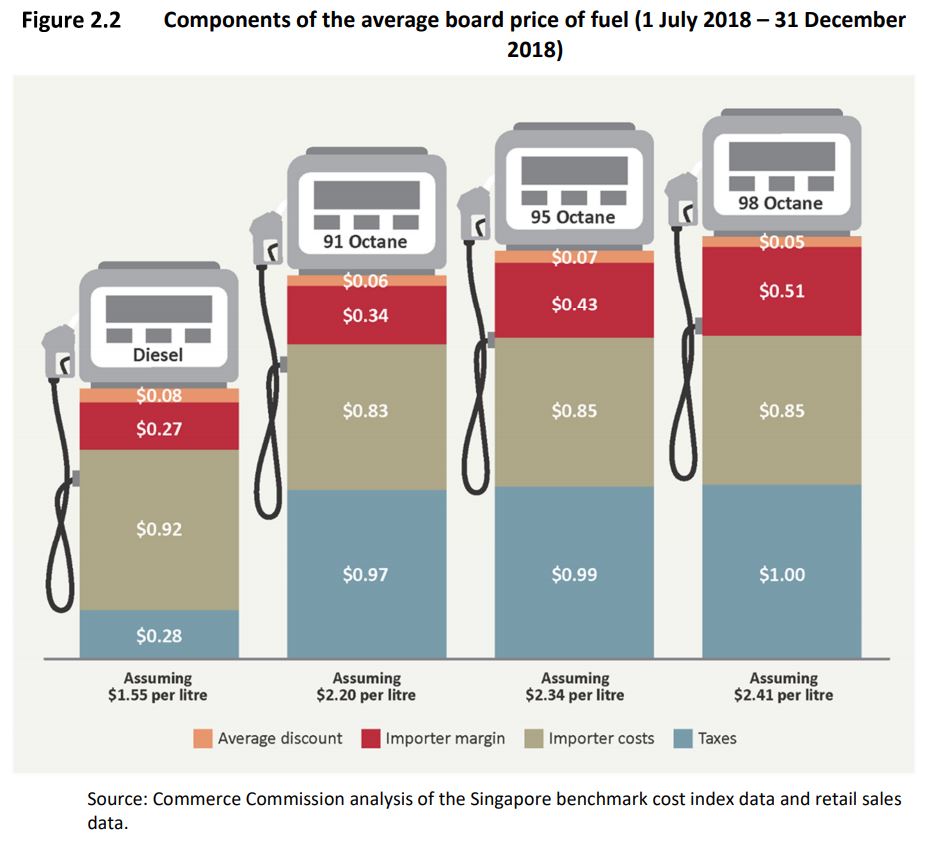
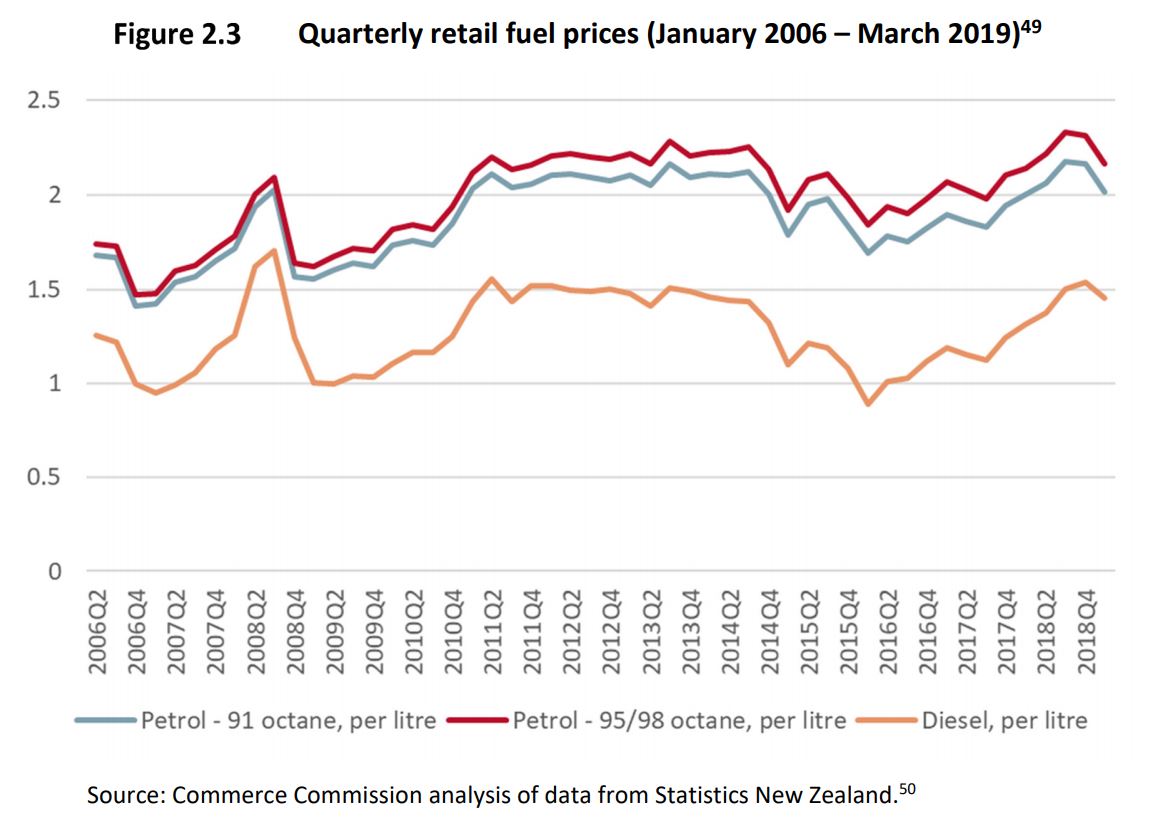
The Commission said signs of a lack of competition in the sector included the fact many fuel companies are highly profitable, there are regional differences in fuel prices, premium petrol margins have grown faster than regular petrol and discount doesn’t provide a substitute for competition on board prices.
It believed competition in the wholesale market could be improved by:
- Greater contractual freedom to make it easier for resellers to switch between suppliers; and
- Enabling wider participation in the majors’ joint infrastructure, notably the shared terminals and supporting logistics involved in their borrow-and-loan system.
It also discussed other options in the report like improving the transparency of premium petrol prices.
“The options we are considering in the wholesale market are not quick fixes, but may help to open up the market and improve competition over time,” said Commission Chair Anna Rawlings.
“We particularly want to test their feasibility with fuel companies and other experts, and gauge whether there may be other options that could help competition.”
The Commission’s draft report is open for public consultation until September 13.
It will publish a final report in early December.
We welcome your comments below. If you are not already registered, please register to comment
Remember we welcome robust, respectful and insightful debate. We don't welcome abusive or defamatory comments and will de-register those repeatedly making such comments. Our current comment policy is here.