
By David Mahon*
Extreme straightness is as bad as crookedness.
Extreme cleverness is as bad as folly.
Lao Zi, 5th century BCE
After the shock of Wuhan, China closed its borders in early 2020, locked down COVID infected areas, and tested, tracked and traced domestic travellers. For two years China has been largely COVID free, demonstrating the effectiveness of its zero-tolerance policy which probably saved hundreds of thousands of lives and enabled continued strong economic growth. As of 1 April, over 1.2 billion people have received two vaccinations and a majority have had three.
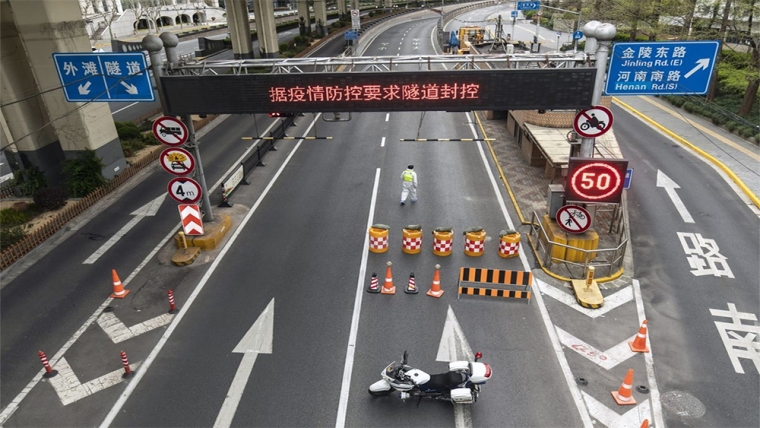
The Omicron variant is now challenging that strategy and many residents of Shanghai, the centre of China’s most recent and severe outbreak, are claiming that Beijing’s prevention and containment measures are deadlier that the disease. Residents are frustrated and angry after being locked down for weeks, facing shortages of food and medicines. Many with acute COVID-unrelated illnesses have died, as hospitals are ostensibly closed to all but COVID cases.
The city is trying to feed everyone, but they were not prepared. Most people in our compound have reasonable food supplies as we buy in bulk. There have been no Omicron cases in our buildings, but they keep testing us. Evidently over 90% of those who have tested positive for COVID in Shanghai were asymptomatic, and they still isolate people. They should focus on vaccinating old people rather than constantly testing just to create data for Beijing: Chinese CEO of a multinational company
In Shanghai in March, children were separated from parents who had tested positive for Omicron and placed in vast quarantines centres. This policy has since been reversed following a public outcry. The city has essentially been sealed off from the rest of China since mid-March, disrupting the movement of essential supplies, while truck drivers struggle to transport goods from Shanghai’s port, the world’s largest, to neighbouring provinces. This is already having serious economic consequences.
While many of Shanghai’s nearly 30 million citizens are relatively affluent and managing to secure food and other essentials, tens of thousands of unskilled migrant workers are struggling to eat.
There are five of us in a two-room apartment. Our door was sealed three days ago as someone tested positive at the factory. We work 12 hours a day, seven days a week, but we have no spare money to stock up on food as the cost of living is so high. We have 10 packets of instant noodles, some dried fish and pickled vegetables left, and we have just been told we will be stuck in here for another two weeks: Shanghai migrant worker
Conquering nature
For thousands of years, Chinese rulers believed they could manage nature and demonstrate their personal power through ambitious engineering projects and social campaigns. In 1958, the government launched the ‘Four Pests Campaign’ to rid China of sparrows, which it claimed were consuming precious grain. They killed a billion birds. Freed of natural predators, plagues of locusts and other insects devastated crops across China, causing millions of peasants to starve. The Grand Canal, the Great Wall, and in modern times, the Three Gorges Dam, are examples of how China has successfully tamed nature. Recent scientific evidence and global experience seem to demonstrate that the spread of the Omicron strain cannot be controlled. Beijing cannot be deaf to this information.
China nevertheless has no choice but to try to mitigate Omicron’s effects by slowing its spread as best it can, and in doing so, lower infection peaks to avoid overwhelming hospitals. As of the end of March, 56 million people over 65 years old remained unvaccinated. It is not that they are ardent anti-vaxxers, but they are sceptical, having seen bungled public health drives and the side-effects of poor-quality drugs in their youth. Ideas of societies winning or losing in battles with COVID have become fuelled with nationalism in many countries, a sentiment from which China is not immune.
Economic impact
The Shanghai Government initially responded too slowly to the emergence of Omicron in China. Shenzhen, with a population of 12.5 million, locked down for a week at the same time as the Shanghai outbreak. With widespread testing, isolating the infected, and the city’s high vaccination rate, cases dropped swiftly and now Shenzhen is almost back to normal. China will have to live with Omicron eventually, but it is a matter of timing that accommodation as best it can and increasing vaccination rates among the elderly. Beijing, like many cities across China, is taking precautions by cutting all but essential travel into the city and sealing off whole apartment complexes for two weeks of testing, even if only one person tests positive.
COVID has revealed people’s capacity for unity under pressure. Legions of volunteers work long hours delivering food in Shanghai, and neighbours who barely knew each other two months ago are sharing resources.
Beijing should be fine. The government seems to know what it is doing, and we assume it is learning from Shanghai’s mistakes. But it often exaggerated the risks of earlier strains of COVID to make sure we followed the rules, so it is hard for it to change now: Beijing finance manager
Beijing has put public health before economic interests in pursuing a zero-COVID policy, but many officials have striven slavishly to meet obligations to be the letter of the law, without consideration of its consequences, and fearing censure or dismissal if they erred. This obedience without discernment has caused unnecessary human suffering and economic damage.
Shanghai’s crisis will not, as some observers dizzy with schadenfreude predict, destabilise the Chinese Communist Party, and neither will it drive China into economic recession. The government has lost some credibility regarding the execution of its recent COVID policies, but few doubt the motives behind them.
A function of social media is for people to express their frustrations. Some of the humour is great, but what angers me is that even when sensible information is posted, if it is critical of the policy and talks about people not coping, it is pulled down by the government in minutes. We respect what they are trying to do managing the crisis, but they can’t assume we are stupid. As long as the government is not transparent with us, they must expect we will fear the worst and lose faith in them: Chinese multinational CEO
The government will sustain economic growth this year by stimulating the advanced technology sector and investing in public works, power generation and distribution, and social infrastructure. It has already lowered bank reserve ratios by 25 basis points (bps) and relaxed household mortgage lending rates by 20 bps to as many as 60 bps. The export sector offered an unexpected boost, increasing 16% January and February, and 14% in March. China can still achieve between a 4.5% and 5% GDP growth rate in 2022.
While this will mitigate some of the damage from disruption to domestic supply and consumption, it cannot mask the considerable economic and employment losses, particularly regarding private SMEs and the general service sector. When migrant workers lose jobs in large cities they invariably return to their villages, where due to their rural status, they have the right to farm land and are not therefore recorded as unemployed. Most have never farmed, so are in fact unemployed. China needs to deepen its poverty alleviation work, both rural and urban, where the working poor are often most vulnerable.
Post Omicron, and with the assumption that no more deadly COVID strains emerge, China’s recovery will stabilise, and the economy will be less dependent on government stimulus in the last quarter of this year.
Risks
If the US extends Russian sanctions to China, the global economy risks more than it has from COVID. China’s trade with Russia fell markedly in the last two months, yet the US will do what it can to accuse Beijing of supporting Russia as part of its strategy to contain China. China’s refusal to condemn Russia’s invasion of Ukraine, while seeming amoral to many, is logical within Beijing’s understanding of its interests. As long as the US is focused on Russia, it is not increasing pressure on China. China believes, rightly, that simply condemning Russia will not compel it to end its invasion. Beijing is also reluctant to help the US expand its already considerable influence in Europe, for it knows that once the Ukraine crisis abates, Washington and NATO will focus on China with even greater vigour. China had a good relationship with Ukraine and wants peace and has offered to facilitate talks. China seldom arbitrates, rather creating forums for belligerents to talk to each other, thereby avoiding criticism if talks fail.
Continued hostilities in Ukraine will damage the global economy severely. China is struggling with inflated grain and energy prices, but it is doing better in general than its two largest trading partners, the EU and the US. Its combined first quarter net trade income with them was USD 165 billion.
China’s challenge is not just economic but how it as a nation can lower its internet restrictions and screens of propaganda to allow its people more of a voice, and to enable itself to be better understood by the world. China cannot allow itself to be cast as a part of an ‘arc of autocracy.’ China is not Russia’s ally but a tacit, temporary partner of circumstance. Many in Asia do not view Russia’s invasion of Ukraine as the barbaric act of an alien culture, but that of a Western culture, the actions of which are contiguous with the recent, doomed colonial adventures of other Western nations in the Middle East. It is another indicator of Western decline.
The global economy needs China to be an engine of prosperity and facilitator of stability, while accepting the obligations those roles bring. China has no intention of allowing itself to be isolated as a pariah, as some of its Western competitors mistakenly believe. Its interests are too dependent on being a part of the global economy, where it plays an irreplaceable role.
*David Mahon is the Executive Chairman of Beijing-based Mahon China Investment Management Limited, which was founded in 1985.
We welcome your comments below. If you are not already registered, please register to comment
Remember we welcome robust, respectful and insightful debate. We don't welcome abusive or defamatory comments and will de-register those repeatedly making such comments. Our current comment policy is here.