

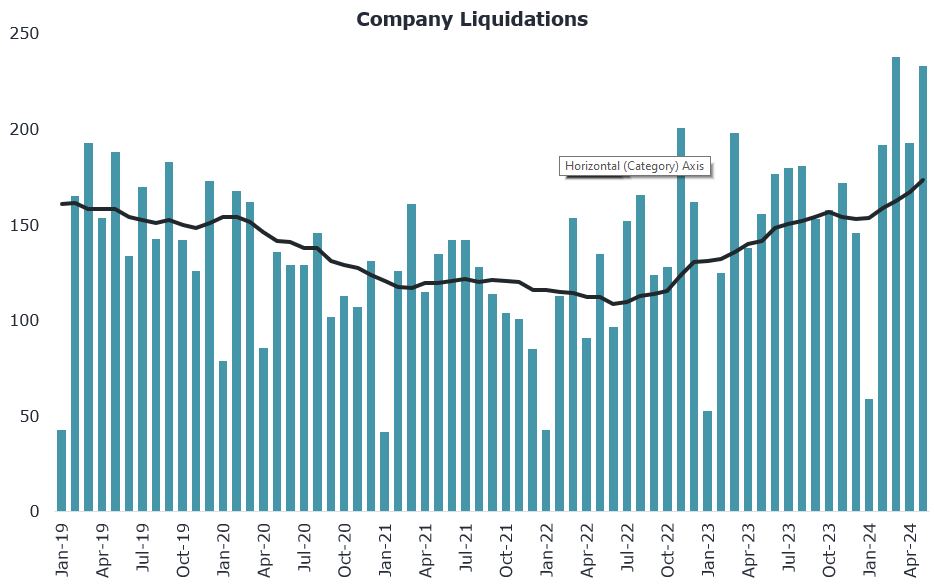
Company liquidations are on the rise, hitting the highest level for a May month in 10 years, according to credit bureau Centrix.
Centrix managing director Keith McLaughlin said in the company's latest monthly Credit Indicator that all sectors have seen liquidations rise with retail trade companies experiencing the largest increase annually, followed by the property/rental and transportation sectors.
In May there were 233 company liquidations around the country, which was up some 49% on the 156 in May 2023.
Looking at the rolling 12-month average, the May figure was up some 22% on the same time a year earlier.
While construction and property companies continued to be the most sizeable contributors to the liquidation numbers - making up collectively nearly 40% of the total, retail trade numbers rose quickly in May.
"Over the last 12 months, retail liquidations have increased by 44% compared to the previous year, with food retailers experiencing the highest volume of liquidations. There were 14 retail companies placed into liquidation in May 2024, the highest monthly since August 2023," McLaughlin said.
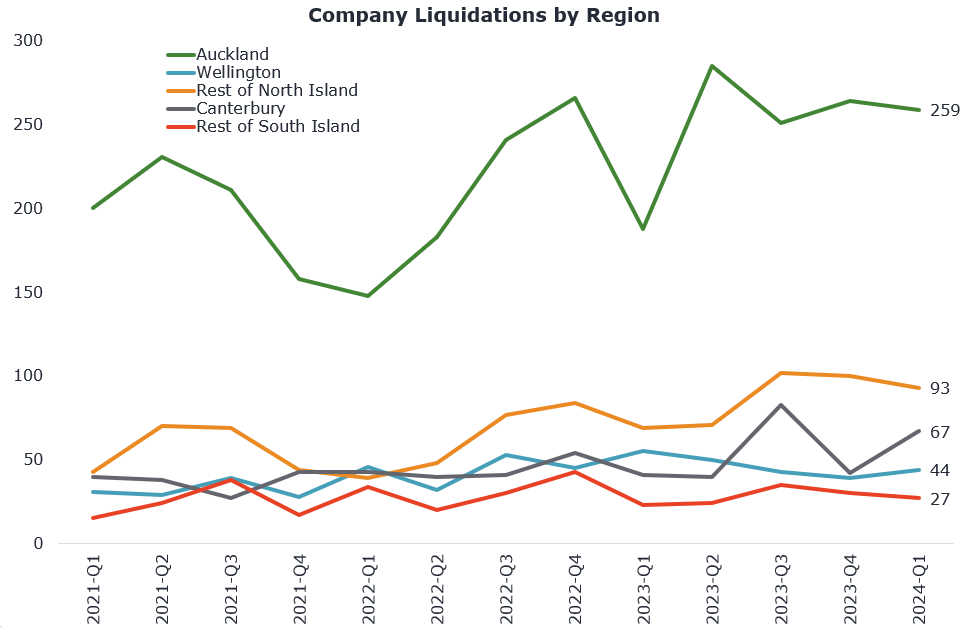
While Centrix has an increase in overall liquidations "across the country", there was "a significant increase" in the rate of South Island companies going into liquidation over the first quarter of 2024 when compared to the same period in 2023, he said.
Over the first quarter of 2024, there were 94 company liquidations in the South Island – up 47% year-on-year and largely driven by the Canterbury region.
There were 259 liquidations in Auckland over the same period (+38% year-on-year) and 137 liquidations across the rest of the North Island (+10% year-on-year).
In April Centrix reported March saw the highest number of monthly business liquidations in nine years with construction companies leading the way, with 238 liquidations the most for any month since 299 in March 2015.
"The challenging economic climate continues to persist," McLaughlin said.
"For example, we saw consumer arrears climb last month– largely driven by telco and mortgage repayments – as pressure from the cost-of-living crisis endures.
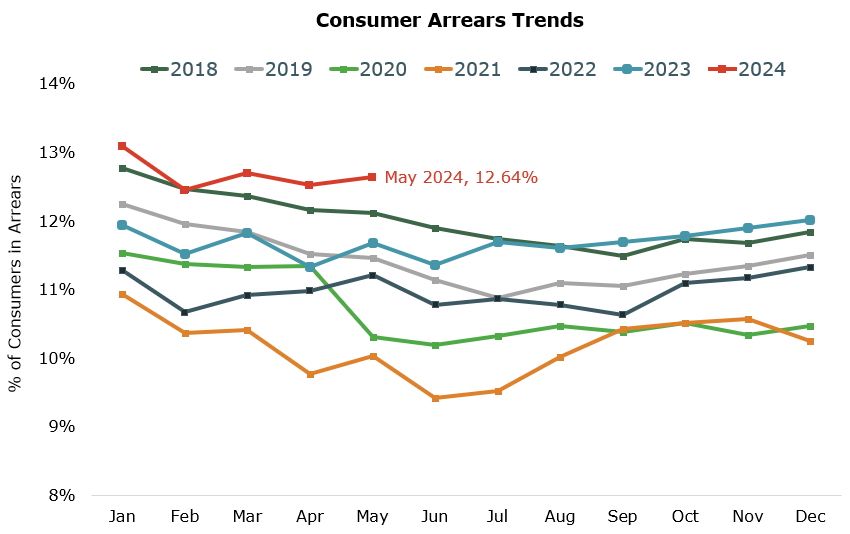
The number of consumers falling behind on payments increased by 16,000 in May, with arrears tracking 8.2% higher year-on-year.
Percentage wise, the number of consumers reported in arrears in May rose to 12.64% of the credit active population (up from 12.52% in the month prior), which translates to 474,000 people behind on payments (compared to 458,000 in April).
Of those in arrears, 173,000 consumers are currently 30+ days past due, and 114,000 are at 60+ days in arrears.
"Encouragingly the number of people with non-performing loans (90+ days behind on their payments) has fallen to 90,000, unchanged year-on-year," McLaughlin said.
Business credit defaults have also risen year-on-year, which further points to the overarching economic tension being experienced across the country as weaker consumer demand flows through to impacting businesses, McLaughlin said.
He said mortgage arrears rose slightly in May, with 22,000 home loans now past due - up 12% year-on-year and a return to 2019 pre-pandemic levels. On the other hand, vehicle loan arrears dropped to 5.5% in May (compared to 5.7% in 2023), while credit card arrears fell to 4.7% in May and remain below historical levels.
"There’s plenty of uncertainty about the future, with many anticipating the challenging conditions to persist well into 2025," McLaughlin said.
"For anyone who is feeling the pinch, it’s important to seek advice early to help get through without impacting their future financial wellbeing," he said.
We welcome your comments below. If you are not already registered, please register to comment
Remember we welcome robust, respectful and insightful debate. We don't welcome abusive or defamatory comments and will de-register those repeatedly making such comments. Our current comment policy is here.