
This is a re-post of an article originally published on pundit.co.nz. It is here with permission. This column focuses only on the business activities of Ron Brierley.
Ron Brierley’s main impact in New Zealand was in the 1970s and early 1980s, which was a strange time for the New Zealand economy. Its business was far from dynamic; it was said that the most successful New Zealand entrepreneurs at that time were those who ran ‘Mr Asia’, an international drug smuggling operation.
Many businessmen I met had inherited their firms from their fathers but had failed to inherit any paternal business talent. Their businesses trundled along, protected from challenges by a host of restrictions such as import controls, price controls, and weak competitions policy. Entry into a market, a crucial element of open competition, was difficult.
Yes, there was some competition. A minor takeover battle got international attention because the aggressing firm was not greatly interested in the business but was trying to acquire its import licences – transferring ownership was not permitted.
The somnolence created an opportunity for Ron Brierley, a natural entrepreneur. In his teenage years he had got involved in a variety of activities including dealing in stamps and a horse racing tip sheet. (Truth requires mention that some activities were on the margins of legality. One of his auditors carried the telephone number of a lawyer he was to ring when the police turned up; they didn’t.)
At the age of 19, Brierley started an investment analysis newsletter Stocks and Shares which led him to found R.A. Brierley Investments Ltd (later Brierley Investments – BIL) in 1961, when he was 23. It literally had zero capital, just Brierley in charge.
By 1987 BIL was the largest company in New Zealand by market capitalisation. It had 160,000 shareholders and a stake in more than 300 companies. There has been a sixfold increase in nominal GDP since, so its $6b market capitalisation was relatively bigger than today’s Fisher & Paykel Healthcare, our largest publicly traded company, currently worth about $23b.
BIL followed the logic of his newsletter which identified undervalued companies. But instead of telling everyone for a pittance, BIL would try to take over an underperforming company and then realise its value.
More controversially, BIL might identify a production line which was inefficient or produced something being sold below cost. It would then lay off workers. There would be much anguish, although less than today because unemployment was lower and it was easier to find jobs. In those days, comfortable firm management was also often associated with comfort for the workers. One of the effects of Brierley’s predations, was that many businesses sharpened their management.
Hence the public calling Brierley an ‘asset stripper’ or ‘corporate raider’ (and worse). But the business somnolence of the sixties and seventies could not last. Brierley was a forerunner of Rogernomics and, as likely as not, made the turmoil of that period less disruptive; he had already caused it.
(Long-time readers of this columnist, will know that I supported the shift to more-market but strongly disagreed with the accompanying extremism, especially in macroeconomic management, public governance and social welfare. New Zealand needed a more dynamic open market economy, especially after the price of wool collapsed in 1966.)
But the opportunities that Brierley saw could not last, for two reasons. Others saw them too and joined in the corporate raiding. After the market liberalisation of mid-1980s the raids became increasingly detached from reality. The raiders – finance companies – bought businesses, stripped out as much they could and sold them to other raiders; very often they used wonky accounting to justify the profits they made.
A particularly painful example was Allflex, which developed a world-leading flexible plastic ear tag for livestock, revolutionising animal tracking and disease control. It was bought and sold by finance companies, each time paying a higher price. Servicing the debt resulting from the purchase the new owner disrupted the firm’s management which included cutting back its research and development. Eventually, Allflex was sold to an offshore company which transferred the development of its intellectual property to its laboratories in France.
(In contrast, Gallagher Holdings, which pioneered the equally revolutionary electric fencing, was a family firm and so was not vulnerable to the 1980s raiders. It remains an active and innovative Waikato business.)
The second reason that Brierleyism could not progress indefinitely was the small market in New Zealand; there are only a limited number of businesses. So, Brierley moved his attention overseas.
Brierley’s memoir tells the story a little differently, describing the ‘magic’ disappearing by the time of the 1987 share market crash. It was earlier. Even at the time, BIL was seen to be restrained compared to the hoopla of the financial corporate raiders.
By this time BIL was becoming a business management company. Brierley hardly criticises anyone in his memoir, but of Paul Collins, who at the time was BIL’s chief executive, he says ‘I don’t question his competence because he would have been a terrific chief financial officer for a large commercial organisation (BIL?) but as a chief executive, the Peter Principle kicked in.’ Yvonne van Dongen’s Brierley tells of conflict between the BIL managers and Brierley who often made decisions without consulting them. The two had very different approaches; managing 300 companies is very different from buying and selling one.
Collins had the misfortune to be in charge when the share market crashed in 1987. A few weeks earlier BIL had been involved in a takeover bid of a British insurance firm, ‘Equity and Law’, eventually selling out to a competitor, making a tidy profit of ₤290m. Five days later, the share market crashed. BIL survived, even though its share price fell from $8.00 to below $2.00. (A reminder that share prices reflect market sentiment rather than intrinsic value.) It was said that had BIL kept Equity and Law it would have been worthless – that they were within ‘gnat’s tit’ of being wiped out. Brierley thinks otherwise.
This reflected the increasing divergence between him and much of the rest of BIL’s management. Brierley steadily withdrew from BIL; in 1989 he was made its founding president, titular position only. Brierley continued to pursue his takeover activities, retiring in 2019 when he was 82.
BIL faded away; in 2007 it was renamed GuocoLeisure. We shall not see its like again, for the comatose business environment wherein it thrived has disappeared. Certainly there will be takeovers and business restructuring and hyped financial markets – we see one in today’s AI bubble.
New Zealand does not lack entrepreneurial talent – risktakers. Some will thrive and move offshore into bigger markets as Brierley did or retire to a comfortable lifestyle; some will go bust, as publisher Alister Taylor did – many of his authors suffered too, just as Brierley shareholders did. (Publishing is one of the most entrepreneurial industries; every book is a new product with an uncertain market.)
Enterprise is about taking risks, often working on the margins of the conventional wisdom and legality. On the whole, economies and the individuals who live in them benefit from such initiatives – Minsky booms are exceptions – but some innocents will suffer. **
* Checking who first said ‘gnat’s tit’, I asked in four slightly different ways. The AI in my search engine nominated four different people. Be warned.
** For more detailed accounts see:
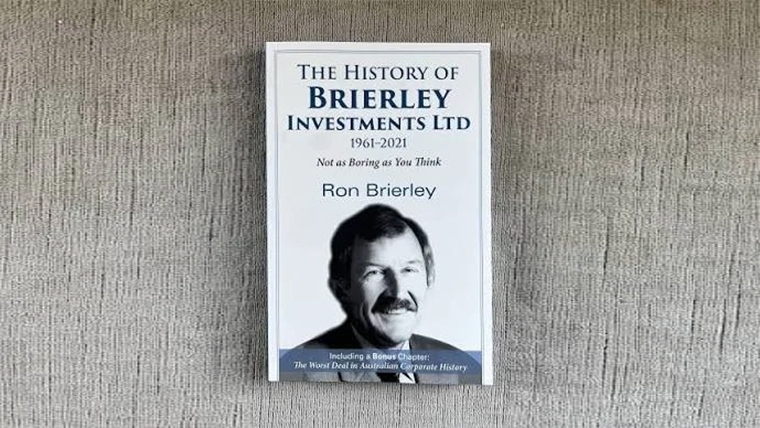
R. Brierley (2026) The History of Brierley Investments Ltd 1961-2021; Not as Boring as You Think. (www.RabPub.com)
Y. Van Dongen (1990) Brierley: The Man Behind the Corporate Legend (Viking) which I reviewed here.
*Brian Easton, an independent scholar, is an economist, social statistician, public policy analyst and historian. He was the Listener economic columnist from 1978 to 2014. This is a re-post of an article originally published on pundit.co.nz. It is here with permission.
We welcome your comments below. If you are not already registered, please register to comment
Remember we welcome robust, respectful and insightful debate. We don't welcome abusive or defamatory comments and will de-register those repeatedly making such comments. Our current comment policy is here.