
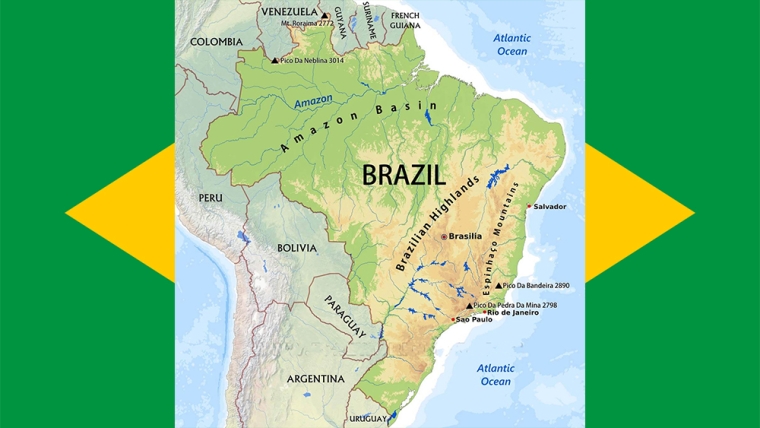
The following report provides a summary of economic opportunities in Brazil. The original is here.
Despite continued growth, Brazil’s economy continues to face structural constraints, including a high public debt burden and modest potential growth. The International Monetary Fund (IMF) projects gross public debt to reach 96.5% of GDP in 2026 and to rise further to 106.5% by 2031 – by comparison, the estimated 2026 average is 59.2% of GDP for Latin America and 48.7% for BRICS+ economies. Growth prospects remain relatively subdued but positive, with GDP expected to expand by 1.9% in 2026 and by between 2.0% and 2.5% annually over 2027–2030, according to the latest World Economic Outlook (WEO).
Nevertheless, economic performance has remained broadly stable, underpinned by expansion across key sectors – notably agriculture, construction, and investment – and sustained private consumption – supported by income maintenance policies. The economy has also proven relatively resilient to global energy shocks, reflecting Brazil’s position as a net energy exporter and the associated improvement in its terms of trade.
Inflation has eased from previous highs, allowing the Central Bank (BCB) to initiate and sustain a gradual monetary easing cycle (three consecutive 25-basis-point cuts). While the benchmark interest rate is declining, it remains elevated in real terms (14.25%), underscoring continued caution regarding inflation expectations and fiscal credibility.
The labour market has proven resilient. Despite a recent increase in the unemployment rate (from 5.9 to 6.1), largely explained by seasonal factors, long-term unemployment has declined markedly. The number of individuals unemployed for more than two years fell to 1.09 million in the first quarter – the lowest level for this period since 2012, down 21.7% year-on-year and 37.8% compared to 2012 levels.
What makes Brazil interesting for New Zealand business?
Brazil, as Latin America’s largest economy, offers significant opportunities for foreign companies seeking to enter or expand in the market. The country combines substantial market scale – supported by a consumer base of over 200 million people – with growing demand for innovative, efficiency-enhancing solutions – currently ranks second in Latin America in the Global Innovation Index.
Strong domestic consumption, underpinned by labour market conditions, continues to drive growth across retail, services, and digital sectors. At the same time, Brazilian firms are increasing investment in productivity, digital transformation, and sustainability to boost competitiveness and meet evolving green requirements.
Brazil remains broadly competitive relative to its Latin American peers, although many stakeholders assess that its economic potential could be further enhanced through greater openness (with trade representing 35% of GDP in 2025, according to the World Bank), improved competitiveness, and a more favourable business environment (Brazil ranks 124th in the World Bank’s Ease of Doing Business index).
Nevertheless, while the “Brazil Cost” remains a challenge, it is not viewed as an insurmountable barrier by many businesses operating in the country.
For New Zealand, opportunities are primarily niche and value-driven across sectors, rather than volume-based. Areas of strongest alignment include:
- Agri tech and sustainable agriculture, leveraging New Zealand expertise alongside Brazil’s scale and productivity needs;
- Renewable energy and low-emissions technologies, given Brazil’s largely renewable energy matrix and growing decarbonisation focus;
- Adjacent technologies for mining, where both countries are committed to sustainable resource development, with opportunities for collaboration across critical minerals value chains;
- Health technologies and specialised services, including efficiency-enhancing solutions;
- Digital and enabling technologies, including fintech, automation, and communications; and
- Education and skills development, driven by demand for technical training.
Many of these opportunities are driven by structural challenges in Brazil, such as logistics bottlenecks, security considerations, and productivity and efficiency constraints. These areas present significant potential for New Zealand companies to deliver innovative, high-value solutions tailored to local needs.
Success requires a deliberate shift away from transactional market entry towards long-term, partnership-based approaches, including co-development and in-market presence. Local legal, commercial, and partnership support are critical to mitigating risks.
We welcome your comments below. If you are not already registered, please register to comment
Remember we welcome robust, respectful and insightful debate. We don't welcome abusive or defamatory comments and will de-register those repeatedly making such comments. Our current comment policy is here.