By Bede Henderson*
On Monday, the Government committed up to $60 million to keep New Zealand's only cement manufacturing plant open. The more interesting number is the one Fletcher Building had already put on closing it: up to $345 million.
Closing an industrial site isn't free. Fletcher's 2025 annual report broke the cost of walking away from the Portland plant near Whangārei into two parts. Up to $165 million is a non-cash impairment: the plant sits on the balance sheet as an asset, and closure wipes that value out. Up to $180 million is cash: make-good, meaning restoring the site and meeting the obligations attached to it, plus redundancy for a workforce of hundreds.
Industrial assets become liabilities at the end of their lives.
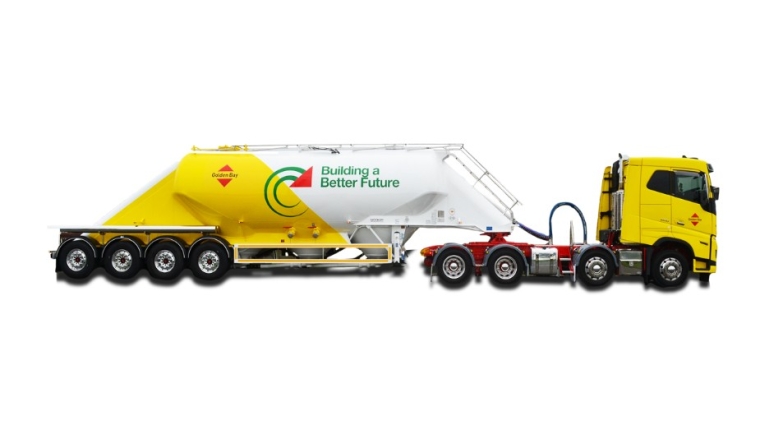
Monday's deal buys that outcome off. In exchange for a grant of up to $60 million, with clawback rights if it doesn't perform, Golden Bay Cement will keep making cement at Portland until at least the end of 2040, retain clinker manufacturing capability (clinker is the kiln-made intermediate product; a plant that only grinds imported clinker is a mill, not a manufacturer), maintain jobs, and invest at least $150 million of its own money.
The pressure behind the closure threat was mostly carbon. Cement is unusually exposed to emissions pricing because most of its CO2 comes from baking the raw material (limestone), not the fuel, so even a kiln burning waste tyres, as Portland's does, carries a bill with a high floor. Imported cement doesn't carry that bill at the same level. Cabinet considered relief from the Emissions Trading Scheme instead of a grant and decided against it: every carve-out weakens the reason the scheme gives firms to cut emissions, and invites the next applicant.
Fletcher is solvent, and had it closed Portland it would have paid every dollar of the $345 million itself. But solvency is a moving picture. This is a company that posted a $419 million loss in its 2025 financial year, suspended its dividend, raised $700 million in new equity late in 2024 to repay debt, agreed covenant relief with its lenders, and until June this year carried a Moody's Baa3 credit rating, the last rung of investment grade.
That doesn't say Fletcher is on the edge; the company has lifted its profit forecast and net debt is back inside the target range. It says the shape of a closure pencilled in for 2030 would depend on whatever balance sheet exists in 2030, and New Zealand knows how quickly large balance sheets can change. Mainzeal was one of the country's biggest builders until the morning in February 2013 when the receivers arrived.
That’s one way an owner's obligations become someone else's problem: the owner fails, and the costs become claims against whatever’s left.
There's also a second way – sell the asset. When an asset nears the end of its life, that’s the orthodox move. It's how Tamarind Taranaki came to hold the Tui oil field, 50 kilometres off the Taranaki coast. Tamarind didn't build Tui. It bought the field in 2017 from a consortium of established operators, and because the cost of plugging the wells and clearing the seabed exceeded the value of the remaining oil, the vendors paid Tamarind US$30 million to take it, decommissioning obligation and all. Officials saw the risk that the money would leak elsewhere in the group but had no legal tool to ring-fence it.
Two years later, after a failed drilling campaign, Tamarind was in administration. Creditors voted it into liquidation before Christmas 2019. The clean-up was then estimated at about $155 million; the liquidators put the realisable assets at between US$5 million and US$17 million, against claims in the hundreds of millions.
Liquidation doesn't make costs like these disappear. It converts them into claims in a queue. Employees rank ahead of ordinary creditors for unpaid wages, holiday pay and redundancy, but only up to a cap under Schedule 7 of the Companies Act 1993, currently $31,820 per employee. Inland Revenue comes next for GST and PAYE. Everything else waits with the unsecured creditors, usually for cents in the dollar.
Where an obligation attaches to the asset itself, section 269 lets a liquidator disclaim onerous property: formally walk away from an asset whose burdens outweigh its value, obligations included. Tamarind's liquidators disclaimed the Tui assets in April 2020.
The bill moved to the party left standing. Cabinet approved about $155 million in February 2020 to decommission the field. The final bill came in at $293 million.
Parliament's response, the Crown Minerals (Decommissioning and Other Matters) Amendment Act 2021, kept former permit holders liable for decommissioning even after they sold. For a while, the next Tamarind couldn't take a field without its past owners staying on the hook. The Crown Minerals Amendment Act 2025 replaced automatic trailing liability with ministerial discretion. The hook is still in the statute. Whether it catches anyone is now a decision.
And that regime, in both its strict and its softened form, is petroleum-only. Sell a cement works, a quarry or a plant on contaminated land to a thin buyer, and no trailing liability follows it.
The Tamarind file itself is still open: in February this year the High Court heard argument on whether the Crown's decommissioning bill even ranks as a claim in the liquidation, and whether the Crown can set off tax credits owed to the companies against it. Judgment is reserved.
The Government's stated reason for Monday's grant is supply security, not credit risk: Portland is the country's only fully integrated cement plant, and losing it would mean relying on importing. Take that at face value. The terms still read like a Crown that's learned where closure costs land. Golden Bay must produce until the end of 2040, maintain jobs, invest at least $150 million, and repay if it doesn't perform. The Crown got the Tui bill after the collapse, at $293 million. On Monday it paid $60 million before the event, and on conditions.
Of course, none of this needs an industrial sized kiln. The cost of stopping is often why small companies trade on past the point they should have stopped. Trading losses are one thing, but stopping is what calls up the personal guarantees. The one on the bank loan, which is backed by the family home, and the one on the lease, which captures the arrears and the make-good.
While the company trades, both stay contingent. In liquidation the lease is disclaimed the same way the Tui field was, and the obligations land on the party left standing. At Tui that was the Crown. At the small end of town it's the director who signed, and the house.
No taxpayer stands behind a company with 12 staff and a workshop lease. What there is, earlier in the piece, is a wider set of exits: a compromise with creditors, a sale as a going concern, a negotiated surrender of the lease while there is still something to negotiate with, or an orderly wind-down. Every month of trading on eats the surplus that would fund those options. The cheapest conversation with an insolvency practitioner is the early one.
When a client models closing a business, the trading loss is often not the only number weighing on the decision. The cost of stopping is too.
*Bede Henderson is Wellington manager at Waterstone Insolvency.
We welcome your comments below. If you are not already registered, please register to comment
Remember we welcome robust, respectful and insightful debate. We don't welcome abusive or defamatory comments and will de-register those repeatedly making such comments. Our current comment policy is here.