
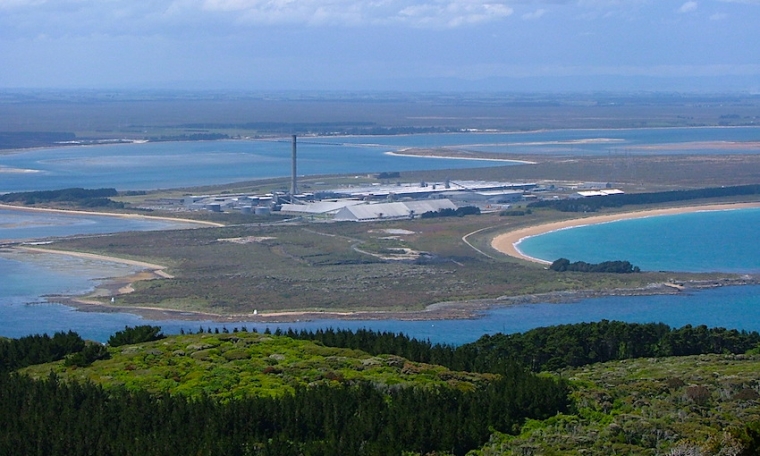
The Tiwai Point aluminium smelter in Southland will continue to operate until at least 2044 after striking a deal with Kiwi energy companies to supply renewable electricity until then.
New Zealand Aluminium Smelters (NZAS), which is owned by multinational mining group Rio Tinto, has often talked of closing due to low commodity prices and high electricity costs.
In 2019, Rio Tinto announced a strategic review of the smelter after a year of losses and eventually decided it would halt operations in 2021.
NZAS says it employs 1000 workers, indirectly supports another 2200 and makes up about 6.5% of Southland’s gross domestic product.
The potential closure became an election issue in 2020, with various parties pitching plans to rescue the important regional employer, but ultimately aluminium prices came to the rescue.
Global prices for the metal climbed to a record high during the pandemic and have remained consistently elevated for the past three years.
Fetching a better price for the product on the global market made New Zealand’s relatively high energy costs more palatable and Rio Tinto signalled it would look to keep NZAS open.
On Friday, the firm announced it had struck a deal for electricity supply to the smelter for the next 20 years, ending the ‘will-they-won’t-they’ drama for a generation.
Meridian Energy, Contact Energy and Mercury NZ will deliver 572 megawatts of electricity to meet the smelter’s full electricity needs.
Contact announced it would supply the smelter with up to 120 megawatts of electricity for a minimum of 10 years at a confidential price.
This price was “consistent with long-term electricity supply agreements” for large South Island industrial users and materially higher than in the transitional agreement, it said.
The new arrangement includes demand response agreements with Meridian Energy and Contact Energy, under which NZAS may be requested to reduce electricity consumption by up to a total of 185MW.
Mike Fuge, chief executive of Contact Energy, said his company had been operating for the past four years on the belief that the Tiwai Point smelter would continue to run long term.
“Confirmation of the sustainable electricity demand from the smelter supports the acceleration of the Contact26 strategy to decarbonise New Zealand, with the addition of demand response also supporting security of supply”.
Energy Minister Simeon Brown welcomed the agreement as certainty for the electricity market and relief for the Southland economy.
Including the demand response element would help to ensure electricity was available for households when supply was tight.
“As our electricity system becomes more based upon renewables, intermittency of generation becomes a larger problem. This commitment from NZAS will help ensure the grid can continue to deliver electricity to Kiwis during times of peak demand,” he said.
We welcome your comments below. If you are not already registered, please register to comment
Remember we welcome robust, respectful and insightful debate. We don't welcome abusive or defamatory comments and will de-register those repeatedly making such comments. Our current comment policy is here.