
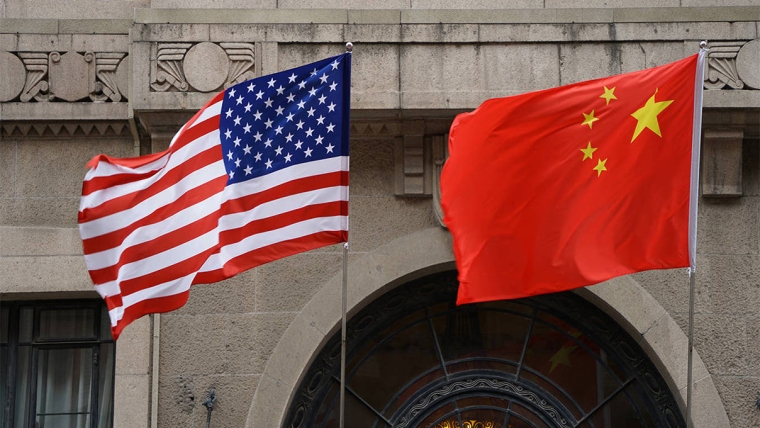
The era in which global order rested on a US monopoly over military and economic power and values has finally come to an end, taking Europe’s long period of stability with it. The world has become significantly more turbulent and uncertain, and the near future will bring even more instability.
In the past, the contours of the world order were clearly reflected in the G7/G8 format, which brought together the leading industrialized countries. But now there are competing formats such as the China-led Shanghai Cooperation Organization, the Russia-led Eurasian Economic Union, and the BRICS+ (Brazil, Russia, India, China, South Africa, and a half-dozen other members, plus ten partner countries)—all consisting predominantly of emerging economies.
American hegemony has given way to a new formulation based on rivalry and competition among several major powers, where there is no longer a fixed, codified set of rules. Instead, there is only economic, technological, and military power, which implies a greater risk of conflict and even war between nuclear heavyweights.
This new order is anything but stable. The wars in Ukraine, in the Persian Gulf, and a civil war in Myanmar that no one is even bothering to try to end, attest to that, as does the persistent threat of war between China and Taiwan or on the Korean Peninsula. The two outright wars, coupled with Iran’s blockade of the Strait of Hormuz, have already had a significant impact on the global economy, owing to higher costs for oil, gas, fertilizer, and other essentials. Many people are dying in both conflicts, and the risk of escalation continues to grow.
It is not surprising that Ukraine and Iran are attracting the most public attention. But these conflicts also have the character of proxy wars, because their strategic implications cannot be understood without accounting for the historic struggle between the United States, the current top power, and China, the rising challenger. China is keeping a low profile—and quietly gaining the upper hand—as the US flails desperately in the Gulf and lashes out at longstanding friends and allies.
This high-level power struggle is a duel between vastly different systems that will shape the 21st century. The US is a highly competitive market economy and the world’s oldest democracy, albeit one that is currently besieged by tech-industry oligopolies.
China, by contrast, is a centralized state ruled by an all-powerful party that can exercise absolute control over the economy, the military, and society. Within a single generation, it has transformed itself from a desperately poor, underdeveloped country into a realistic contender for the top spot in the world order. That is a colossal success no matter how you spin it.
The true masterstroke of Chinese communism came after the madness of Mao Zedong’s Cultural Revolution. While maintaining absolute power and party control, Deng Xiaoping allowed a rapidly growing private sector to flourish within the existing state-controlled economy, which eventually surpassed even the US in many industries. The result, enabled by a gigantic domestic market, is a kind of communist hyper-capitalism.
China’s model stands in stark contrast to that of the Soviet Union, which from the very beginning was an anti-capitalist, primarily ideology-driven enterprise. The Chinese wanted both to maintain their roots and to emulate the most successful capitalist economy in history; and they pulled it off. This seemingly paradoxical approach has worked wonders and continues to do so.
China owes its success to several factors, including a domestic market that allows for massive economies of scale, enormous infrastructure investments, a construction boom, advancing urbanization, fierce internal market competition, and massive state investments in research and development. The Chinese state has been laser focused on its strategic objectives, particularly building up and modernizing its military and winning the race for global dominance in technologies such as renewables and AI. No one can deny that the Communist Party of China’s long-term planning expertise and determination to rise to the top have created an extraordinarily successful dual system.
Whether the US will be able to fend off the Chinese challenge to its primacy—as it did against the Soviet Union—remains to be seen. The answer will depend partly on whether it continues to drift away from the democratic capitalist model it perfected. The current lurch toward an authoritarian oligopoly of private tech tycoons and cronyism is a gift to the CPC.
But the answer will also depend on whether the Chinese leadership can resist the temptation to resort to violence vis-à-vis Taiwan. If China sticks with its own successful model, it can and will be able to achieve most of its goals eventually through peaceful means. But it will have to avoid the delusion that history unfolds according to laws that the CPC understands. Contingency and poor judgment are always possible, and their costs can be enormous. Just ask Vladimir Putin and Donald Trump.
*Joschka Fischer, Germany’s foreign minister and vice chancellor from 1998 to 2005, was a leader of the German Green Party for almost 20 years. Copyright: Project Syndicate, 2026, published here with permission.
We welcome your comments below. If you are not already registered, please register to comment
Remember we welcome robust, respectful and insightful debate. We don't welcome abusive or defamatory comments and will de-register those repeatedly making such comments. Our current comment policy is here.