
By Alex Tarrant
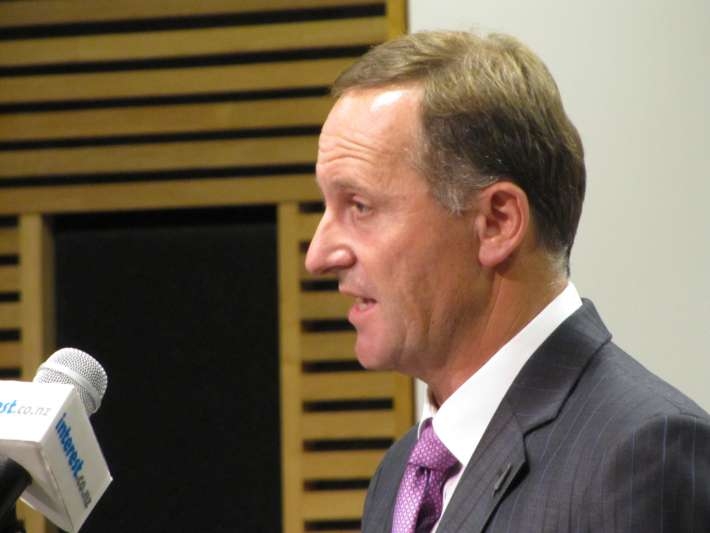
Prime Minister John Key has poured cold water on the prospect of tax cuts for term deposit savings, saying it would be too costly in the current fiscal environment.
Meanwhile, Key also expressed confidence in Treasury's forecasts of strong wage and jobs growth to be included in the Budget tomorrow, and said the government would not be making KiwiSaver membership compulsory.
Finance Minister Bill English will release the National-led government's third budget at 2pm on Thursday which will show no additional spending from last year and cuts in areas other than Health, Education and Justice. The government has signalled its desire to cut the size of government as a proportion of the economy and control spending in order to return to surplus and begin paying down debt.
The budget is expected to show a deficit for the current financial year to June 30 of up to NZ$17 billion. Key has indicated the budget would show a track for returning to surplus before 2016/17 and that net government debt would peak below 34%.
'No savings tax cuts'
Asked by media today whether the Budget would lower taxes on savings, as recommended by the government-appointed Savings Working Group earlier this year as an incentive to drive investment away from property, Key said it would not.
“Literally [because of] fiscal cost. One of the real issues, as that Savings Working Group recommended, was that [government shouldn’t] tax savings as high. Now, long-term that might be a great thing to do, but we just simply can’t afford it tomorrow,” Key said.
Finance Minister Bill English yesterday said the government had not looked at the option of indexing savings taxes to compensate for inflation as the recommendation from the Savings Working Group was "too complex".
'Forecasts will hold up'
Meanwhile Key defended Treasury's forecasts to be included in the Budget tomorrow, which he said would show strong growth in employment in coming years, and wage growth that would "well and truly outstrip inflation".
It had been difficult for anyone forecasting recently, Key said. See Bernard Hickey's opinion piece on being sceptical about strong growth forecasts.
“Overall, there’s always the element they can get things wrong, there’s always the element of surprise," he said.
“But overall, if you have a look at the basis for their growth [forecasts], which is a number of different factors – stronger global growth, lower interest rates, higher commodity prices, stronger trade in this part of the world, in our case the Rugby World Cup, the rebuild of Christchurch – they’re all very solid things you can actually point to," Key said.
“So I think on balance it’s about right."
Asked whether there was a danger of jobs growth being unsustainable once the Rugby Worrld Cup ended, and as the Christchurch rebuild tapered out, Key replied:
“I think we’ve got a very different international environment. Global growth is returning, interest rates – they’re looking like they’ll stay low for quite a period of time – so yes I do think that growth will be there but in the end that’s in the hands of professionals like Treasury and proof of the pudding will be in the eating.”
“The government policies tomorrow will show we’ve done the right thing. In the three years in office, we’ve reformed the tax system, we’ve reformed the RMA, we’ve reduced the size of government, we’ve made it easier to do business in New Zealand, we’ve liberated Labour laws," Key said.
"All of those things help provide a platform for stronger growth,” he said.
KiwiSaver won't be compulsory
Meanwhile Key said the government would not be making KiwiSaver compulsory.
Currently workers are enrolled in KiwiSaver if they enter a new job, although people still in jobs from before the scheme began have to choose to opt in to KiwiSaver.
The Savings Working Group had recommended a 'soft' compulsion option where people were automatically enrolled at either a certain age or when they first entered employment, but had the option to opt out.
We welcome your comments below. If you are not already registered, please register to comment
Remember we welcome robust, respectful and insightful debate. We don't welcome abusive or defamatory comments and will de-register those repeatedly making such comments. Our current comment policy is here.