

Here's my Top 10 links from around the Internet at 10 past 8 pm in association with NZ Mint.
I welcome your additions in the comments below or via email to bernard.hickey@interest.co.nz.
I've just have to to get these out earlier.
Grrrrrrr.
But I'm loving the video at the bottom.
It has lots of RRRRs in its name.

1. It's serious now - Barack Obama is considering tapping into America's oil reserves to try to get the oil price under control, the New York Times reports.
Oil prices sprinted higher over the last day as the situation worsened in Libya and the nerves about Saudi Arabia grew.
Fears about financial market stability as the euro debt bubble heats up again are also adding to the sense of panic in Washington.
Something is brewin'
Check out below the problems in Europe.
And China is also talking very tough about inflation.
Only a few days ago Obama's guys were saying things were OK.
Administration officials have sent mixed signals in the last several days about the possibility of opening the reserve, which is a rare step. Energy Secretary Stephen Chu said on Friday that the administration was monitoring prices, but he seemed reluctant.
“We don’t want to be totally reactive so that when the price goes up everybody panics and when it goes back down everybody goes back to sleep,” he said.
A few days earlier, Mr. Chu said that the administration was watching closely, but expected oil production that had been lost in Libya because of unrest there would be made up by production elsewhere.

2. The big news is wages, not jobs - Robert Reich writes over at his blog about the US jobs figures on Friday night and what's going on under the surface.
Most of the new jobs created since February 2010 (about 1.26 million) pay significantly lower wages than the jobs lost (8.4 million) between January 2008 and February 2010.
While the biggest losses were higher-wage jobs paying an average of $19.05 to $31.40 an hour, the biggest gains have been lower-wage jobs paying an average of $9.03 to $12.91 an hour.
Detroit is creating auto jobs again — but new hires are getting about half the pay that auto workers were getting before. Airline workers are taking home 30 to 50 percent less than they did years ago.

3. Gerry Brownlee would love this - The Economist talks here about how quickly buildings are going up in China.
The biggest worry of all is the rush of new supply. The pace of development is often frantic, nowhere more so than in China. According to Barclays Capital, more than 40% of the skyscrapers due for completion in the next six years will be in China, increasing the number of tall buildings in Chinese cities by more than half.
Landscapes are changing in a matter of days. One of the more hypnotic items on YouTube is a time-lapse video of a 15-storey prefabricated hotel in Changsha being put up in just six days.
“The range of outcomes in London and New York is pretty limited,” says one investor. “In Shenzhen you can be building a block of apartments with four others going up alongside.”
Portugal, long considered likely to be the next European country to reach crisis point, with its hefty debt burden and struggling economy, is seeing yields on its government bonds rise above 7% – something that, as City consultancy Fathom points out, Greece and Ireland were only able to withstand for a couple of weeks before accepting a bailout.
Meanwhile, European Central Bank president Jean-Claude Trichet has ratcheted up the pressure by signalling that he is ready to raise interest rates, making life even harder for Portugal and the other "peripheral" economies. "What this has done is make it much more likely that Portugal is going to have to ask for finance," says David Owen of City firm Jefferies.
Yet with Portugal's plight becoming urgent, the EU remains locked in a row about who should pay the price for the boom and bust of the past decade.
Owen at Jefferies agrees that the banks in the wealthier "core" states of France and Germany are painfully exposed. "Some of the big holders of Portugal, Ireland and Greek paper are the banks, and the banks are in the core. Everyone is exposed to everyone else. That's why this problem is so intractable, and it's not in anyone's interests for anyone to default."
Not wanting to offend those in Christchurch, but this is is a billboard outside a Cafe in Christchurch. Black humour is one way to hit back at an event.

5. Nothing happened - Standard and Poor's and Moody's copped a lot of flak over their AAA rating for toxic mortgage debt and derivatives. So new laws make it possible to sue the ratings agencies for bad ratings were passed.
But, as Gretchen Morgenson from the New York Times points out, the SEC has stopped enforcing the new rules, even though the agencies are flouting it.
It's something to think about as we waiting with our knees-a-knockin' for Standard and Poor's to finish its downgrade reviews on both the New Zealand government and the New Zealand banks.
Here's Morgenson:
When Dodd-Frank became law last July, it required that ratings agencies assigning grades to asset-backed securities be subject to expert liability from that moment on. This opened the agencies to lawsuits from investors, a policing mechanism that law firms and accountants have contended with for years.
The agencies responded by refusing to allow their ratings to be disclosed in asset-backed securities deals. As a result, the market for these instruments froze on July 22.
The S.E.C. quickly issued a “no action” letter, indicating that it would not bring enforcement actions against issuers that did not disclose ratings in prospectuses. This removed the expert-liability threat for the ratings agencies, and the market began operating again.

6. How the SEC is letting them off - Further to the above, Matt Taibbi from Rolling Stone has written a detailed smokin' gun of a story explaining how the SEC is systematically letting off many of the culprits on Wall St. Essentially, there is a revolving door between the banks/big law firms and the regulator.
America is a corrupt plutocracy. We should avoid the Trans Pacific Partnership and work wherever we can can to disconnect ourselves from America.
It is going to blow up in everyone's faces at some stage and we should be as far away as possible when it does.
The Revolving Door isn't just a footnote in financial law enforcement; over the past decade, more than a dozen high-ranking SEC officials have gone on to lucrative jobs at Wall Street banks or white-shoe law firms, where partnerships are worth millions.
That makes SEC officials like Paul Berger and Linda Thomsen the equivalent of college basketball stars waiting for their first NBA contract. Are you really going to give up a shot at the Knicks or the Lakers just to find out whether a Wall Street big shot like John Mack was guilty of insider trading? "You take one of these jobs," says Turner, the former chief accountant for the SEC, "and you're fit for life."
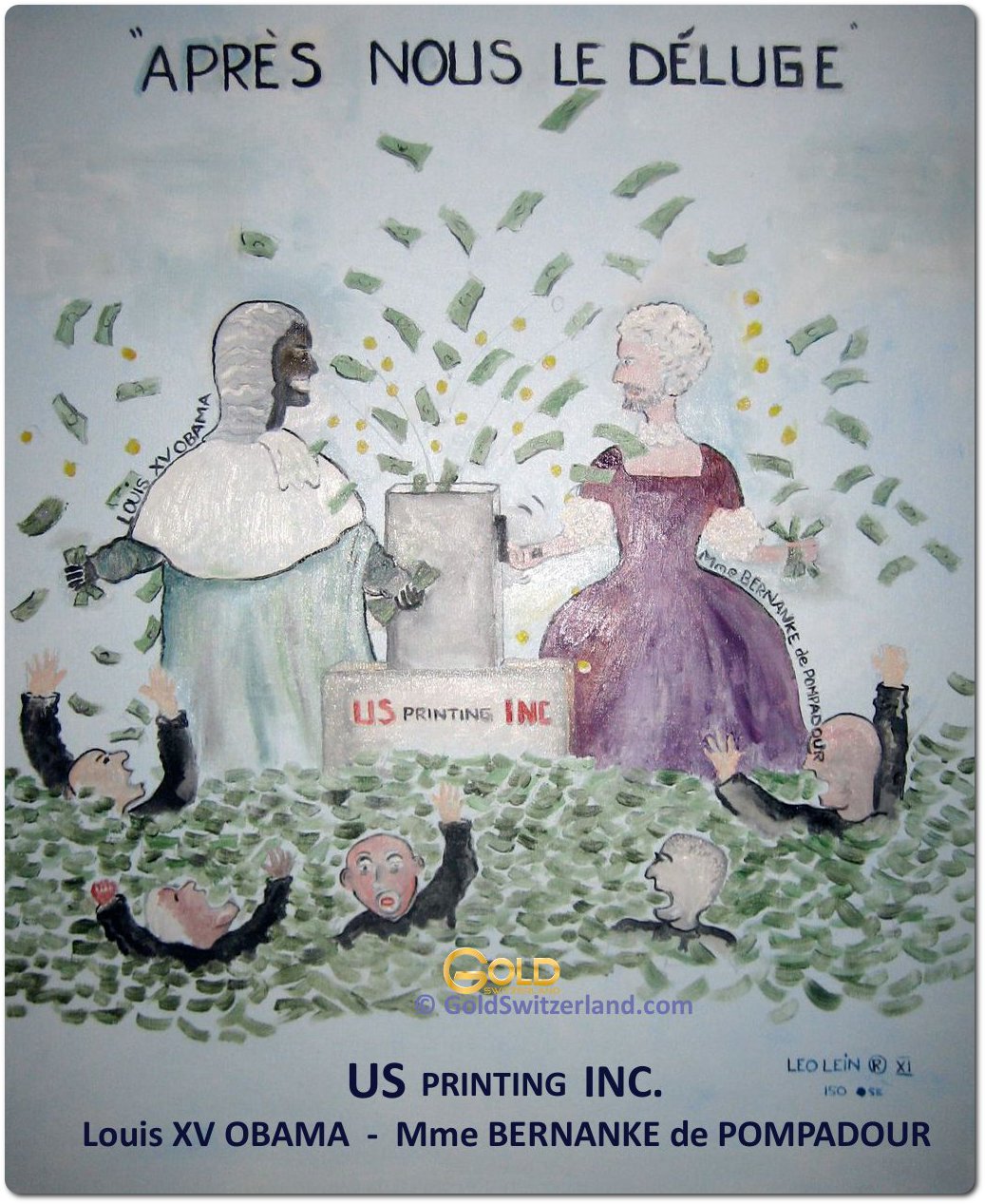
7. Rates are being hiked - BBC reports Brazil and Russia have both hiked their interest rates in the last week as they try to shove the inflation genie back in the bottle.
Yet New Zealand doesn't see the same inflation problems and seems about to cut interest rates. Curiously, Brazil's inflation rate isn't that much faster than ours at the moment...
Brazil's central bank has raised its key interest rate to 11.75% in a bid to hold down inflation in one of the world's fastest-growing economies. The rise, from 11.25%, is the second half-point increase since the start of the year. Inflation was 5.91% last year and is forecast to remain above 5% in 2011.

The announcement follows a series of protests by the kingdom's Shia minority in the oil-producing eastern province. Last month, King Abdullah unveiled a series of benefits in an apparent bid to protect the kingdom from the revolts spreading throughout many Arab states.
"Regulations in the kingdom forbid categorically all sorts of demonstrations, marches and sit-ins, as they contradict Islamic Sharia law and the values and traditions of Saudi society," the Saudi interior ministry statement said. It added that police were "authorised by law to take all measures needed against those who try to break the law".
The protests in the Eastern Province - where much of the country's crude oil is sourced - have been demanding the release of prisoners who demonstrators say have been held without trial. The announcement of the crackdown on protests follows the return, last week, of King Abdullah to the capital after an absence of several months due to illness.

9. Further and further away - Britain's move to student loans, tuition fee hikes and higher taxes is making it harder for young graduates to afford their own home.The Telegraph's Ian Cowie reports that Scottish Widows estimates the average age of first home buyers will rise to 44 from the 27 that their parents saw.
And people wonder why Generations X and Y are grumpy about what the baby boomers have done with the economy....
When will these young couples be able to afford have children of their own? Never mind parenthood; what about pensions? Serious saving for retirement typically begins rather later – but graduates in future will be lucky to get started much before the ages at which many of their parents retired. Too bad for them that employers are washing their hands of pension provision and various Ponzi schemes run by the State are already reneging on promised retirement ages.
Finally, who can blame them for devoutly wishing that house prices will fall? No wonder websites such as housepricecrash.co.uk are proving increasingly popular and are now, perhaps somewhat counter-intuitively you may think, supported by advertising from Barratt Homes.
10. Totally RRRRRRR video - Watch it and you'll see.
26 Comments
Article 1. Bututututututututut the Saudi's said they would just use some of their spare capacity and replace the Libyan barrels!!!!
Why isn't it happening?????
After all there is only 0.8mbd off line from Libya, and Saudi has 2mbd (at least!) of spare capacity and OPEC has a total of 4mbd of spare capacity (according to the Economist).
Surely its just a matter of turning on the right tap.
Surely............
As far as I know Libya produces light sweet crude whereas Saudi Arabia produces heavy sour. The latter being more expensive to refine into useable petroleum product, such as diesel etc.
Then Robby I fear you need to know more: over half of Saudi production ( 5 mbd) is from one oil field - Ghawar.
Ghawar produces light crude oils ranging from 33° API (860 kg/m3) to 40° API (825 kg/m3)
http://en.wikipedia.org/wiki/Light_crude_oil
Dig a little deeper..............
r217 - quite correct. Andy is too - the bulk of Ghawar is sweet - the extra if they push is sour, if memory serves me, it's from the southern end and I think Khursaniyah. They can push production, though, for short periods. Water-flooding is a bit like hosing down a concrete path (my chore as a youngster) with your thumb over the hose-end. If you sweep along methodically, it all ends up clean. If you hurry, you leave dirty puddles behind - but to go back and get them would take as much work as a complete hose-down.
They also have to use salt water (7 million ballels a day ) - the fresh was depleting the Tigris/Euphrates aquifer. So they have a separation problem, and a corrosion problem. And water-cutting tends to end abruptly - one day oil is coming up, mixed with water, the next, it's just water.
http://www.investingadvisers.com/articles/Dec04/trouble_in_the_worlds_l…
To cut to the chase - the bulk of Saudi production in the past was indeed light sweet crude (the highest value oil). However they have been unable to find much more of it in the last 10 years (go check Oil Megaprojects on Wikipedia); and that is despite now drilling offshore - instead their more 'recent' discoveries have tended to be heavier sour crudes often contaminated with heavy metals such as vanadium.
So the questions are:
a) how much real 'spare capacity' do the Saudis have?
b) if this 'spare capacity' does exist how much is difficult to refine sour crude contaminated with heavy metals etc?
Well what's the oil price telling us? Its 10 days since the Saudi's said they would turn the taps on - and the price continues UP.
Its not much good having this alleged spare capacity if a) the markets dont believe you and b) the markets think the product is crap anyway.
So are you guys for cheep America controlled Saudi oil and a regime thats suppresses its people or are you for freedom of the people as in Egypt and other middle east countries.
I guess what I'm asking is do you think we have a natural birthright being born in NZ to support a regime that suppresses its' people through the production of cheep petrol or of-course do you not care what happens over there as long as there is cheep petrol here?
RB- no. lots of us have long avoided Shell servos -
http://en.wikipedia.org/wiki/Ken_Saro-Wiwa
The trouble is that the rest probably aren't much better. Essentially, we live at the level we do through the repression of others - either via keeping their wages low, or by disenfranchising them of their resources.
To have the luxury of having the time to have a conscience about it, you have to be doing it.
So I suspect that the social conscience will decrease in the powerdown phase.
The short answer is when it comes down to them or us, it will be them id we have the choice/ability....
Variations on that are, I consider some oil giants worse than others.....so I choose a petrol station chain....it seems to be BP because the others I regards as worse.
My impression is you may have a simplistic ie black and white outlook on the world....eg
In terms of freedom of the ppl, well, example, when you look at the Shia of Iran overthrow in 1979 and then the fruitcake that replaced him and the number of deaths that resulted....what improved for the ppl? I knew some iranians in 1978 who were training in the UK, it was made clear to them that if they returned the death squad was a likely outcome.....I know ppl who's family members were shot (probably the lucky ones), stoned to death or simply disappeared....post revolution.
The overthrow in egypt isnt so much about democracy as ppl getting fed.....they have changed the Govn.....in a nation that has a narrow band of fertile soil along the nile with the rest useless desert and population growth...so they import food and sell oil to do so......that's a long term problem for them which is now here....
regards
And China is rapidly building reserves along with India.
Greece downgraded again by Moody's by 3 notches to B1
http://www.dailyfx.com/forex/market_alert/2011/03/07/Greece_Downgraded_at_Moodys.html
yep....so when someone finally figures out that Greece's only viable business model is tourism and jet fuel will kill whats left of it....they will double....their bonds are junk status....nothing more.
regards
Andy - and Bernard for that matter -
this is the most definitive look at Ghawar I ever saw, an oldie but a goodie, The 'mouse-over' is stunning, as is the tech talk.
http://www.theoildrum.com/node/5432
The water-cut is the reason. They can force the flood, but they leave oil behind - never to be re-gotten.
pdk
You gotta admire JB for the work he does, to think over 6% of the worlds oil comes from that one field and for over 60 years..when she goes its going to be a biggie
Neven
Neven - indeed, it's a stunning piece.
Compare that to Jim Mora's nonsense yesterday (The Panel, circa 4.28) "they're still finding oil and not just deep-water, aren't they?" and "there's a whole lot of oil in Canada".
The replies were good - factually correct, the fellow (think it was Chris Roberts from NZOG) explained EROEI in lay terms ("it takes a lot of energy to produce") but Mora wasn't listening.
He seems to be on a mission - anything which threatens his way of life will be discredited.
I'm going to email him this graph
http://planetforlife.com/oilcrisis/oilsituation.html
Makes the "still finding oil" comment look somewhat disingenuous.
pdk
Hey 1ZB was reporting petrol went up because of "speculators", never mind the civil war in Libya, Stupidity abounds, what i love about JB's work is how has used google earth (and Aramcos own info) to come up with such analysis
Neven
yep - speculation only magnifies - I am beginning to wonder whether these pontificators will never actually acknowledge anything that threatens their status-quo.
The difference between opinion, spin, disingenuousness and lies, is an interesting one.
Maybe Bernard could do a poll each time with those options.......... :)
From the moderator: "America is a corrupt plutocracy."
It is now O.K. to mention corruption, but only over there?
...more Mickey Mouse than Pluto :)
Leadership and competence deficits?
If someone added questions on our prerceptions of them to an appropriate survey Bernard could graph the results.
No doubt ECB governors need to prove their hawkishness after Bundesbank chief Axel Weber walked out of the Eurotower in disgust, more or less stating that he did not wish to take over a body that had departed so far from orthodoxy, and succumbed to political pressure by purchasing the bonds of bankrupt states.
Worldwide economic recovery or will oil price set the limits not to go to war, but in stead go crazy or ........ ?
Baltic Dry Index http://www.bloomberg.com/apps/quote?ticker=BDIY:IND
#5
Regarding Moody's and S&P Article
"...............they had little incentive to assess securities aggressively or properly. Their assessments of mortgage securities were singularly off-base, causing hundreds of billions in losses among investors who had relied on ratings".
How is it these organisations still carry credence in the financial world........?
"America is a corrupt plutocracy. We should avoid the Trans Pacific Partnership and work wherever we can can to disconnect ourselves from America. It is going to blow up in everyone's faces at some stage and we should be as far away as possible when it does."
I couldnt agree more and Ive been saying so for a while....
We dont need them....they need us....they are bankrupt, even if its not yet on the national level, in effect the american consumer is bankrupt, they wont be buying our goods because they cant or wont be able to afford to. There are lots of asian and middle east countries that will have the $ and will buy and on fair terms. What the US wants is to have us on their terms, and locked in to a monopolistic, punative one way to their advantage system, hence TPP etc........I say let the market decide and lets not do TPP at all.
regards
@steven
agree, New Zealand should never enter into a Free Trade Agreement with the US.
The conditions are to our disadvantage, so why bother?
I'm hoping for high oil for a long time.
Despite the pain it causes everyone in the form of higher prices at the pump and elsewhere through flow-on effects, I'm willing to pay my part.
When this last happened in '08, suddenly the news was full of people investigating alternative energy sources ... then when the price dropped off the alternative energy stuff faded away just as quickly. We need to get off the jurassic juice at some point - I'd rather it start now.
We welcome your comments below. If you are not already registered, please register to comment
Remember we welcome robust, respectful and insightful debate. We don't welcome abusive or defamatory comments and will de-register those repeatedly making such comments. Our current comment policy is here.