

Here's my Top 10 links from around the Internet at 8 am in association with NZ Mint.
I'll pop the extras into the comment stream. See all previous Top 10s here.
I welcome your additions in the comments below or via email to bernard.hickey@interest.co.nz.
Up early today rather than late yesterday. Some good backgrounders below on why the Aussie and US economies are struggling.

1. Listings shortage? - Alistair Helm at Realestate.co.nz's Unconditional blog has written in detail about what he and many in the real estate industry say is a listings shortage that is about to cause supply problems and rises in house prices.
Alistair does a great job of showing those regions where listings are down and sales volumes are up.
But is it really the case the market is undersupplied?
It's worth looking at actually how many properties are listed in total in any one month and how many actually sell.
For example, Barfoot and Thompson had 5,067 properties on its books at the end of June, yet sold just 873 properties.
What happened to the rest? Why didn't they sell? Sellers are not moving their prices to meet the market.
I think the real problem for real estate agents is there are not enough sellers willing to cut their prices to meet the market and clear it.
Here's Alistair's view though:
Listing numbers have been falling steadily for over a year, and matched to a slowly rising rate of sales, is beginning to show in the declining stock of homes on the market. This could potentially lead to a demand heavy market which could see price pressure in the medium term.
Looking around the country the regions that are showing growth in sales year-on-year are grouped in the chart below. Eight of the 19 regions show year-on-year growth in sales – the West Coast of the south island topping out with a sales rise of 14%. All regions though show declines in listings.

2. The Eurozone's last stand - Here's Nouriel Roubini on what he says is the Eurozone's last stand.
The eurozone needs policies to restart economic growth on its periphery. Without growth, any austerity and reform will deliver only social unrest and the constant threat of a political backlash, without restoring debt sustainability. To revive growth, the ECB needs to stop raising interest rates and reverse course. The eurozone should also pursue a policy – partially via looser monetary policy – that weakens the value of the euro significantly and restores the periphery’s competitiveness. And Germany should delay its austerity plan, as the last thing that the eurozone needs is a massive fiscal drag.
The eurozone’s current muddle-through approach is an unstable disequilibrium: kicking the can down the road, and throwing good money after bad, will not work. Either the eurozone moves toward a different equilibrium – greater economic, fiscal, and political integration, with policies that restore growth and competitiveness, including orderly debt restructurings and a weaker euro – or it will end up with disorderly defaults, banking crises, and eventually a break-up of the monetary union.
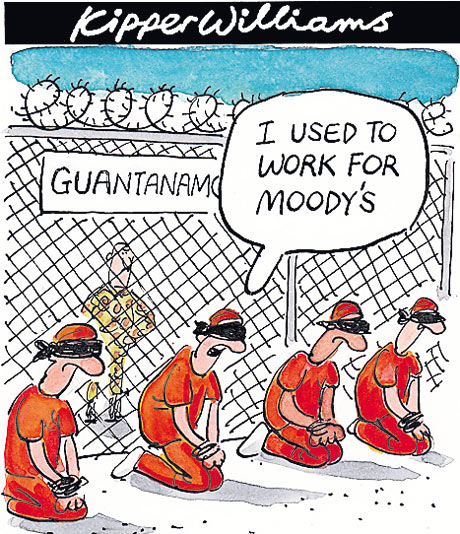
3. Global minimum wage? - Thomas Palley argues here at an FT blog (which means it can be read) there needs to be a global minimum wage system.
The global economy is suffering from severe shortage of demand. In developed economies that shortfall is explicit in high unemployment rates and large output gaps. In emerging market economies it is implicit in their reliance on export-led growth. In part this shortfall reflects the lingering disruptive effects of the financial crisis and Great Recession, but it also reflects globalisation’s undermining of the income generation process. One mechanism that can help rebuild this process is a global minimum wage system. That does not mean imposing US or European minimum wages in developing countries. It does mean establishing a global set of rules for setting country minimum wages.
The minimum wage is a vital policy tool that provides a floor to wages. This floor reduces downward pressure on wages, and it also creates a rebound ripple effect that raises all wages in the bottom two deciles of the wage spectrum. Furthermore, it compresses wages at the bottom of the wage spectrum, thereby helping reduce inequality. Most importantly, an appropriately designed minimum wage can help connect wages and productivity growth, which is critical for building a sustainable demand generation process.
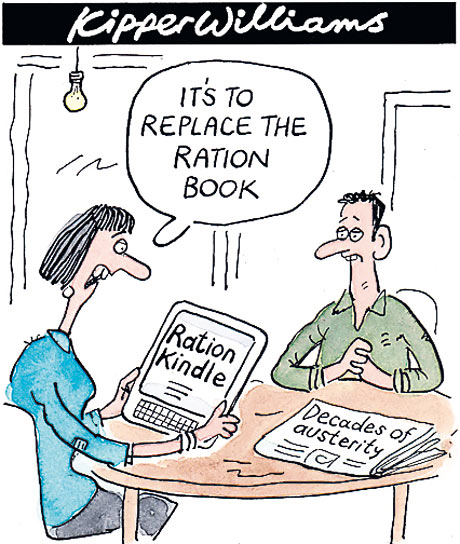
4. 'Another 20% drop in US house prices coming' - US economist Gary Shilling, who was one of the first to predict the sub-prime meltdown, reckons US house prices have another 20% to fall because of an overhang of houses yet to be foreclosed on and stubbornly high unemployment.
RealtyTrac estimates that 1 million foreclosure-related notices that should have been filed by banks this year will be pushed to next year.
With only 18,000 jobs added in June, the country also has a high unemployment rate at 9.2 percent. Also contributing to a decrease in housing demand is an overleveraged consumer base and home prices that have already seen a double-dip decline, according to the Case-Shiller Index, Shilling said.
"In the past, almost everyone was sure that house prices would never fall, and on a national level, they hadn't since the 1930s," Shilling wrote. "Now everyone knows prices can fall, have collapsed and continue to drop. Who wants to buy an asset that is highly likely to continue dropping in price?"

5. But don't just take it from him - PIMCO's Rod Dubitsky also has a couple of reasons why the US housing market just can't get going again.
A basic concept of personal finance is that as long as borrowers have sufficient funds for a down payment and a stable source of income, the next rungs up on the housing ladder should be within reach. For the typical American homeowner, these requirements have traditionally been satisfied by solid employment for young graduates, reasonable pricing and availability of mortgage credit, accumulation of funds that allow trade-up purchases of larger homes and finally by the view of housing wealth as a potential income supplement during retirement.However, we believe the challenging economic situation today has dramatically altered this progression. At the bottom of the ladder, dismal employment prospects and the debt situation of young graduates may be impeding their ability to save for a down payment. In the middle of the spectrum, negative equity is effectively preventing many homeowners from advancing (i.e., Core Logic estimates that over 23% of homeowners have negative equity in their homes preventing them from buying a new home). And at the top of the ladder, the erosion of retirement income could result in downscale housing investments and may push retirees to consign themselves to the status of lifetime renters. Instead of serving as a potential wealth builder, housing has in some cases become a potential millstone that can drain limited remaining liquidity and retirement funds. Hence, even buyers who can climb on to the home ownership ladder may opt out of home ownership in favor of what is often times the more flexible, available rental option.

6. A bear hug - China and America are hugging each other tightly over their trade deficit/surplus and America's ballooning debts.
China can't afford to sell US Treasuries or it would drive down the price of its US Treasuries and the US dollar. America can't afford to stop borrowing or its economy collapses....
China can't afford to stop saving and generate internal consumption because its export sector would slump. It's a type of economic mutally assured destruction.
How is this going to end?
They can't let each other go and start fighting because they would end up killing each other. Do they have time to tip toe to the exits?
Here's the New York Times with an excellent backgrounder on this issue.
It is the ultimate “too big to fail” global relationship, said Andy Rothman, an analyst in Shanghai for the investment bank CLSA.
If Beijing even hinted that it might try to sell part of its American debt, “other countries might sell their dollar assets,” Mr. Rothman said, noting that this would drive down the value of China’s holdings. “It would be financial suicide for China.”
China got into this situation, experts say, by indulging its own economic interests. To bolster what has become the world’s largest export economy, China has focused on policies that encourage domestic savings and hold down the value of its currency. The result: huge trade and current-account surpluses. China has accumulated more than $3 trillion in foreign currency reserves, far more than any other nation.
Most of those reserves are held in dollars, and recycled back to the United States through investments in Treasury bonds and other dollar-denominated securities — even stocks. And while some of China’s foreign exchange reserves are plowed into European and Japanese debt, those bond markets are not big or liquid enough to absorb the bulk of China’s ever-larger foreign holdings.
Beijing has tried to diversify its foreign exchange portfolio by creating a sovereign wealth fund that can invest some of the reserves overseas. The government has also encouraged Chinese companies to expand overseas and to acquire mines and natural resources to fuel China’s hungry economy. But because China has too much foreign money for any other outlet to absorb, the vast majority of its fast-growing reserves continue to be destined for the United States bond market.
“China has no choice but to keep buying,” said Zhang Ming, an expert at the Chinese Academy of Social Sciences, a Beijing research group. “After all, U.S. Treasury bonds are still the largest and most liquid investment product in the world.”

7. Seen The Social Network? - Remember the scene where then Harvard President (and since then Obama economic adviser) Larry Summers hears the Winklevoss twins whingeing about how Mark Zuckerberg stole 'their' idea for facebook?
Here's Summers in Fortune on that episode:
"One of the things you learn as a college president is that if an undergraduate is wearing a tie and jacket on Thursday afternoon at three o'clock, there are two possibilities. One is that they're looking for a job and have an interview; the other is that they are an a**hole. This was the latter case."

8. Life after GPG? - Fairfax's Michael Evans reports Ron Brierley has quietly bought a stake in another company to use it as his vehicle for dealmaking.
In a handwritten substantial shareholders notice, Sir Ron, 74, told the market he had emerged with more than 5 per cent of the listed investment shell India Equities Fund through a private company, Siblow.
Sir Ron paid nearly $294,000 for a 5 per cent stake. It is believed he is looking for a listed vehicle for future endeavours.

9. Australia's cities battening down the hatches - Fairfax's Eli Greenblat has a nice backgrounder on the problems in Australia's domestic economy.
A MIX of cost of living pressures, higher household debt and an overweight exposure to jobs in manufacturing and finance compared with the rest of the country has helped make Melbourne and Sydney the ''epicentres of pain'' for the current weakness in the Australian economy.
A report by Joshua Kirkwood of Merrill Lynch argues that much of the weakness in the retail sector is structural, not cyclical as some within the sector have argued, and that it extends beyond the retail sector to any company exposed to the consumer.
10. Totally a jet pack failure - Luckily for us it's a water powered jet pack rather than our own jet pack.
78 Comments
Boatman pointed to this report on rising protectionism
http://www.voxeu.org/index.php?q=node/6771
Fair enough I reckon.
The current trade and capital system isn't working. It reducing global wages, increasing profits and storing up unsustainable debts.
I think trade protectionism and capital controls may be the only way to fix it.
cheers
Bernard
Hmmmmm....so are we going to be forced by govt taxation and import restrictions to buy NZ manufactured stuff...like in the good old days...when monopolies ruled the economy and certain families had pollies in their pocket and we got shite product because that was all we was allowed...and our exports ended up costing way too bloody much for buyers...and the whole sorry pile imploded...but magically left the wealthy 'manufacturing families' rolling in it...is that what you want BH?
Spot on Wolly Bernard keeps promoting these ideas around capital controls and import restrictions. Its utter nonsense! He fails to understand the more rules and the more regulation you have the greater the freedom loss. The idea that we have a bunch of bureaucrats sitting in Wellington dishing out licenses and privilege to select groups and individuals is abhorrent and simply leads to cronyism the rest of us pay for.
Oh yes, I remember the good old days. If you had an import licence you had a licence to print money. And the importation of 21 Audi's made headline news, it was that rare an event.
What is the source of your assertion that global trade is reducing global wages?
I assume the source is his wild imagination.
MdM - you don't need a sauce. You can eat it straight.
What happens is that the corporates move their operations to the places where labour is cheapest. Some via Third-World origins, some via repression, some both.
That becomes the labour benchmark - note the Hillside railwaywagons vs Chinese ones debate.
So you get made redundant. So you either bid your labour lower, or you stay non-incomed. (income via your state is ultimately non-incomed too).
If the repression is to slave-labour level (see the film 'China Blue') then that's the benchmark.
If self-preservation means protectionism - why not? Who exactly are you shooting yourself in the foot for?
You buy things as cheaply as you do - food and consumables - because you are happy for some person conveniently somewhere else, to work in conditions you wouldn't. Some excuse themselves that it is helping those folk 'up the ladder', but that's horseshit. We'd need 3-6 planets (certainly well more than one) for that to happen.
It's easy to predict what happens from here on - to a large extent anyway. The technologies that were appropriate on the way up, will more or less be appropriate on the way down. So learned skills (fitting/turning, draughting, engineering) will be appropriate, and better not lost. Indeeed, to keep them via subsidy in the short term will pay off in spades.
As did keeping the RAF as a going concern between WW1 and WW2. It costed in the interim, but a green-fields start-up without expertise wouldn't have had a Camm or a Mitchell at the drawing-boards....
I meant, in terms of statistics, data, that sort of thing.
Nope, sorry, I do not see anything there to back the statement that global trade is reducing global wages (although it wasn't clear which McKinsey report you meant me to look at).
Shifting of production from high wage to low wage countries may be depressing some individuals' wages in wealthier countries, but that is not the same thing at all.
huh? I must be missing something here....
2 men in in china, one on $10 a day the other effectively a peasant farmer so wages are so close to $0 they are effect $0.....another 2 men in the US on $200 a day....average global wage is what?
$410/4 = $102.50.... US guy loses job and works in McD's for min wages say $100 a day, chinese peasant gets his job at $10.
$320/4 = $80.....
So how can global trade not reduce global wages?
Move on from that, the US now finds that the 70% of its economy that was consumerism shrinks (or survives on debt to compensate for the loss of US workers wages)....and look where they are now at....hollowed out and stuffed...they have in effect exported or used up their Nation's natural resources taht cannot be replaced...now look at what NZ and indeed OZ are doing.....I look out the window on the way home and see logs being exported to Korea / china and wonder why we dont sell the finished product at a NZ price and a NZ brand....guess what the chinese laugh at us for selling the logs...they think we are fools....
regards
That's a made-up argument, using made-up figures. I am simply looking for real global figures, not hypothetical individual examples.
Neither am I convinced that "average" is a good measure. Are you saying that an average of $80 in which one person earns $200, another earns $40 and the third earns nothing at all, would be better than an average of $70 in which one earns $140, another earns $60 and the third earns $10?
Its an attempt at an economics model to help understand the more complex real world...what I have just described is a simply one of the real world. Average, no as a spot figure, the point is to look at the trend plus other stats at the same time....and look at the impact on each Nation....look where the US is now its outsourced all its jobs? its a hollowed out debt adict....how in the longer terms has this been good for them? My model starts to demonstrate this.....does making it any more complex demonstrate better? or significanltly more accurately? Sure we can add to it....can we model teh effect/outcome in some other maths construct? Im all ears.
regards
I am not asking for an ad hoc model of the theoretical impact of globalisation on wages. I am asking for some actual empirical data. Something like this, for example, from the ILO's Global Wage Report, 2008/9:
“Estimates of wage growth over the period 2001 – 2007 … based on wage data for 83 countries, representing about 70% of the world’s population. Globally, we estimate that average wages grew by 1.9 per cent per year … among developed countries, we find that wages in the median country grew by about 0.9% per year. Comparable figures were 0.3% in Latin America and the Caribbean, 1.8% in Asia and 14.4% in CIS and non-EU central and south-Eastern Europe”
... except obviously that won't do, because it seems to suggest precisely the opposite to the original contention that global trade has driven down global wages.
I
MdM: Global wages. The proposition that global trade has driven down global wages is a difficult one. Not sure you will find an answer. The anecdotal evidence quoted in earlier posts is both logical and persuasive, but not necessarily factual. You will note the ILO figures quoted by you are "again" averages and not gross totals. ie the average wage (hourly? or annual?) in the US may have gone up by 1.9% in one year but if the number employed has gone down by 2,000,000 then anecdotally the original proposition is "probably true". You need gross numbers and I doubt they are available.
Well, it wasn't I who made the original assertion, so it's not I who has the obligation to back it up with facts ...
MdM: dont misunderstand me. I'm behind you completely 100% in asking for substantiation and evidence and authorities and citations etc considering I'm often one of the first to do so.
That's obtuse.
Yes definitely recommend watching China Blue. It's not just the bosses exploiting the workers here it is also the buyers - big name retailers who screw down the manufacturers price to slave labour levels. A lot of factories have recently moved from southern China to the north because wage costs are lower. This has been in response to western buyers demanding extremely low cost purchases. The real rip off is at retail with a lot of fat cats clipping the ticket along the way.
Yes Yes Yes. Definitely capital controls with a managed exchange rate in favor of exporters.
Yes Yes Yes. Definitely capital controls with a managed exchange rate in favor of exporters.
Dunitsky may as well have been commenting on the NZ housing future.
All roads lead to Rome - 1-6 and 9 are all the same thing.
Wally - this is 2011. You world is about to get a lot more local, and the distribution of skills will too. Better they are available here.
Why is it that you can see the banking problem so clearly, but not the reason? No point putting bandaids on cancers...
http://www.cnbc.com/id/43810438A
George Soros' hedge fund manager Keith Anderson was the former chairman of the Treasury Borrowing Advisory Committee and is also a member of the Investment Advisory Committee at the New York Fed. Has moved into 75% cash.
Interesting that Soros has also sold his gold recently.
Does not paint a rosy picture in the confidence of US money printings effect on the economy.
Soros has sold his holdings in GLD (a paper representation of gold) not phisical.
In current situation we may have only two options:
Strong governments - with localized labour, austerity etc
or
Strong(er) corporations - with globalization and total collapse
by debt.
We are living in very interesting time?!?!?!
stp, about sums it up......in the early stages anyway....later globalisation will be gone. We wont care about overseas debt, it wont matter. A NZ Govn will be faced with the stark choice of nationalise all foreign assets or lose an election to someone who will.....We wont care about foreigners because there will be little (relatively) global trade.
Meanwhile most of us are thinking along these lines.....if someone offers you a nice cosy deckchair in a gently tilting Titanic deck and then a nice rug as well and the captain and designer say its un-sinkable.....do you sit and stay warm and chat or get in the cold drafty, wet lifeboat because some "kook" says its safer? if of course do you even listen to the "kook" no you dont......
regards
@ #3 and the golbal minimum wage. Makes me shudder. Same as protectionist trade measures. The only thing is that the world has has 30 odd years of free-trade and low-wage orthodoxy and it has been a disaster.
To that end I'd like to see this explored a bit more because its time for some lateral thinking.
i know Wally's and the other local dramatists going to be up in arms with worst-case scenarios, but the fact is that we're in a horrible mess and its time to try some new things. Let's face it it might be a failure but its unlikely to be worse than what we currently have.
Aren't there enough starving people in the world? Do we really want to add to that number by banning millions from working and earning a living?
Driving around in your car and using 400% more energy than you should is doing the same thing....
Why get moralistic now?
regards
Ok then, how did you come to your conclusion of how much energy I should be using? Pick a number out of a hat? And what does my energy consumption have to do with people starving in other countries? They are starving because of lack of income, not because I use a laptop and drive a car.
Kleefer - more oxmoroncy.
"They are starving because of lack of income, not because I use a laptop and drive a car".
Um, that's a really really stupid statement.
I'll rebut it in terms even you might understand: If you gave those people the money instead of spending it on the laptop, the car (and the energy spent making and running them), they then wouldn't lack income.
By your own definition, they then wouldn't starve.
You wanna think before you blurt, with a mind like that.
Actually, folk like Steven and I know that, but we've thought it through a bit further. There are absolute limits, even if you give up your toys.
http://www.energybulletin.net/stories/2011-07-18/galactic-scale-energy
http://www.impossiblehamster.org/
Oh - and no energy = no work = no income. Quite simple, really.
Enviromentalism Refuted - for those with an open mind, have a look at this link http://mises.org/daily/661
Kleefer, that's a cranially-oxymoronic question.
If there was less consumption of discretionary/disposable shyte, there'd be more food.
Food is absolutely dependent on the energy that is used for production of 'stuff'.
Not that that would solve the Jevons paradox, re the population you'd be increasing.....
Consider that ethipoia (I think it was) had 40miilion starving ppl, the UN (or whomever) "solved" their food problem by getting effective farming going.....some decades later they are 80million and starving and it seems will reach 120million if they can and then starve....
1 starving person translated into 3 some decades later....
What did we fix?
the future is looking really ugly, consider boat ppl....if NZ is a life boat and such come here in their millions how long will NZ and NZers last?
Sorry but if Im handed a gun on a beach and its them or my family and other NZers I know which way the gun will be pointing....
regards
Don't do it Steven - shoot the boatpeople instead.
Survival of the arm'dest. :)
Harrrrrhahahahaha
I'm not sure what boat people have to do with this but I'd be happy for them to come here. The best thing that could happen would be a few million motivated, hard-working and productive people coming here and producing wealth. New Zealand is vastly under-populated and could fit another ten million people in only about 1% of New Zealand's land mass.
This sounds like another policy step in the right direction by Labour:
http://blog.labour.org.nz/index.php/2011/07/21/kiwi-jobs-kiwi-skills-kiwi-industries-labour-invests/
"A Labour Government will use major government contracts to back NZ firms instead of exporting jobs offshore.
We want people to stay in New Zealand and develop and use their skills. We want industries that are productive. And a Labour Government will invest in that."
Read* the link that shows what other countries do.
Cheers, Les.
* If you go to Red Alert also read:
http://blog.labour.org.nz/index.php/2011/07/20/capital-gains-tax-most-get-it/
It seems they are gaining ground in the polls.
Ever heard of the law of comparative advantage?
So they will start writing blank cheques?
How does that help us?
regards
Les, this is the same thing that Harold Wilson's govn tried, I think they called it "investing in winners". Reality they just handed wads of cash to the cr*ppy car builders/unions etc....real inovators went to the wall or left the UK, ....and who paid? consumers paid 20%+ over the odds for the sh*ty Leyland cars and then tax as well....
Guess what, japanese manufacturers came in and cleaned up....better built, more reliable and lasted longer.
regards
So just how do labour intend to pay for these subsidies ???
All standing on the idea that the government knows best what to do with money to create jobs.
Better than tax payers and better than businesses.
This despite decades of detailed history that shows this never happens.
Quite right Ralph - it never happens.
Money never creates jobs.
Absolutely correct.
Hot off the PEC press, enjoy:
'Labour’s Kiwi jobs, Kiwi skills, Kiwi industries initiative makes sense'With the New Zealand dollar at a record high and the high costs of borrowing, New Zealand’s industry is suffering. Rather than support local industry, the current Government has made life even harder by pursuing policies that have seen jobs exported. The Government is willing to invest taxpayer dollars in the Rugby World Cup and re-write legislation to support the Wellington movie industry and yet it only makes things harder for our domestic manufacturers and exporters. The decision to tender a $500 million contract to an overseas company to build railway carriages for Auckland’s light railway network lacked common sense. The Bureau of Economic Research made a strong economic case for keeping the jobs, tax dollars and industrial capacity in New Zealand and yet the government opted instead for the short-term gain to the bottomline. Common sense procurement policy is not about protecting industry but investing in industry.
The Productive Economy Council supports a procurement policy that would balance the costs of providing large infrastructure projects with the wider benefits of procuring a contract to local industry and the flow-on effects on jobs, wages, income tax and GST, and the long-term effects of building New Zealand industry. The KiwiRail contract was expected to add 770 – 1270 full-time equivalent jobs over the construction period; $232 – $250 million in added gross domestic product; Crown net revenue increase of $50 – $70 million and an improvement in the trade balance to the value of $122 million. BERL concluded that it made economic sense to pay up to 25% more for an infrastructure project if it was delivered by a New Zealand business.
Labour’s Government Procurement Policy, announced last night takes a step in the right direction by directing government agencies to apply a whole-of-life cost analysis to tendered contracts rather than the narrow focus on cost and quality. Many New Zealand businesses understand the importance of securing a single, large contract to help build their business, ramp up their capacity and hire New Zealanders. These contracts give the leg-up these companies need to compete in the global marketplace.
The Productive Economy Council believes that understanding the wider benefits of procuring a contract to local industry and applying this to the tendering process is necessary at a time where New Zealand companies struggle, incomes stagnate and our overseas borrowing grows. Furthermore, it is important that the Government develop relationships with local industry members to discuss how firms can be better involved in Government projects and help local industry deliver benefits to wider society.
We need government policy that matches the ambitions of New Zealand industry to compete on the global stage and secure economic benefits for New Zealanders. We support government policy that ensures taxpayers get greater value for their money for large infrastructure projects by balancing the costs and quality of projects with the benefits of keeping New Zealand jobs, businesses and tax dollars on our shores.
This is the kind of policy we need. Labour is not advocating protectionism here, merely the adoption of a sensible approach to using the procurement process to help maintain and build industrial capacity in the country. If we are to grow jobs and expertise within the country and use them to develop export business opportunities then Government needs to start thinking strategically, not tactically.
That is why, on balance, the Productive Economy Council supports Labour’s Kiwi Jobs, Skills and Industry initiative.
Cheers, Les.
PS - read the links in the Red Alert artilce above to see how other countries do it, successfully. What do they know about the difference between comparative advantage and context reality; the difference between writing blanks cheques and a wider more strategic view on cost/benefit assesment. Who said anything about supporting Leylands, to a degree this is about counterbalancing manipulated currencies and abuse of labour in conditions I doubt even the National Association of Cockies and Taxdodgers (NACT) would support. Or maybe they would ....?
Still reading and believing that socialist drivel Les?
Still reading and believing that short-termism drivel, Wolly?
Read all about it:
'Government procurement policy must consider total economic cost'
The Government must consider the total cost to the economy, rather than just the upfront cost, when determining where to source public work say the New Zealand Manufacturers and Exporters Association (NZMEA). Public money can be spent carefully and not just chase the lowest price – lifetime costs, maintenance, repair, protection of capacity and capability development are all criteria worthy of consideration in what are ultimately Crown decisions.
NZMEA Chief Executive John Walley says, “I am mindful of the first Obama stimulus package that was specific on a 25 percent benefit before the work was lost to the United States. A similar hard line is required in New Zealand to emphasise local preference.”
“With the dollar at a highly overvalued level currently we are seeing some Government contracts move offshore. When the dollar drops off again New Zealand firms will once again be competitive, but if that capability is lost in the meantime we won’t see it return.”
“It is short sighted and damaging to move contracts offshore on the basis of short-term gains. A longer term policy that considers the impact of transient issues like exchange rates, the stability of capability in the economy, the maintenance of capacity in economy and the whole of life cost is needed.”
http://www.realeconomy.co.nz/195-government_procurement_policy_.aspx
It's short-sighted, Wolly. Why would you support such? How does it affect your tax-free capital gains?
Cheers, Les.
In a few days we'll find out if the US of A is bankrupt hehehe. If not, we can relax and keep borrowing $300mil per week and spending our savings. Exciting times.
powerdownkiwi
What is your agenda with this blog some of your views seem a little
dangerous you keep talking about over use of energy resources etc
the world on the brink over population the same old stuff what is your
solution to these man made problems , more control freak solutions
the kind Al Gore , Ted Turner, Bill Gates offer up come on put it on the line.
Baz
and your solutions are? or dont you see a problem?
Simple really if we dont curb our behaviour we will be extinct within 200 years...now I dont know about you but if the course of action is a "control freak" solution or extinction of the species/children I choose control freak. Actually when you look at the actions needed to even get us through te Peak Oil crisis that is unfolding it will be on the scale of the ramp up to WW2, consumerism is gone.....30% of GDP will be going on this if not more it will be control freak time....dont like the coming austerity and control, well move to some pacific atoll...but build your abode on 20ft stilts is my advice....
regards
Baz - I don't really have an agenda. I certainly don't have a vested - oh wait, I do have a vested interest.
I've got two kids.
What is my solution to these man-made problems?
There you lose me - I think because you lack logic. It's a lack of control has got us where we are, lets be very clear about that. Turner, Gates and Gore all have one thing in common - they aint stupid. You might want to think on that. Take your time, you may need it.
My solution? Well, if China keeps using coal at the present rate of increase, there is no solution. If global population keeps increasing faster than forecast (as it is) then there is no solution. And regardless of those two, if folk like you and I keep consuming as we have done, then there isn't a solution either.
It's important to note that all the above crux well before 2050 - and if you haven't heard that, you've been reading the wrong stuff.
http://www.mnforsustain.org/meadows_limits_to_growth_30_year_update_2004.htm
Note the 'suggested guidelines' near the bottom.
Me? My contribution (you can only do what one person can do - which is better than doing nothing) is in the area of energy efficiency.
Steven Im sorry I offended you but I dont think the coming austerity is due to your or mine
use of oil. I think we have been feed lies and more lies about Global warming etc and the control freaks I have named are that and more we are being lied to by politians the media even scientist that are Gov funded. Well I wont be moving to an atoll anytime soon . The world crisis and upcoming war has been carefully planned and orcastrated by the global elite who cause a crisis then the problem becomes evident then they always offer the solution which is what they always wanted. No I dont live in fear but there is a world wide Consipracy taking place Goverments around the world are under debts they carnt repay ever countries are being raped by the IMF just as DSK TREATS WOMAN . So I dont buy into the lies being spewwd out by AL Gore etc . And by the way if there is such a thing as a carbon footprint Al Gores footprint would be the size of a small town these guys are hyporicites Ted Turner has huge land holdings 5 or more kids and wants to depopulate the earth.Long before we had Democarcy , communism, what did we have Feudalism and thats the new world orders plan slaves peasants etc controled by the elite The Prince Charles , Al Gore Ted Turners, Warren Buffet, Bill Gates etc and lets not forget the CFR, UN, Ford Foundation , planned Parenthood usa which its founder was a eugenicst . there are many many more who want to control the world. They view people as sheep . The end result of a carbon tax will be to bring the world into a post industrial age where the goverment will be under the control of an un elected UN type of beaurocacy all this stuff is offical and there if you want to find out for yourself I could give many more examples but I hate typing. One more thing watch Libya freedom and democarcy in action led by a massive Nato bombing ground forces to follow soon, oil to $130 plus a barrel more death destruction hey they dont have a Central Bank or any Debt......BAZ
Baz, do you pay poker say?
We just saw two 1000 year events, that means each event has a 0.1% chance of happening in one year the rains/floods in Tennesse and the heat wave in russia so we had 2. Have a look at the insurance claims, the re-insurance industry is reeling at these claims....Bananas in OZ are $12 a kilo, we pay < $3 here....remember that storm? Im sorry but even if you want to deny the scientists or the mouth pieces like Gore all the rest just cant be dismissed....Im a gardener I can see how confused the plants are, flowering early....its all over the place...
Also step back, when you run your business at times you will be at risk, you know that....same here this is a risk thing...only its your children and probably your grand children who will be impacted the most, you and I will be long gone. In fact the worst impact is if we go to 6.5Deg C or higher....that is a human species extinction event our entire food chain will be gone, it resets.....before that mind the society we see today will be long gone, it wont survive 4Deg C which is the turn of the century....this is the choice you are making....
Scientists, I know some of these ppl....I trust them far more than most they are good ppl....they dont have a political axe to grind, they dont worry about getting money, they worry about their kids and grandkids and us....Im long past being convinced on this stuff.......
regards
BAZ here's a video of a debate on Oz TV on 19th July
National Press Club Debate Christopher Monckton v Richard Denniss 2011 Addresshttp://www.youtube.com/watch?v=ma6cnPLcrtA&feature=player_embedded
Monckton slaughters the thermogeddonists. His only statistical error is the increase in CO2 since the end of the little ice age, where he states it has doubled, in fact the increase is 40%. The misanthropic interest.co warmies with their guns trained on the "millions" of climate change refugees they think will pour onto a beach near them are sure to chime in with nasty comments, ;-O
More here
Hey Powerdown dont belittle mate im not stupid I do my bit to protect the planet ive got kids as well all my vehicles are emission free , I run my own Plumbing and Drainage Business so logic is important to me . But I dont get sucked in by wimpocrats and do nothing pollys
BAZ
Baz - fair enough. Politicians certainly have and do drop the ball.
My own beef is the media - because if the population was a bit more informed, the 'pollies wouldn't get away with it.
Wimpocrats? No - EECA for instance has a brief which could go all the way - but it's clearly nobbled. The HERS Scheme could have been made mandatory (but note the howls re shower-heads, efficient bulbs and 'fart taxes').
The real problem is that we are out of lead-time to do things by natural progression, so we are looking at hitting energy-depletion with 90% ofthe existing housing stock, for instance. So having proven to have a lack of self-discipline, we need leadership.
http://www.youtube.com/watch?v=BmiXqh0wrTg
If you're a plumber you might enjoy that. It runs the house. I reckon micro hydro is the next thing - drains and creeks so small they don't have names. This on does a litre a second at just under 80ft.
FYI on China slowing down. HT Hugh
http://macrobusiness.com.au/2011/07/chinas-pressures-intensify/
"Sarkozy drops bank tax proposal Greek debt appears to be heading for selective default"
Good clip...
regards
What do you mean 90% off the housing stock ?
Please explain
Strong Leadership the kind the germans wanted circa 1936----1944 ?
Baz
Maybe not that bad, but honestly I wonder just how draconian it will get....NZ is lucky we have a high % of electrical power from renewables....we are ahead on that.....but when someone says "The long emergency" I think of the civil defence laws being used/enacted for years and not as designed ie days......maybe even decades....This isnt what I want but what I expect...
regards
Sorry, you must have missed a lot here (from a few of us).
Start with this:
It's a good clean graph. Now, whether it's out, and by how much, get a bit more complex
http://www.hubbertpeak.com/bartlett/hubbert.htm
I put this one up often - essentially it says that even if you doubled the known and anticipatedresource, you'd only spin it out to 2030.
Houses, pipes and roads are all amde and serviced with oil. The maintenance of the existing will compete with the desire for new, and the suppl;y will dwindle.
Houses are a 100 year machine, to me. Overlay the timeframe, and I reckon we won't build more than 10% (of the existing stock) extra before TSHTF.
Simple science - no energy no work.
Ive Had dealings with the EECA not that interested in real savings to add valve to your pocket
I was quite concerned at their lack of understanding of basic savings and costs.
BAZ
Without a put-down, I suggest that you and they are counting different things.
We have just seen Brent Crude hit $119 a barrel. That price is mostly driven by scarcity vs demand (with a wee bit of speculation on same). The IEA - in a late move closely resembling panic - 'released' 1mbpd of the 'strategic reserves'. That's like dipping into your savings to pay the rent. The 'price' dipped to 114, is back to 119, and the injection is soon to cease.
Sure, the USD ain't what it was, and it's ain'ting every day. But the fact is that energy underwrites everything done, and it's about to become more contentious. I don't reckon to know whether that will show up as higher prices for energy, or whether lower incomes via less energy will produce the same result.
Either way, energy should not be (under)valued as it has been. Meaning payback-times can be counted on the be much shorter than conventional figures suggest.
If the energy is the real cost - then saving the energy in the first place is the better approach. I suggest that thinking of 'your pocket' might be taking you down the wrong track, that way.
That said, the top echelons of EECA suggest that it might have been injected with growth economists. This Govt is a waste of time, given where we have to go.
Updates on Fukushima: Not enough information for the public - health risks widespread !
Beef export ?
Money is running out in many countries – how safe are infrastructures ?
How safe are airplanes, food etc. ?
http://www.cbsnews.com/stories/2011/07/20/earlyshow/main20080965.shtml
Why world leaders are losing hearts and minds
All through Europe and America, as Japan, Western democracies are suffering a collapse of leadership and a catastrophic decline in popular confidence in them. It's not as though the need for leadership is not there. On most accounts, Europe and the US are now facing the greatest crises in their economies cohesion since the end of the Second World War.
http://www.independent.co.uk/news/world/politics/why-world-leaders-are-…
How much longer does the money flow to pay for what the world really needs ?
Wars in Afghanistan, Asian, Africa, also climate change, natural disasters etc. plus increasingly “Hidden wars” are forcing nations/ businesses worldwide to pay costs in the trillions.
It took Iranian and Russian computer and cyber-terrorism experts a year to cleanse the system. This gave security agencies their first indicator of the time it takes to overcome a large-scale, sophisticated cyber attack.
http://www.debka.com/article/21133/
http://www.economist.com/node/16481504
Good points powerdown and kunst I still have questions as regards the cost of energy I see what your saying that im looking at energy as a economic unit thats is true because I measure everthing with that view it doesent always mean I put the cost first though. I carnt say to much on this site about my engines im running but you would be impressed powerdown. I have acheived almost 100% complete burn of the fuel both on petrol and the diesel I run. The engines have more power and produce no Toxic emissions. The key is the higher temp in the combustion chamber caused by the complete combustion burhs all the products of combustion. co2 is still produced but as you know through science its non toxic.The Gov is not interested because $$$$ is not going to them ie taxes and big oil imagine nz gas bill 10-20 % reduced do the sums If bernard wants I can be contacted they have email address . SO its not just about $ its about control they dont want people to be able to produce their own energy or savings noooo taxxxxx. As far as world leaders go the elite operate by this tried and true method ORDER OUT OF CHAOS. THEIR AIM IS TO GET PEOPLE TO BE THAT DESPERATE THAT THEY LOOK TO GOV TO SAVE THEM AND THEN THEY OFFER THE PEOPLE THE SOLUTION AND THEY JUMP OUT OF THE FRYING PAN INTO THE FIRE. the name of the game is control.
Baz
Lol @ #10. Looks just like Cunnilife's CGT!
FYI from a reader via email:
Hi Bernard, Spot on comments on Unconditional re listings decline. Like you suggest perhaps listings are decreasing because potential sellers, unwilling to meet the market, are not bothering to list. Why list your property into an over-supplied market with prices below your expectations? The figures Helm's quoting are for new listings. Has the total volume of listings declined significantly?? Properties where I'm living (in a small town in the South Island) aren't moving, are being advertised around the 2010 GV ( about 10% below 2007 GV) and some are selling 20% below that.OMG Thanks for that post good stuff. These global warming nutters are no different from the Nazi movment in Germany in the 1930s attacking anyone who speaks up. Science is at risk of being destroyed or banned just listen to the LIES of Nick Smith , Peter Gluckman they have decided to beleive a lie. The Global Tax will destroy the middle classes and stop the third world going forward these people are scary make no mistake about it. And I will mention again Nazi Germany All Science,Medical,Education was sate controlled so called experts were so decevied , look this will end in the death of millions of people . In America they have hundreds of years of oil just untapped.The engines im running have complete burn of the fuel these people dont even know what that means no engine manufactured today does that . they dont care if you run on water they want control.....of everything in the name of man made global warming. The SUN is the main driver of climate.
Baz
You are most welcome, BAZ, you might like this too
http://www.2gb.com/index2.php?option=com_newsmanager&task=view&id=9419#.TiP-ztvj0CM.email
More of what the watermelons don't want to hear.
OMG
Baz you are will need to be careful with such statements on here , closed minds etc
There is speculation that the yanks are getting ready to open their untapped fields which were left alone after the Saudis had agree to support the us markets back in the 60's or which decade it was.
Thanks OMG and LloydM1 The americans are tapping into their oil in a big way at prescent I have in the past few weeks purchased Stock in three US OIL companies , the parties over in the middle east look at the news in Norway this morning the strange thing is Norway has 6 jets bombing Libyia under Nato command and they have made it clear they want out by early Aug so the powers to be will use this lastest terror attack to ramp up more support for the destruction of The M East WATCH CLOSELY THE LIES BY THE GOV CONTROLLED MEDIA anyway buy gold silver and good oil stocks , drilling ones in the good old US of A
Baz
We welcome your comments below. If you are not already registered, please register to comment
Remember we welcome robust, respectful and insightful debate. We don't welcome abusive or defamatory comments and will de-register those repeatedly making such comments. Our current comment policy is here.