

Here's my Top 10 links from around the Internet at 6 pm in association with NZ Mint.
I welcome your additions in the comments below or via email to bernard.hickey@interest.co.nz.
I'll pop the extras into the comment stream. See all previous Top 10s here.
What a week...

1. 'Debt is a snare and a delusion' - GMO Fund Manager Jeremy Grantham has written plenty of provocative and counter-intuitive things in the past.
Now he was written a real doozy questioning the entire basis for modern multi-national, free-market capitalism and the debt complex that underpins it.
He is saying that somehow wages of average workers need to be raised.
He is saying the unsustainable mortgage debt of many average workers needs to be forgiven.
He is saying taxes need to be increased for the wealthiest.
He is saying debt needs to be made less attractive. He describes it at a snare and a delusion.
All heretical things to say by one of the Masters of the Universe. Remember, Grantham runs a US$100 bln hedge fund and doesn't bother to handle investors worth less than US$10 mln.
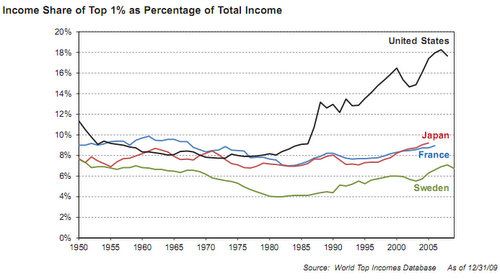
Today the artificial sugar-coating of increasing debt has been removed and we must live with the reality that an average hour’s work has not received a material increase for 40 years.
Without increased debt and without gains in hourly wages, how can there be sustained broad gains in consumption? Only Chanel suits, Hermes scarves, BMWs, and their ilk have very strong sales, and these top-end items are just too small a fraction to carry the day. If we want to dig out of our current morass, don’t we have to change this equation and isn’t the most direct way of doing this to divide the pie more evenly? That would mean lower income and sales taxes for the bottom 75% of earners and higher taxes for the top 10%!
We have allowed the vagaries of globalization and the plentiful supply of cheap Chinese labor to determine our income distribution, which has become steadily steeper, to the point where we have become one of the least egalitarian developed societies
2. Lender's remorse - Bloomberg's Adam Minter points to the growing public anger through micro-blogs in China about the amount of money the government has lent to America's government.

3. Righteous indigation - How dare Britain's politicians accuse a bunch of looters of being "sick" and stealing. \
This letter to David Cameron's parents from Nathan Tapley captures the incredulity nicely (HT SirWB via Twitter):
Of course, Mr and Mrs Cameron, your son is right. There are parts of society that are not just broken, they are sick. Riddled with disease from top to bottom.
Just let me be clear about this (It’s a good phrase, Mr and Mrs Cameron, and one I looted from every sentence your son utters, just as he looted it from Tony Blair), I am not justifying or minimising in any way what has been done by the looters over the last few nights. What I am doing, however, is expressing shock and dismay that your son and his friends feel themselves in any way to be guardians of morality in this country.
Can they really, as 650 people who have shown themselves to be venal pygmies, moral dwarves at every opportunity over the last 20 years, bleat at others about ‘criminality’. Those who decided that when they broke the rules (the rules they themselves set) they, on the whole wouldn’t face the consequences of their actions?
Are they really surprised that this country’s culture is swamped in greed, in the acquisition of material things, in a lust for consumer goods of the most base kind? Really?
(BTW check out the great photoshop action in the picture above showing looters leaving Number 10...)

4. "Corporations are people" - Republican Presidential candidate Mitt Romney actually said this when arguing for corporate tax cuts paid for by cuts for social welfare and public health care.
After receiving jeers from the audience over the quote, he elaborated: "Everything corporations earn goes to people. Where do you think it goes? Whose pockets? People's pockets. Human beings, my friend."
Romney went on to suggest raising the retirement age rather than increasing taxes on business in order to fix entitlement programs' shortfalls.
5. Why Europe's banks matter - Bloomberg writes a nice editiorial on why we should care about European banks.
The euro area’s debt troubles are probably the single largest threat to the global economy.
European bank troubles matter for the U.S. and the rest of the world, in part because the money-market funds in which millions of U.S. households keep their savings have invested heavily in European bank debt. Trouble at money-market funds would disrupt the short-term lending markets on which U.S. companies depend to pay suppliers and their own workers. Much as after the Lehman Brothers Holdings Inc. bankruptcy, the resulting credit freeze could force companies to slash production and fire workers, triggering a sharp recession in the world’s largest economy.
Ideally, Europe would conduct stress tests showing exactly how much banks can lose and immediately announce how they will raise the necessary capital, much as the U.S. did in 2009. But no stress test can be credible until European leaders own up to the fact that some governments can’t pay all their debts, define the losses investors will take and put a system in place to guarantee the debts that can be paid.
As Bloomberg View has advocated, the best route to clarity -- and stability -- would be for all the governments of the euro area to issue new bonds guaranteed by a unified finance ministry with taxation power. Investors would exchange the debt of individual governments for the euro bonds, probably at discount rates that would erase some of the debt at the investors’ expense. The remaining sovereign debt would be sustainable. Banks and investors would know the extent of their losses. It won’t be pretty, but ultimately the bloodletting will have to happen.

6. The feral rich and the feral poor - The Telegraph's Political Editor Peter Oborne has written a great piece challenging the politicians in Britain who criticise the rioters. HT SirWB via Twitter.
There was something very phony and hypocritical about all the shock and outrage expressed in parliament. MPs spoke about the week’s dreadful events as if they were nothing to do with them.
I cannot accept that this is the case. Indeed, I believe that the criminality in our streets cannot be dissociated from the moral disintegration in the highest ranks of modern British society. The last two decades have seen a terrifying decline in standards among the British governing elite. It has become acceptable for our politicians to lie and to cheat. An almost universal culture of selfishness and greed has grown up.
It is not just the feral youth of Tottenham who have forgotten they have duties as well as rights. So have the feral rich of Chelsea and Kensington.
A great deal has been made over the past few days of the greed of the rioters for consumer goods, not least by Rotherham MP Denis MacShane who accurately remarked, “What the looters wanted was for a few minutes to enter the world of Sloane Street consumption.” This from a man who notoriously claimed £5,900 for eight laptops. Of course, as an MP he obtained these laptops legally through his expenses.
7. Washington is broken - WSJ's Washington Wire blogs about how one of the new members of the 'super committee' to reduce America's budget deficit is already touting his new super powers to lobbyists to raise funds.
Food seems to be very expensive when bought at a fundraising dinner...
Political supporters of Rep. Xavier Becerra (D., Calif.), one of the appointees to deficit-reduction committee, have already figured out how to raise revenue—by touting his seat on the panel to raise money for his political campaign.
About two hours after House Minority Leader Nancy Pelosi named Mr. Becerra to the committee on Thursday, a political supporter began notifying Wall Street lobbyists about a $1,500-per-person fund-raising event on Aug. 31.
An emailed invitation from Jim Hart, an official with the Investment Company Institute, noted that it will feature Mr. Becerra, who is “not only vice chairman of the Democratic Caucus, but who also has just been named to the new deficit reduction committee.” It promised attendees “a glimpse into what will most assuredly be the primary topic of discussion between now and the end of the year.”
“This will be Mr. Becerra’s first event since being named to the commission and may be one of the first for any of the twelve members of the group,” the invitation continued. “This even could give all attendees a glimpse into what will most assuredly be the primary topic of discussion between now and the end of the year.”
8. A CreditAnstalt moment - If you think I am a gloomster, have a read of International Politics Professor Daniel Drezner at Foreign Policy on why the global economic outlook may actually be worse now than in 2008 and as bad as 1931...
First, the governments that bailed out the financial sector are now themselves the object of financial panic and political resentment. Second, the tools used to try and rescue the global economy in 2008 are partially to blame for what's happening right now. Despite all the gnashing of teeth about the Fed twiddling its thumbs, it's far from clear that a QE3 would actually stimulate anything besides a rise in commodity prices.
With both Europe and the United States unable to stimulate their economies, and China seemingly paralyzed into indecision, it's worth asking if we are about to experience a Creditanstalt moment.
The start of the Great Depression is commonly assumed to be the October 1929 stock market crash in the United States. It didn't really become the Great Depression, however, unti 1931, when Austria's Creditanstalt bank desperately needed injections of capital. Essentially, neither France nor England were willing to help unless Germany honored its reparations payments, and the United States refused to help unless France and the UK repaid its World War I debts. Neither of these demands was terribly reasonable, and the result was a wave of bank failures that spread across Europe and the United States.
9. American house prices still falling - Those wondering why America just can't seem to pull itself out of its funk should read this via The Atlantic:
The economy feels sick because we never extracted the poison of the recession. The housing bust still lives with us. The value of the typical home fell by nearly 50% in the last five years. In many cities, values are still falling. This has wiped out the most important source of net worth to most middle income families. We aren't building new homes -- housing starts are down nearly 75% from the peak -- and we're stuck in our old homes -- one fifth of mortgages are in negative equity.
This housing depression creates a negative feedback loop. Families stuck in negative equity homes close their wallets. Businesses react to low revenue by not hiring. High unemployment depresses wages. Low wages delay the purchase of more homes, which would reverse the pernicious cycle.

10. Totally Clarke and Dawe - They talk about the London riots and the global markets meltdown.
46 Comments
greg Pytel has two new articles about the Uk and rating agencies
The fact that, based on the same methodology, countries are underrated in comparison to private corporations is not just a matter of opinion as President Obama seemed to naively suggested putting a brave face - that looked rather silly - over a big problem. It means the states (countries, taxpayers) pay more money for servicing their debt than if they were private corporations in the same circumstances. In the financial markets of global capital allocation the effect is profound: it is a global wealth transfer mechanism from states (countries, taxpayers) to the private corporations. It is not an ideological opinion or a matter of political ideology but a financial fact.
More virals (like #2) Daily Mail
"I ain't carrying that home" was quote of the week for me....
Schadenfreude, bit overpowering this week....
FYI and now the Chinese are worried about European debt
Here's Barbara Ehrenreich at Mother Jones about how America is criminalising its poor
http://motherjones.com/politics/2011/08/nickel-and-dimed-afterword?page=2
In defiance of all reason and compassion, the criminalization of poverty has actually intensified as the weakened economy generates ever more poverty. So concludes a recent study from the National Law Center on Poverty and Homelessness, which finds that the number of ordinances against the publicly poor has been rising since 2006, along with the harassment of the poor for more "neutral" infractions like jaywalking, littering, or carrying an open container.
One result is our staggering level of incarceration, the highest in the world. Today, exactly the same number of Americans—2.3 million—reside in prison as in public housing. And what public housing remains has become ever more prison-like, with random police sweeps and, in a growing number of cities, proposed drug tests for residents. The safety net, or what remains of it, has been transformed into a dragnet.
Really rich people lack empathy, it seems
http://www.psychologicalscience.org/index.php/news/releases/social-class-as-culture.html
Upper-class people are different, Keltner says. “What wealth and education and prestige and a higher station in life gives you is the freedom to focus on the self.” In psychology experiments, wealthier people don’t read other people’s emotions as well. They hoard resources and are less generous than they could be.
One implication of this, Keltner says, is that’s unreasonable to structure a society on the hope that rich people will help those less fortunate. “One clear policy implication is, the idea of nobless oblige or trickle-down economics, certain versions of it, is bull,” Keltner says. “Our data say you cannot rely on the wealthy to give back. The ‘thousand points of light’—this rise of compassion in the wealthy to fix all the problems of society—is improbable, psychologically.”
... might help to explain the vitriolic outrage at the very idea of taxing the rich for a mere 15% of their passive capital gains.
Cheers to all.
Don't say that too loudly on this site mate!
Too true! There are clearly more than a few vested interests who are fiercely protective of their privileges!
I don't tend to engage too much with them, as it is like trying to argue with creationists.
.... which fits with the "lack of ability to empathise with others" research, I suppose...
Cheers
How wealth concentration turned our market economy into a centrally planned economy
Here's how European money markets are freezing again via Reuters
http://www.reuters.com/article/2011/08/11/us-crisis-asia-exposure-idUST…
One bank in Asia has cut credit lines to major French lenders while five other banks in Asia are reviewing trades and counterparty risk as worries about the exposure of French banks to peripheral euro zone debt mounts, banking sources told Reuters on Thursday.
That sudden rise in risk perception, combined with sharp share price falls in French banks, prompted some banks in Asia to speed up reviews of counterparty risk and look at whether they should cut exposure to European lenders, sources at each of the six banks in Asia said.
Bernado - if you dont already, you might like to load this page onto your resources - its the sovereign CDS spreads for various nations and shows the percieved risk of holding their Treasuries. Good indicator to watch:
Cheers. Very useful. If only it had New Zealand and Australia...
Bernard
Here is a more extensive list of 10yr CDS as at 5/8/2011
Well NZs CDS risk has jumped up recently
http://www.efinancialnews.com/story/2011-08-09/how-risky-is-the-aaa-wor…
Bloomberg follows 57 sovreign CDS quotes - just cant lay my hands on NZ's at the moment:
ie http://www.bloomberg.com/apps/quote?ticker=CT350188:IND
This site is also very interesting:
Here's Gillian Tett explaining via some interesting research that cashed up mutual funds are buying monstrous amounts of (downgraded) US Treasury bonds and bills because they are too afraid of America's banks. This explains the ultra low yields despite the downgrade and the problem of hoarding...
And here's Albert Edwards from SocGen (via FTAlphaville) explaining a few home truths similar to Grantham above
We are now entering the third phase of the Ice Age when another cyclical failure combines with a secular de-rating of equities and re-rating of government bonds. I and many others have been pointing out for a long time now the simple fact that the global economy has been living way beyond its means for years. A massive transfer of income to the very rich has occurred while middle class real incomes stagnated. The middle classes only tolerated this because Central Bankers created housing booms to keep the impoverished middle classes borrowing and spending to give them the illusion of prosperity and stop them from revolting.
I believe the Fed and Bank of England, in particular, were wholly complicit in this daylight robbery (see link). These unsustainable private sector, debt mountains were transferred to the public sector in 2008 to prevent the adjustment to the depression-era reality that the debt unwind would undoubtedly have brought about. Yet, those debts are as unsustainable in the hands of the public sector as they were in the private sector.
Grantham had a stunner a couple of months back - and I thought "he's got it". This one is a load of hokum. He's suggesting everyone has to consume more.
More what made with what? We're already up against the limits, bashed our heads hard against the ceiling. This one wasn't worth the read.
Bernard - has anyone studied the heights of 'rich' people? I suspect they're shorter than average. I've always reckoned it's nothing more than an inferiority complex, and compensation. I've also noted the attendant arrogance - usually easily goaded.....
Great fun when young, but the novelty wears off, there's more interesting things to do.
That's better. I just emailed Grantham and pointed out his oversight.... :)
I thought he got it as well, he's said other things since which still makes me think he does
http://www.youtube.com/watch?v=iYii4Oo1Nn8&playnext=1&list=PLC0761AA8F8…
http://www.youtube.com/watch?v=MThMfTNxaB8&feature=related
....just I suspect he jumped in to early on the likes of peak oil and maybe got slapped by ppl who didnt want to hear it just want fat profits thanks. I got the impression that he didnt have a good quarter, if he went defensive due to what he expected to happen at some point then his returns would have below par and I dont think rich ppl are "foregiving".......I think he's still defensive almost seems to be trying to justify low returns....
he's pretty damning on the banks/finance...3mins in.
http://www.youtube.com/watch?v=0vLRWYvdtA4&feature=BFa&list=PLC0761AA8F…
regards
Bernard - congratulation all these articles and links you posted are important guides to the practical understanding, of slowing down the destruction of economies, environment respectively societies - in order to impose ethic and moral behaviour for better societies.
Enough material to read over a cold winter’s weekend.
Hopefully, it will trigger a lively debate without much political small talk.
The flaw in Jeremy Grantham's waffle ....he leaves out the human factor...even ignores himself and his hedge fundies...bloody BS I call it.
If the opportunities to grow wealth without having that wealth stolen from you by thieving politicians hell bent on buying a place to park their arse and be paid to do feck all...if that is taken away as in a socialist bog of garbage laws that make life more equal..yuck... the consequence would be a human ant colony with no bloody reason for living other than to work for the ant colony. What the hell is the point.
Is Grantham suggesting an ant colony existence would be somehow a good thing....how is it that someone so thick can achieve such wealth!...in his own created universe of more equal ants, he would be one of the worker ants...goodbye to wealth and all the shite it brings for Jeremy Grantham.
On top of that he fails utterly to understand the link between the drive for wealth by individuals and the advancement of technologies....! go figure
No Wally, you go figure.
Technology alone can't save you. I've shoved 'efficiencies' (which are essentially the end-product of technologies, if you understand that energy underwrites all activity) as far down the track as anyone.
but
they won't save a system based on selling each other exponentially more and more goods and services. Sorry, the flawed mind-set - which share-investors and PI's share with hedge-funders - is that you can turn a money-gain on a money-investment, into goods/services indefinitely.
Your view of 'wealth' is counting the wrong thing (I've suggested this before) and it's a flawed mind-set carried by most folk - they seem to transfer the value of the purchased item to the proxy, and leave it there mentally. What's a dollar worth when there's no bread on the bakery shelves? Will a million dollars change the fact that the shelves are empty?
And - who said there had to be a point? That's a bit high-and-mighty, isn't it? You're just an example of one species, and on a statistical basis, all species that have existed on this planet are extinct. The ratio is that emphatic. Why do you think we're somehow exempt?
It's in our hands, given the magnitude of our impacts, and judging by the denial we see hereabouts, I don't like our chances.
Let's see if Barry O has the balls to boot Becerra off the "committee" and end the money grubbing shite game that has turned Washington DC into a pool of effluent. He won't.
S&P's downgrade call will be followed by Moodys and Fitch but they are all three of them way behind the Chinese downgrading slapped on the USA.
The markets are set to slump into a very long bear in which spasmodic bursts of light will shine as spin and BS dominate the lying media...only to slump again.
Those promised gold ownership on paper will discover they have a fistful of used toilet paper because there is more gold owned on paper than exists on the planet...should be fun to see this one explode.
Everybody is broke. It is just taking some people longer to come to the realization that the party is over.
Italy prepares to slash spending, raise taxes:
http://www.cnbc.com/id/44124168
''It also brings forward measures to raise the retirement age for women in the private sector, originally programmed to begin in 2020 but which will now start in 2016''.
But of course our brilliant leader will not even discuss the retirement date issue - because we are in so much stronger a position........
Bring on the next Great Depression.When government takes up almost 50 percent of the economy and you begin to make savage cuts in its services, who will fill the demand gap left behind?
"What's QE3?"
"It's a ship."
"That's QE2, isn't it?"
"It was... they must be launching a new one."
"This is for Cunard?"
"I imagine it's not easy, Brian..."
Brilliant.
" this was one of the most important policy decisions in modern history"
Today Key will announce a govt shift in policy on welfarism in NZ....ok but shouldn't he also announce the intention of his govt to change the credit culture that is killing this economy!
Shouldn't Key begin the journey to take the economy back from the hands of the banks!
Shouldn't Key make a start by dragging the RBNZ away from it's close and cosy relationship with the banks and bring an end to Bollard's near zirp game!
Shouldn't Key make good on his statements that saving is important and to be encouraged!
Doesn't he have the courage to tell Shipley she will receive the going rate for attending a few meetings to discuss what might be a good idea to sort out the Chch problems...or to bugger off.?
Will Key ever admit in public that his govt is continuing to subsidise landlords to the tune of $1100,ooo,ooo,ooo in rent supplement payments every year......and that removing them would force landlords to accept what tenants could afford to pay or receive no rent at all...sort of 'market forces'.....?
Shouldn't Key have the guts to begin to end the scam whereby one very small group of pointy heads in wgtn gets to determine the bloated salaries to be handed over to all the other pointy heads across the country on the govt payroll...including the waseful mps.?
Does he lack the leadership needed to end the SOE salary and bonus rort going on?
Will Key ever admit in public that his govt is continuing to subsidise landlords to the tune of $1100,ooo,ooo,ooo in rent supplement payments every year......
I think you got excited with your 000's here Wolly or just reflecting your lack of understanding of these matters?
And what are these subsidies? Agree under the old LAQC rules there was aform of subsidy but the removal of depreciation has halted a lot of this.
1,264.227 millions for 2011 - wonder what accomodation the govt. could build for that sort of money.
I think this is Wally's starting figure....
- stimulate the construction industry further?
Some bugger keeps changing what they call it KWJ...it's all subsidies to me...well not to me in real terms cos it goes to the landlords...wonder what % of landlords are national voters!
Funny isn't it...a blatant example of hypocrisy...a National govt pushing free market success but stuffing up the rental market with over a $billion a year that achieves one unstated goal...that of rewarding landlords with fatter rents.
Now even if National are too gutless to remove this subsidy that distorts the market for fair of losing votes..they could at the very least set in motion a grandfather clause and wind back the subsidies at 5% per year....too much to ask isn't it!
Public targets...no honestly...just a matter of when and where..the how is an easy guess!
"If you look at some of the central players who caused this economic crisis, you will see that they are among this Economic Elite group.
Former Goldman Sachs CEO and Bush Treasury Secretary Hank Paulson had already amassed at least $700 million prior to moving to the US Treasury in 2006. Current Goldman Sachs CEO Lloyd Blankfein and a few other top executives at Goldman Sachs just received $111.3 million in bonuses. Blankfein just took home $24.3 million, as part of a $67.9 million bonus he was awarded. Goldman’s President Gary Cohn took home $24 million, as part of a $66.9 million bonus he was awarded. Goldman’s CFO David Viniar and former co-president Jon Winkelried both took home over $20 million in bonuses.
Citigroup CEO Vikram Pandit just took home $80 million, in what may eventually total more than $200 million in compensation and bonuses. Coming in at the top of the list is JP Morgan Chase CEO Jamie Dimon, who just took home $90 million.
If you think people in this income level don’t control the US political process, you are not paying attention. After they caused this economic crisis, they got the government to give them trillions of dollars in taxpayer support, and then, after taking our tax dollars, they gave themselves all-time record-breaking bonuses. 2009 was an all-time record-breaking year for Wall Street executives bringing in a total of $145 billion [53]. And then, in 2010, they raised the bar even higher, breaking the all-time record set the year before by pulling in another $149 billion [54]. The audacity of it all is stunning.
Finding people more grotesquely greedy than Wall Street executives would seem to be impossible. However, health insurance CEOs are giving them a run for their money. As the LA Times reported [55]:"
interesting to read he sees Stagflation as well. Inflation + deflation(income, asset values) = stagflation.
Here's some utter bullshit
"New Zealand company directors are securing higher fees, which a remuneration consultant says is to compensate for the increased levels of accountability they are now facing.
A survey of directors' fees by remuneration and performance consultants Strategic Pay shows that they increased by 4.9% between 2009 and 2011.
John McGill, managing director of Strategic Pay, says that given their increased responsibility and accountability it is not surprising that directors' remuneration is rising". stuff.co
why is it bullshit.
Because it is....!
A token reason to justify directors taking even fatter fees. As they will..As they always have.
Because it is is not an answer. Its not even a comment. Its a nothing, much like the rest of your blogs.
You sound like an old fasioned school teacher when asked by a student what is the rationale for something which you cant answer or justify just say Because it is
Because it is .. is a whole lot more rational than some of the reasoning you can see in givernment and business and on this site.
token wolly waffel and stephen talking from his socialistic assumption on life ...some things never change around here...get away from macro economic and property matters and this place just falls off a cliff on informed comment.
Many business are working in a lot more uncertain environment, with business failure is a distinct possibility or negative PR risk if something goes wrong . The vast majority of directors are not on public listed boards, lot of mid sized organisations and companies out there with Boards, non executive Directors in middle New Zealand. I know Directors who agonise on what else they can contribute to their companies. They do put their reputations with the companies they serve on the line and do care. They are judged by their mis-steps within the Directors community a lot harsher than any other forum in the community. Stuff up and they will not be on another board period and tainted by association.
Shame the opinions here are formed by articles and media representations rather than people getting out into the real world. Very shallow.
The increase of renumeration for CEOs was in the past it was claimed becasue they deserved it because they were generating great results (in a ponzi scheme), while real workers saw declines in real terms...Now they are being held accountable and consider they are worth more because of this.
Its rubbish and its obscene.
regards
Every business in every indusry type is not in a ponzi scheme and to use your words, is rubbish and obscene.
Many directors contribute their skills to make businesses (more) profitable and sustainable to the benefit of all stakeholders which includes customers, workers and owners.
Yes there have been some crap directors and do not take their responsibilities with the amount of care required, especially showpony directors who are just looking for companies to put on their CV's.
Some of the best directors I have seen have been in SME businesses which have been able to add real value to the business by assisting the company to produce the right goods and service to the right market at the right price.
SME's where there is no over-riding shareholder pressure from institutions holding those shares, by all measn might be OK, however as a general comment there is clearly IMHO little long term care given its all about keeping those shareholders happy between conference calls.
regads
Their increase in fees is about the same as many other workers got over this period. Don't see the problem here.
You mean no increase?
Always had a soft spot for Bjork - she's from Iceland.
I know we're not Iceland but....
Missing in Action: Iceland's Hydrogen EconomyMore parallels than we realise?
We welcome your comments below. If you are not already registered, please register to comment
Remember we welcome robust, respectful and insightful debate. We don't welcome abusive or defamatory comments and will de-register those repeatedly making such comments. Our current comment policy is here.