

Here's my Top 10 links from around the Internet at midday in association with NZ Mint.
I welcome your additions in the comments below or via email to bernard.hickey@interest.co.nz.
I'll pop the extras into the comment stream.See all previous Top 10s here.
A good crop of cartoons today.

1. Why is John Key so confident about China? - The Wall St Journal reports here that China is loudly telling Europe and the United States that it can't and won't bail them out this time around.
Key spoke this morning about how New Zealand will be OK as long as China stays decoupled from America Europe and the United States.
That can only happen if China goes on yet another monster infrastructure building and real estate development spree to rival the one it undertook through 2009.
That triggered a surge of inflation that China is now desperately trying to control by slowing its economy.
If you want to see a real world indication of how China is being affected by that slowdown -- which is part of the latest 5 year plan by the way -- then have a look at the copper price.
It is down 17% inside the last 10 days. That's a steeper drop than we saw around the Lehman crisis.
Anyway, here's what the Chinese are saying:
"We can't just go save someone," said Gao Xiqing, president of China Investment Corp., China's huge sovereign wealth fund. "We're not saviors. We have to save ourselves," he said at a weekend panel discussion
Chinese central banker Zhou Xiaochuan was just as adamant that China shouldn't be expected to boost its growth rate in an unsustainable fashion to help out the global economy.
Currently China is growing at roughly a 9% annual pace. He said that growth of somewhere between 8% and 10% was a "reasonable expectation."
"Some people may have an irrational hope that the higher the growth, the better," he said at a Saturday news conference. But growth rates of 15% or higher—"that's not realistic," he said.

2. And it's not just the Wall St Journal - Canada's Globe and Mail reports China can't be relied on again to rescue the world.
The country is still dealing with the side effects of its previous stimulus package: burdensome local government debt, stubbornly high inflation and a red-hot housing market that many say is set to blow up.
“I don’t think China will fill the void of growth that is left from a slowdown of the Western economies at this stage,” said Na Liu, the founder of CNC Asset Management and an adviser on China strategy to Scotia Capital. “A new ‘shock and awe’ stimulus package from China like the one in 2008 is almost impossible at this stage.”
At the same time, China’s economy is decelerating from the more than 10 per cent GDP growth it enjoyed in 2010.
A third month of slowdown in manufacturing highlighted by a weak HSBC Chinese purchasing manager’s report this week contributed to the market mayhem that sent global stocks into a tailspin and investors rushing for the safety of bonds.
This little anecdote from a Mr Chen is most interesting:
Many of the factories here that helped the world out of recession are now gone. The low-skill garment factories were the first to go, and now other owners are either shuttering their operations completely or moving to the Chinese interior. As the economy in China has sagged, Mr. Chen’s customers are taking longer and longer to pay for orders, asking for 30-, 60- or even 90-day payment periods, which have hit his cash flow and made him increasingly reliant on loans.
However, since the state-owned banks are refusing loans to small to medium-sized businesses like his own, Mr. Chen says, he has been forced to rely on private lenders with usurious interest rates as high as 60 per cent.

3. The Christchurch effect - Anne Gibson reports at NZHerald on how expectations about the Christchurch rebuild are slowing down building elsewhere.
Christchurch's multi-billion-dollar earthquake rebuild is putting a damper on construction for now as businesses assess the costs of the devastation and staff flock to Canterbury, creating a shortage elsewhere.
A construction sentiment survey from David Langdon, part of AECOM, says uncertainty is dogging the building sector, largely due to the earthquake and ongoing seismic activity.
"Across the country, projects have been cancelled or deferred pending determinations on companies' capital requirements in Christchurch," the survey said.
4. RUB sounds a lot like the MUL - Auckland's new draft plan proposes a Rural Urban Boundary (RUB) to replace its Metropolitan Urban Limit (MUL) and wants Aucklanders to build up rather than out, Jessica Tasman-Jones reports at Stuff. Your view?
But it's not a move all believe will be popular. Professor Jennifer Dixon of Auckland University's planning department said many of the city's high rise apartments, built during the 1990s, have been tarnished by leaky home syndrome.
In an article on the university website this month she said the image of apartment blocks and "cheek-by-jowl" housing does not match New Zealand's long-held dream for a quarter-acre paradise.
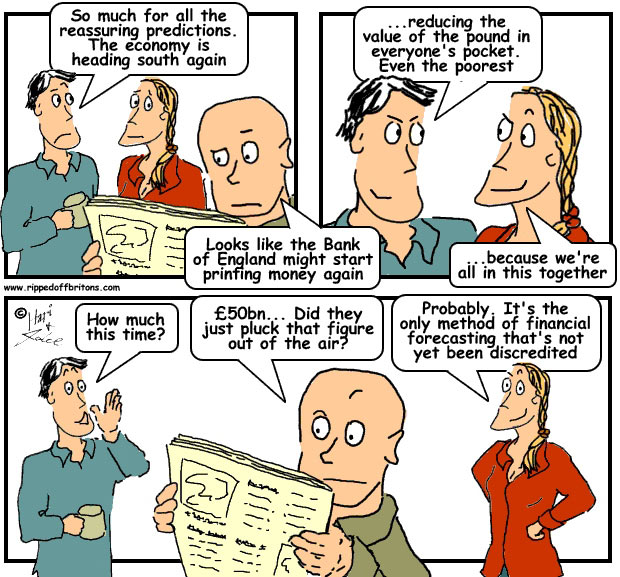
5. 'Those greedy boomers' - Paul Sheehan, a Baby boomer, writes at the Sydney Morning Herald that Baby Boomers racked up huge bills and debts that are now coming due.
Responsibility for this bill lies mainly with the boomer-and-bust generation, but the cost will be borne by all.
Though this is a crisis of capitalism and consumerism, it is not caused by the systems themselves, which have been dynamic wealth-generating forces improving the living standards of billions of people to levels not seen before. This is a crisis of consumption and self-absorption, a desire for more than was needed or expected by previous generations. It is a crisis of moral and economic obesity.
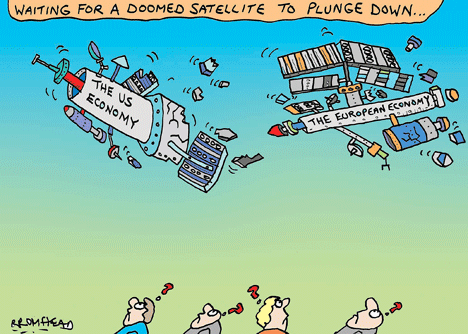
6. How a European meltdown would spread to America - John Hussman writes here about the linkages between the stressed European banks and US households, via their money market funds.
He makes a good point too about moral hazard and the hunt for yield. Interest rate repression by central banks drives all sorts of desperate behaviour.
According to Fitch Ratings, the ten largest U.S. prime money market funds had total assets of $658 billion as of July 31, 2011. Of those assets, $309 billion - an unsettling 47% of the total - represented debt obligations issued by European banks. It is unclear what level of subordination these debt obligations take, but we can expect that in the event of a Greek default, this concentrated ownership of European bank debt by U.S. money market funds will be less than ideal for investor confidence.
I can't imagine what the yield-reaching managers holding European bank debt are thinking, but if last week's agreement by the Fed to provide dollar swaps to the ECB is any indication, my guess is that the eagerness to send dollar liquidity to Europe is abruptly drying up from private sources. In any case, the heavy allocation of U.S. savings to the European banking system strikes me as an awful example of "moral hazard" produced by two forces: the 2008-2009 bank bailouts, coupled with a European regulatory structure that doesn't require those banks to hold any capital against holdings of European government debt, including that of Greece.
As we saw in the housing crisis, when a weak regulatory structure encourages unaccountable leverage, and irresponsible monetary policies encourage reaching for yield, the combined result is predictably disastrous.

7. China's trusts - This piece via BusinessWeek goes into a bit more depth on the extent of the off-balance sheet and unregulated trust lending sector in China. These trusts sound an awful lot like our finance companies.
As the official banks have cracked down on lending, many of the developers and local government vehicles have migrated to the unregulated trusts who make short term loans at rates of 10-30%...
In my view they're the sort of things you reach for at the final stages of a bubble to prop up a Ponzi scheme...
China’s banking regulator is looking into financing of developers through trust companies as part of a broader evaluation of real estate lending, a person familiar with the matter said.Chinese property developers led by Greentown China Holdings Ltd. plunged in Hong Kong trading yesterday on concern tightened access to loans will force them to cut prices.
“Given that the nature of trust loans is short term, the key question would be whether or not developers have sufficient cash to repay the outstanding loan amounts,” Samsung Securities Asia Ltd. analysts led by Wee Liat Lee, said in a report today. “We believe that developers should be financially secure should the trust loans not to be rolled over.”
Trust loans are usually debt that’s repackaged into investment products and sold to retail investors, and the loans are typically funded by banks or the investors themselves, according to Samsung Securities. For most developers, these make up less than 10 percent of their loans and the debt maturity is a few months to a year, the brokerage said, adding that the interest rate ranges from 10 percent to 30 percent.

8. So what happens next? - Australian hedge fund manager John Hempton muses at Bronte Capital about what might happen with Greece and the euro.
He sees either a default and an exit from the euro or a default and no exit. Neither ends well. The former is very bad.
Here's his thinking, which hinges on a Greek default and surprise devaluation causing chaos in the rest of the PIGS:
A bank deposit in Athens is going to turn your Euros into Drachma. Overnight it will lose 70 percent of its valuation. So it has to be done quickly and with an element of surprise (as per Argentina when most people did not get their dollars over the border). Without surprise people will rush their money to Deutsche Bank in Munich.
One weekend we will just find that the Greeks have done it.
But now suppose Greece does pull this trick. The day after we have a Drachma - deposits are in Drachma. We might print a single 10 drachma note and allow it to settle against the Euro - then over time print more. This should work for Greece.
Now if you are Irish or Italian or Portuguese (or even Spanish) you know the rules. You get to get your Euro out of the PIGS and into the core (Germany) as fast as possible. So max all your credit cards (for cash), draw all your bank deposits and load them in the boot of your car and make the drive to Switzerland or Germany. Somewhere safe. Otherwise you are going to lose half the value the day that the rest of the PIGS do a Greece.
And this bank run – a run including tens of thousands of Italians driving their Fiats - will surely blow apart every Italian bank. And their Euro-skeloritic compatriots will sign the death knell for for all their banks too.

9. Save the rich from themselves - Yves Smith at Naked Capitalism has pointed to an excellent post by The London Banker that cites testimony by Marriner Eccles to the Senate Finance Committee in 1993 on how to save the rich from themselves.
It is utterly impossible, as this country has demonstrated again and again, for the rich to save as much as they have been trying to save, and save anything that is worth saving. They can save idle factories and useless railroad coaches; they can save empty office buildings and closed banks; they can save paper evidences of foreign loans; but as a class they can not save anything that is worth saving, above and beyond the amount that is made profitable by the increase of consumer buying.
It is for the interests of the well to do – to protect them from the results of their own folly – that we should take from them a sufficient amount of their surplus to enable consumers to consume and business to operate at a profit. This is not “soaking the rich”; it is saving the rich. Incidentally, it is the only way to assure them the serenity and security which they do not have at the present moment.
10. Totally Jon Stewart on Barack Obama's tax plan.
We welcome your comments below. If you are not already registered, please register to comment
Remember we welcome robust, respectful and insightful debate. We don't welcome abusive or defamatory comments and will de-register those repeatedly making such comments. Our current comment policy is here.