
For many years, people in retirement held their savings in bank deposits or similar fixed interest securities. The interest would be received (perhaps monthly, or perhaps six-monthly) and spent. On maturity, the investment would be rolled over into a new similar investment. This process was repeated and the continual rolling over of interest-earning securities and bank deposits was probably the main drawdown strategy for most retirees.
This strategy seemed to work reasonably well. Interest rates were higher than they are now, and the income received from interest payments was enough. Importantly, life expectancy was lower and people were probably less active than they are today and had fewer expenditure demands placed on them in retirement.
However, the higher interest rates were really an illusion at most times. Certainly, headline rates were higher (often much higher), but so too was income tax and inflation. Therefore, real interest rates (after inflation and tax) were often very low, even negative. People following this strategy were losing spending power each year and there was a great deal of talk about it all being very tough for people on ‘fixed incomes’ (a code for retired people).
In reality, although the rolling over of interest-bearing securities seemed to work, lower life expectancy masked the fact that it was not a good strategy. Quite simply, a lot of people died before inflation had a chance to wreck their retirement plans. In 1950, the retirement age was 60 years, meaning that on average people only enjoyed nine years of retirement. Today, with retirement age at 65, people on average have 17 years in retirement.
Therefore, today people must fund an additional eight years of retirement and low returns from interest-bearing investments that no longer work, if they ever did. Term deposits no longer cut the mustard.
At the same time, two other things have happened:
- People have become more willing to spend capital; and
- It is much easier to access financial markets which give higher returns.
There are still a good number of people who continue to be wedded to bank deposits and fixed interest investments. Such people think that these kinds of investments are safer, even though by taking out a term deposit you are almost certain to lose money in real terms. In my lifetime, there has been a swing towards diversified portfolios, and, although not everybody is quite there yet, things are improving.
Retirement income - the new way
While a few people still adopt the term deposit strategy, a much smarter plan is to have a diversified fund and draw a defined amount from this each fortnight. This diversified fund or portfolio could be a managed fund or funds (possibly a KiwiSaver account), a fund put together by a financial adviser, or, less commonly, a set of investments you directly manage yourself. A diversified fund will give exposure to all asset classes and be diversified within all asset classes.
At the moment, you cannot expect this diversified portfolio to spinoff much cash income - interest rates are still low, and so too are dividend yields. In the past, people may have lived happily enough on the interest and/or dividends they received but that is no longer the case. The idea of investing for income to live on is gone.
Instead, you will draw from the portfolio a set amount regardless of the cash returns that the portfolio or fund is returning. The fund will certainly make returns, but these will be made up of interest, dividends and capital gains.
These returns will accrue to the fund; however, it is quite likely that you will draw more than these total returns - and that means you will effectively be withdrawing a part of the capital, i.e. you will be running the fund down.
It is necessary for you to draw a pre-determined and constant amount because that is what you will be living on. You will draw on the fund every fortnight (or month) and that amount needs to be set at a level that will run the fund down - but not too quickly or too slowly. Over long periods of time the amount that you draw may change, however, over short periods of time (fortnightly or monthly), it will remain consistent as you draw down to pay bills.
It’s important to remember that you will not be living solely on the income or gains that the fund earns. The fund will have investment returns but almost regardless of what they are, you will draw down an amount that you have set at the beginning.
Spending capital
Whatever the drawdown rate you choose, unless it is very low it is most likely to include your investment returns and, each year, a little bit of your original capital as well.
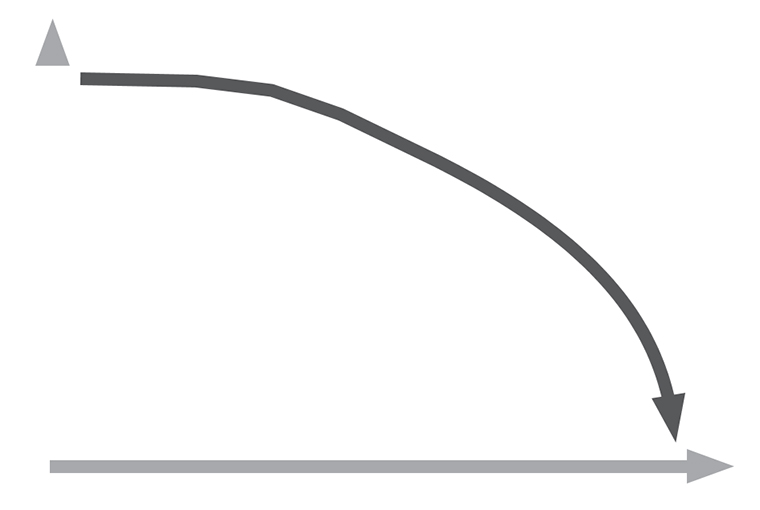
Throughout retirement, you will make constant withdrawals - possibly following the 4% rule or some other rule of thumb. At the beginning of retirement, you will spend mostly investment returns and only a little of your investment capital. However, as time goes on and your capital gradually reduces, you have smaller investment returns (because you have less capital to generate returns) and so a greater proportion of your withdrawals from the portfolio is made up of capital.
You may be drawing a standard $1,000 per fortnight from your investments but if you track the amount that you have in your investments, you will notice it reducing - slowly at first, faster towards the end. Graphically the amount that you have in your investment fund will look like this:
There is good way to think of this: imagine a couple who spend their whole lives as chicken farmers. They buy a dozen chickens (their capital) and, when they lay, they sell their eggs (their investment returns). However, they realise that selling a dozen or so eggs is not going to make them rich, and so, instead of selling all of their eggs, they hold one back each day (i.e. they save it). They keep this egg until it hatches, and this grows their flock. Saving that egg grows their capital and they end up with a magnificent flock of chickens, which lay plenty of eggs.
Come retirement, our farmers stop selling their eggs and instead start to consume them - eggs for breakfast, lunch and dinner (boring, perhaps, but nutritious enough). However, their eggs do not go quite far enough (they are not quite rich enough, there are not quite enough chickens laying) and so they must supplement their diet of eggs by killing the odd chicken. Roast chicken makes a welcome relief from all those eggs, but as chickens are killed and eaten, there are fewer to lay for them - and so the number of eggs available to eat reduces.
Gradually, the couple’s diet changes: they find that they are eating fewer eggs (income) and more chickens (capital). The race is on to see if they will have enough for their whole retirement - if they can get the timing just right, there will be no chickens to trade with the undertaker for decent funerals.
In the chicken farming example, there is a clear distinction between eggs and chickens, income and capital. In real life with a diversified portfolio, you will simply draw the same $1,000 each fortnight. Certainly, you will be able to figure out what your investment returns are, and you will be able to keep track of the amount of capital you have, but each fortnight, you will draw $1,000 regardless (or, nearly regardless - if the markets are in a serious downturn, you may stop or reduce drawings for a bit if you can).
The key for you is to decide how much you can draw down and still pay the undertaker. The chicken farmers had the same problem - they could have been gluttons or starved themselves. I could offer them no advice on this - I do not know the reproduction rate for chickens, nor have any idea the number of eggs or chickens you need to eat and have a good life.
Fortunately, when it comes to money, I am not so blind. This is because many people have the same drawdown problem, and we now have some rules of thumb to work from. These give the rate of drawdown which should be safe for you. They are not perfect because over the course of a long retirement anything might happen. They are, nevertheless, a good starting point and, even though you may need to make adjustments during retirement, they ought to give a fairly reasonable idea of how much to draw down each year.
Other drawdown ideas
I have frequently met people who have told me their retirement plans features rental property. This plan is to purchase a rental property, spend 20 years repaying the mortgage and then use the rent from the property to fund their retirements. For people in their forties, this all seems a good idea because it handles both the accumulation and decumulation phases in one fell swoop.
However, simply owning a rental property in retirement and relying on that for decumulation is not a good idea. It flies in the face of two of the critical requirements for decumulation that are set out above: a rental property is neither a liquid investment nor is it a diversified one.
In fact, it is a very concentrated investment and if a big majority of your retirement investment capital is in this property and you own little else you could strike trouble:
- Rental property may not perform as well as it has in the past (recent government measures which extended the Brightline test and removed the tax deductibility of interest could decrease returns and greater compliance could reduce cash returns).
- A big concentration of your wealth in rental property excludes having money in other asset classes, and especially stops you from having a significant proportion of your retirement
- It is hard to draw on capital. The rents may continue to flow and these, along with NZ Super may meet your basic expenses, but to get at your capital if needed, will almost certainly require a sale of the property.
- When all costs are factored in, residential rental property does not really give a great deal of income.
I would make similar comments to those who have a business and plan to try to keep their business when they ‘retire’. This plan may involve putting in managers or a business partner but, if the business’s value makes up a large proportion of the retiree’s wealth, it runs afoul of the two requirements for liquidity and diversification. It also does not allow for any kind of proper retirement. If you own a business, it is hard not to have at least some involvement and that involvement will likely be more than you want at times and may end up giving you continuous worry and work.
I see no alternative to a conventional diversified portfolio, probably one that is balanced (i.e. 50% is in growth assets and 50% in income assets).
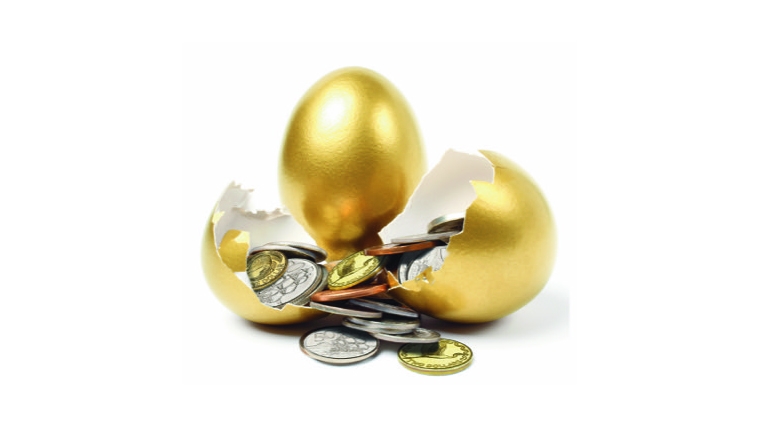
This edited extract is from Cracking Open the Nest Egg by Martin Hawes. The book sets out to help people with the way they should invest when the nest egg has hatched, and how they draw down from their savings to give a good retirement.
We welcome your comments below. If you are not already registered, please register to comment
Remember we welcome robust, respectful and insightful debate. We don't welcome abusive or defamatory comments and will de-register those repeatedly making such comments. Our current comment policy is here.