
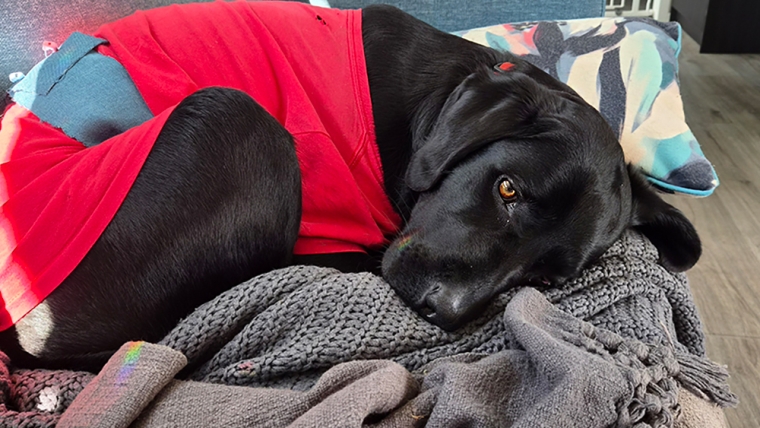
Last week, my beautiful boy Jett had an unexpected trip to the vet. In typical Labrador style, he had eaten something that got stuck on the way out. By the time we walked out after an Xray one day, the ultra-scan the next day, blood tests, surgery and a night in doggy hospital he was on the mend, and I was holding a bill far larger than anything I'd have guessed at the start of the week.
I was fortunate. I have an emergency fund, so paying it was uncomfortable rather than frightening. But as I drove home with Jett in the back, I kept thinking about everyone who doesn't have that buffer. What does that moment feel like for them? And, after a very honest conversation with our vet, what does it feel like from the other side of the counter?
Why does a Vet bill feel so personal?
Most bills are transactions. A vet bill feels like a verdict on how much we love someone.
Many of us carry a quiet belief that if we truly loved our animal, we would pay whatever it takes. So, when an estimate arrives and our first thought is "can I afford this?", it can feel like a betrayal. The question isn't only financial. It's tangled up with loyalty, guilt, and the kind of person we believe ourselves to be. Fortunately my threshold wasn’t challenged, and I really don’t know where it is.
David Krueger talks about our money stories, the beliefs about money we've absorbed over a lifetime, often without noticing. In the vet's consulting room, those stories speak loudly. One person hears "good owners never count the cost." Another hears "I've never been able to afford the things that matter." Neither story is chosen in that moment, but both shape how the next few minutes unfold.
What does stress do to our money decisions?
When we're frightened, our thinking narrows. The part of the brain that weighs options and considers the months ahead takes a back seat to the part that simply wants the threat to go away.
That's why people so often respond at extremes. Some say yes to everything and worry about paying for it later. Others freeze, unable to take in what's being explained, and leave feeling they decided without really making it. Neither response is a failure. It's what a stressed nervous system does.
What does an emergency fund really buy you?
We usually think of an emergency fund as money set aside to pay for things. But standing at that counter, I realised it had bought me something more valuable: clear thinking.
Because I didn't need to work out which bill to delay or which card had room on it, I could focus on Jett. I could listen to the vet, ask sensible questions and make a decision based on what was best for him, not on panic. That calm isn't a personality trait. It was built, slowly and unglamorously, over years of putting a little aside.
How do I pay for an unexpected vet bill without savings?
If you don't have a buffer, please know you're not alone, and you're not a bad pet owner. There are still ways to make the moment more manageable.
Start by being honest with your vet about what you can afford, as early as possible. Many practices can talk you through options at different price points, or stage treatment so you're not committing to everything at once. Ask whether they offer a payment plan. If you're considering pet insurance for the future, read the fine print on excesses, limits and pre-existing conditions, because the time to arrange it is before you need it.
Be cautious about reaching for a credit card or a buy now, pay later option in the heat of the moment. Sometimes it's the right tool, but borrowing can quietly shift today's stress onto the months ahead, and it's worth pausing long enough to know what you're signing up for.
What is it like for the vet?
When I talked with our vet about Jett's bill, they said something that has stayed with me. They aren't trained to be grief counsellors, or money advisors, but they often end up being both on the same day.
I've spent years learning how money and emotion tangle together, and I still find those conversations delicate. Vets are having them in a consulting room, with a frightened animal on the table and an owner doing sums in their head while trying not to cry. Then they have to wash their hands and walk into the next appointment.
We tend to see the vet as the person handing us the bill. But they're also the person watching us try to decide what we can afford to do for someone we love, and they feel the weight of that decision too.
Why do vet bills seem so expensive?
Our vet also told me they receive a fair amount of abuse about their prices. I understand the shock, but I think it says more about how we see healthcare than about vets.
Most New Zealanders never see the true cost of an MRI, an operation or a night in hospital, because our public health system, ACC or insurance quietly absorb it. At the vet, we see the whole bill: the anaesthetic, the imaging, the surgery, the aftercare. Compared with human specialist care, it's often considerably less. It's just the first time many of us have looked the true cost of medicine in the eye.
Our sense of "expensive" is shaped by what we're used to seeing, not by what things are actually worth.
Why do people react so differently?
People meet a big vet bill in different ways. Some respond with anger, because fear and helplessness need somewhere to go, and the person holding the estimate is the nearest place. Some feel overwhelmed, the numbers blurring while they try to take in what's happening to their animal. And some, like me, feel mostly gratitude.
I don't say that to suggest I handled it better. Having a buffer meant I could focus on Jett rather than on which bill to push back. Without it, I suspect I'd have felt the overwhelm too, and perhaps a flash of the anger.
None of these reactions makes someone a bad pet owner or a bad person. They're what happens when love, fear and money all arrive in the same room at the same time.
Can I plan ahead for a pet emergency?
The kindest thing we can do, for our animals, our vets and ourselves, is to have the hard conversation before it's needed.
What would you be willing to spend on your pet? Where is your ceiling? If you share your life with a partner, do you agree? And if treatment were ever beyond your reach, what would you want to happen? These questions are much easier to answer on a quiet Sunday afternoon than in a consulting room with your heart in your throat.
Alongside that, even a small, dedicated amount set aside each week for the unexpected can change how that moment feels. It doesn't need to cover everything. It just needs to give you enough room to think.
And in the end ...
As I write this, my beautiful boy is home, snoozing in his bed, oblivious to the invoice on my desk. And that, in the end, is what the money was for.
If this has stirred something for you, perhaps tonight is a good time to have that conversation at home. And next time you're at the vet, it might be worth remembering that the person across the counter is carrying some of it too.
*Lynda Moore is a Money Mentalist coach and New Zealand’s only certified New Money Story® mentor. Lynda helps you understand why you do the things you do with your money, when we all know we should spend less than we earn. You can contact her here.
We welcome your comments below. If you are not already registered, please register to comment
Remember we welcome robust, respectful and insightful debate. We don't welcome abusive or defamatory comments and will de-register those repeatedly making such comments. Our current comment policy is here.