
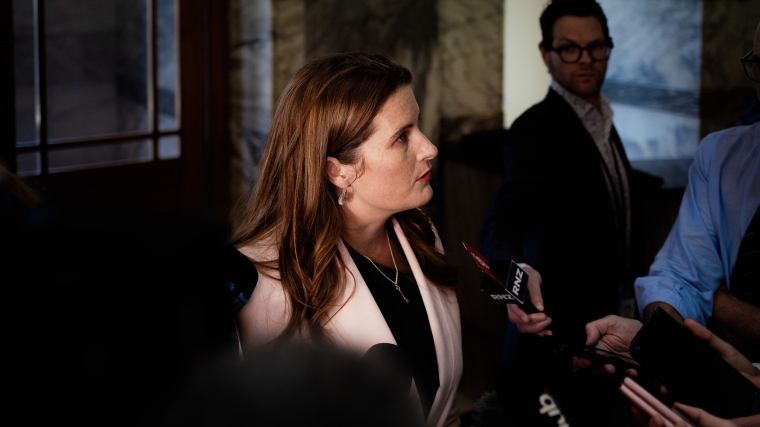
Finance Minister Nicola Willis will announce the Government's next steps to increase competition in the grocery sector this weekend.
RNZ reported this on Friday morning as the Government strives to motivate an international grocery player to come and combat New Zealand's supermarket duopoly.
“We’re not saying any more today,” a spokesperson from Willis’ office said after interest.co.nz queried if Sunday's announcement would include making changes to the Overseas Investment Act in order to make it easier for an international grocery player enter the NZ market.
Willis is now responsible for overseeing the Government’s plan to increase competition in the country’s supermarket sector. The Minister of Finance is also responsible for the Overseas Investment Act.
Supermarket regulation had previously been a job for the Minister for Commerce and Consumer Affairs. However Scott Simpson, who is the new minister, is unable to be involved due to a family member owning a supermarket.
Simpson took over the portfolio after previous Minister Andrew Bayly resigned following an altercation with a staffer.
Grocery Commissioner Pierre van Heerden told interest.co.nz in September last year the Overseas Investment Act creates additional costs, delays and uncertainty in relation to site acquisition by overseas entities looking to enter or expand in NZ's grocery industry.
Willis said last month at the Waikato Economics Forum that international supermarket chains and local investors have expressed interest in entering the NZ grocery market.
“I want to help them succeed,” she said. This help would include removing unnecessary regulations from the Overseas Investment Act.
Interest.co.nz also asked Willis’ office if any consideration was being taken to break up NZ’s two major grocery players. Researchers recently wrote in The Conversation that it would be faster, and more straightforward to break up NZ’s local dominant supermarket players than wait for a foreign company to enter the country.
The Commerce Commission released its first annual grocery report in September 2024, revealing the Commission’s efforts to boost grocery competition hadn’t had much impact. Major retailers still increased their margins and retained high levels of market share and profitability.
The Commission’s report found between 2019 and 2023, price-cost margins on non-fresh products across the New World, Pak’nSave, and Woolworths brands increased by 3.1% on average, while fresh food margins rose a lesser 0.4% on average.
(The Commission defines price-cost margins as a measure of the difference between the price a firm receives for the sale of an item and the direct supply costs incurred).
Sue Chetwin, chair of the Grocery Action Group (GAG), said earlier on in the week that a government announcement on the prospects for a new supermarket chain was “extremely positive”.
However, “rolling away the red tape” won’t be enough, she said.
“For example, Aldi’s 20-year journey in Australia is often cited about how long it can take for a new entrant to get up and make any useful headway in restraining grocery price rises. Aldi still has less than 10% of the market in Australia.”
In a press release on Friday, Consumer NZ said that it continued to see “significant issues” in NZ’s grocery sector.
“With fewer players in the market, our situation is, in many ways, worse than Australia’s, meaning we need a stronger response to address the issues shoppers face,” Consumer NZ chief executive Jon Duffy said.
We welcome your comments below. If you are not already registered, please register to comment
Remember we welcome robust, respectful and insightful debate. We don't welcome abusive or defamatory comments and will de-register those repeatedly making such comments. Our current comment policy is here.