
sign up log in
Want to go ad-free? Find out how, here.

ACT unveils transport policy: No 'non-functional art' and growth triggers for new lanes

Public Policy / news
ACT unveils transport policy: No 'non-functional art' and growth triggers for new lanes
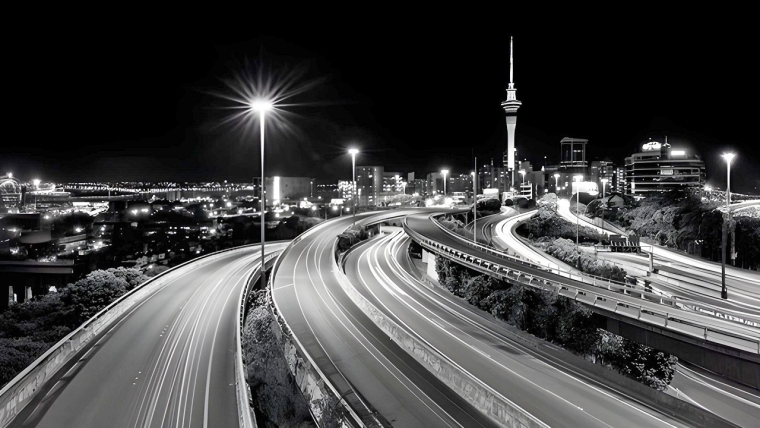
auckland-roadsrf1.jpg
Source: 123rf.com

ACT wants the Government to publish both the preferred option and the "lowest-cost safe option" of major transport infrastructure projects - detailing the time, cost and benefit-cost ratio of each option. 

Releasing its transport infrastructure plan on Friday, ACT's policy document states; "New Zealand has made simple infrastructure too complicated to build. Good engineering must manage genuine safety and resilience risks, but it must also identify safe, workable and affordable solutions."

It said while safety or resilience should not be compromised, the lowest-cost safe option; "must be properly investigated, priced and tested before high-level estimates, excessively conservative assumptions or optional design features become embedded in a project."

The party also promised major growth areas would be required to have funded transport-capacity plans, projected future routes and triggers, which would signal the point construction starts. 

"On major two-lane growth corridors, 10,000 vehicles a day will trigger route protection, 15,000 will trigger consenting, design and a funded capacity plan, and 20,000 will trigger construction of additional lane capacity where growth is continuing," ACT said.

"That means land is protected and projects are ready to build before congestion becomes entrenched."

ACT pledged to scrap local government targets of Crown funding to Māori-owned businesses and make any "non-functional art" and "decorative amenity features" ineligible for National Land Transport funding. 

"Philanthropists, environmental groups, businesses, iwi and communities should be free to add the features they value, but those extras should be funded through voluntary contributions, sponsorship or local fundraising – not the roading budget."

ACT also promised to permanently ring fence maintenance finding from the National Land Transport Fund, and end vehicle emissions settings. 

The Green Party transport plan released earlier this year promised mass rapid transit in major cities, with "comprehensive bus lanes" in all cities, nationwide rapid rail, targeted subsidies for e-cargo bikes and extended free public transport fees for some people. 

We welcome your comments below. If you are not already registered, please register to comment

Remember we welcome robust, respectful and insightful debate. We don't welcome abusive or defamatory comments and will de-register those repeatedly making such comments. Our current comment policy is here.

9 Comments

What a fun world ACT would create. 

We used to be able to build amazing stuff that is still adored today. 

Up
1

...& perhaps it also used to be delivered on time, on budget & to the specified quality std. None of which typically happens today, partly because of scope creep.

Artists (& sportspeople) typically do think that the world owes them a living from other people's money because they "improve the culture, ambience, inspiration etc" - in their own minds.


Up
4

"the world owes them a living from other people's money" - surely they need to be paid if they do work. And if they don't do that work we end up with a 5 billion dollar bland project instead of a $5.01 billion dollar interesting project. Only ACT and yourself think the world should be so shit. 

Up
1

Of course they should be paid - if there's a real market for their work. Otherwise they're just welfare beneficiaries living on taxpayer & ratepayer charity to subsidise their vanity.

Up
4

I'm trying to imagine this country you would like to create - everything as cheap and functional as possible to avoid "vanity". No interesting buildings, no artwork, no parks, no playgrounds, no events, no fun. 

I wonder how prosperous that country would actually be? Nothing but old people?
 

Up
2

You could say the same about most civil engineers.

Up
0

The Gray Highway to Intellectual Bankruptcy: Why ACT’s Transport Policy Proves We Need a Monetary Revolution

Oh, sweet summer children of the 'free market' - let’s take a collective deep breath, step away from the austerity spreadsheets, and gently suggest that the ACT Party, and, frankly, the entire bunch of intellectually bankrupt parliamentary incumBENTS, extract their collective skulls from their own supply-side rear-orifices. 

You really have to marvel at the microscopic vision of ACT’s latest transport policy unveiled on Interest.co.nz, where they solemnly pledge to fix our broken infrastructure by banning "non-functional art" and decorative features on roads.

For decades Kiwis have been about "tightening belts" and staging a moral panic over god knows what, and as if 'money' were a scarce commodity dug out of the ground by hard-working billionaires. 

But if they paused their relentless worship of private bank ledgers for just a single second, they might stumble upon a staggering macroeconomic reality - broad money is created out of thin air as debt by private commercial banks.

Right now, we are collectively volunteering to let private corporations control the printing press of our society's purchasing power, paying them handsomely for the privilege via skyrocketing interest.

Painting Over the Potholes: The "No Fun Allowed" Transport Triage

While ACT is out here playing the role of a hyper-frugal Victorian schoolmaster, patrolling our highway corridors to make sure nobody accidentally looks at an aesthetically pleasing retaining wall, they are completely missing the multi-billion-dollar elephant in the RBNZ vault. 

Simon Court solemnly promises us that banning roadside murals will magically deliver "faster, safer, or more reliable" journeys. Imagine standing at a podium, looking out at a country with literal potholes the size of hot tubs, and declaring with a straight face that the real enemy of New Zealand transit is a piece of public sculpture under a bridge. 

This is peak managerial micromanagement, designed to distract us from the fact that the entire treasury model is running on Western-centric, private bank fumes.

IF ONLY it could dawn on New Zealand as a societal paradigm shift, that if it transitioned to a public banking utility model, where broad money is created as credit directly within a public framework, we could completely flip the script. Instead of private bank shareholders extracting astronomical wealth from the Kiwi public, we could divert an eye-watering river of capital straight into the government revenue account.

We are talking about capturing the immense velocity of New Zealand's total broad money creation and transaction volume. While the exact annual flow of capital depends on how you measure total credit generation and financial transactions, capturing this mechanism for the public good would unleash tens of billions, if not trillions, of dollars over time into public hands.

Think of what that sovereign capital could actually pay for instead of funding an executive’s next super-yacht?

Inter-City Bullet Rail Networks: We wouldn't just be patching up State Highway 1 - we could have the sovereign capital to bankroll high-speed, low-emissions rail networks connecting Auckland, Hamilton, Tauranga, and Wellington without signing our souls away to predatory Public-Private Partnerships (PPPs).

Climate-Resilient Arteries: Instead of waiting for a cyclone to wash away the shifting hillsides of the Ngāuranga Gorge or the Brynderwyns, and then wondering which school lunch program to cut to pay for the cleanup, a public credit stream lets us completely re-engineer our transport corridors for the next century before the rain starts falling, without needing to penny-pinch roadside landscaping.

Zero-Fare Municipal Transit: Imagine a public transport grid so well-capitalised by the captured velocity of our own money supply that regional and city buses, trains, and ferries are completely free at the point of use. That does more to fix congestion, emissions, and road safety than an army of ACT-inspired bureaucrats tearing down highway monuments.

Fully Funded Hospitals and Schools: Social infrastructure where staff are actually paid enough to live comfortabily, completely separating the health of our communities from the arbitrary constraints of tax-cut deficits.

The Macro-management Deficit: Brutalism on a Budget

It takes a truly monumental brand of cognitive dissonance to look at a modern economy and decide that the best way to fund a first-world transport network is to turn our roads into brutalist, grey concrete tunnels of pure utility.

When you capture the economic rent factor and credit-creation power of broad money creation domestically, the entire concept of "funding shortfalls" evaporates into the historical footnotes. 

We don't need growth triggers, we don't need international tolling syndicates, and we certainly don't need to penny-pinch the creative sector just to keep the tarmac from delaninating within a week of it being laid down. 

Instead of fighting over the crumbs of a self-imposed deficit and treating a bit of highway geometry as a budgetary crisis, a public utility banking model recognises that money is a public tool, not the global billionaire-club's private commodity. 

It’s time to stop letting private banks rent our own medium of exchange back to us, and start using public credit to build a country that actually works for the people living in it.

Structural Speed Bumps - Overhauling the Reserve Bank Act

Ultimately, ACT’s obsession with policing roadside landscaping is a symptom of a much deeper intellectual bankruptcy. They are forced to micromanage the pennies because they refuse to look at who is printing the pounds. 

By treating money as a scarce commodity that must be aggressively rationed, Simon Court and his coalition retards are acting as low-level compliance officers for a financial system that prioritises private bank profits over public progress.

If we want transport infrastructure that is genuinely faster, safer, and built to last, we have to stop looking at the end of the road and start looking at the source of the capital. It is time for a complete, uncompromising structural overhaul of the Reserve Bank of New Zealand Act.

The End Game

We need to rewrite the rules of the game to strip private commercial institutions of their unearned monopoly over credit creation. By statutory mandate, the power to generate broad money must be reclaimed as a public utility under a sovereign framework.

When the reserve bank creates credit to serve the public interest, rather than commercial banks creating debt to serve their shareholders, we transform the government revenue account from a site of perpetual deficit into an engine of national renewal. 

Let the ACT Party have their joyless, brutalist highways. The rest of New Zealand deserves a financial system that uses public credit to build a world-class, resilient nation, art, soul, and high-speed rail included.

Up
1

Why should energetic, interesting and productive places need to be pretty?

Our procurement of major infrastructure projects is very poor, with costly design choices baked in early on, or where bare bones specifications are used becasue the price comes in low enough to avoid too much scrutiny - and then extras get added under change clauses that cost a fortune to implement becasue they are executed after things are under way. Specifications should always be reviewed for sanity and utility, but frequently are not and therefore succumb to the group think that leads to a loss of perspective.

Dunedin Stadium as an example: 180 million to 220 million when things like (oops) the electronic scoreboard, a jumbotron, a media centre, kitchens, an (admittedly short) new state highway and other things got added in after the project got voted through against huge public opposition. Or the massive overrun on the Auckland CRL caused by pointless over specification.

"Art" appliqued as part of projects is usually a second rate and middle-brow effort aimed at middle-class prettification at best, committee-ified drear at worst. Look at the embarrassing po-mo box that is Te Papa: the extraordinary design entry from Ian Athfield/Frank Ghery was disqualified by the committee judging the entries, so we missed out on what could have been an astonishing building of renown. If you want something interesting, invite new artists to paint, knitters to yarn bomb, and installationists to do their thing: don't leave it to the politically adjacent to pick safe things that are metaphorically just so much beige that dates before the adhesive on the expensive tiles is dry.


Up
1

More insignifigant virtue signalling from Act.

Up
0