
sign up log in
Want to go ad-free? Find out how, here.

Nicholas Stern considers the implications of a new UN report warning that humanity has been too slow to cut emissions

Public Policy / opinion
Nicholas Stern considers the implications of a new UN report warning that humanity has been too slow to cut emissions
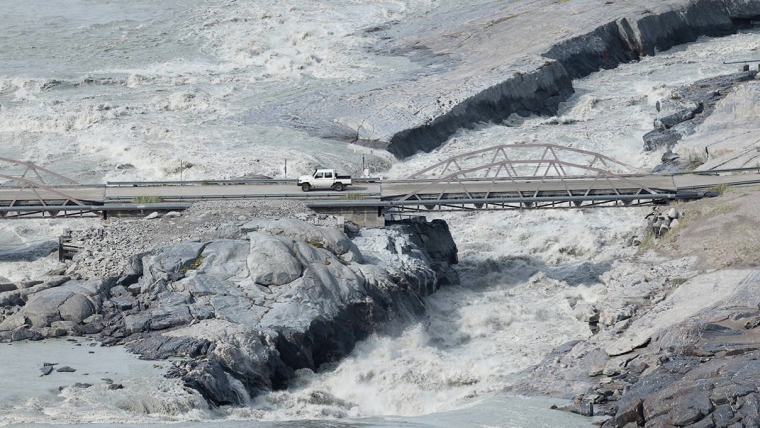
glacier melt

The world must now face up to the fact that the increase in average global temperatures will surpass 1.5° Celsius, the more ambitious of the 2015 Paris climate agreement’s targets. That means devising a plan for managing the consequences—by increasing our focus on adaptation, loss and damage, and geoengineering—while redoubling our efforts to cut greenhouse-gas (GHG) emissions.

A sobering new report from the United Nations Environment Programme (UNEP) warns that even if governments deliver on all their existing climate pledges, global warming could reach 1.8°C later this century. Meanwhile, a continuation of current policies could produce warming of 2.6°C by 2100. Either way, overshooting 1.5°C will expose the world to serious costs, including more frequent and intense heatwaves and bouts of heavy rain in many places. It will also bring us closer to breaching climate thresholds (or “tipping points”) beyond which lie far greater risks—such as destabilization of the polar ice caps in Greenland and West Antarctica.

While the poorest countries will continue to be hit earliest and hardest, this summer has demonstrated that even rich countries like the United Kingdom are not prepared for the climate-driven risks that are already materializing, let alone the risks that await us. Temperatures will rise, and the negative effects of climate change will continue to mount until global GHG emissions are reduced to net zero and atmospheric concentrations stop growing. As long as they are still rising, so will the costs to us all. The net-zero target follows from physics, not ideology.

The effects of overshooting 1.5°C will require much larger investments in adaptation and resilience, ranging from higher sea defenses to the development of more drought-resistant crop varieties. Such investment will become a much higher priority, and overall investment needs will become much greater than would have been the case had we met the Paris target.

But there are limits to adaptation. Breaching major climate thresholds could lead to conditions so hostile that socioeconomic development itself would be reversed, forcing hundreds of millions of people to move despite whatever adaptation measures are in place.

The longer it takes us to reach net-zero emissions, the larger the costs will be. Minimizing those costs will require more investment in rapidly cutting emissions through the deployment of renewables and electric vehicles, while making more rapid progress in hard-to-abate sectors such as maritime shipping and air travel.

Although investment in the necessary technologies has been growing strongly, we still need a marked and sustained acceleration to phase out the polluting, inefficient practices that are making emissions rise further. Despite the International Energy Agency’s warning five years ago that limiting warming to 1.5°C would require that no new fossil fuel projects be launched, many producers have been expanding their exploitation of oil, gas, and coal reserves. As a result, managing climate change will require stranding even more fossil-fuel infrastructure, creating a real cost for investors who have backed dirty energy over renewables.

One must also acknowledge the high costs associated with depending on international hydrocarbon markets. The competition for fossil fuels drives violent conflict, and price volatility has repeatedly caused severe economic crises. And yet, in most of the world, clean energy is now cheaper than dirty alternatives. Investing in clean, efficient technologies and infrastructure offers developing countries the chance to generate strong, sustainable, and resilient economic growth while cutting emissions.

Nonetheless, the UNEP report points out that reversing the 1.5°C overshoot will require us to go beyond net zero to achieve negative emissions, meaning we will eventually need to remove much more carbon dioxide from the atmosphere than we add. Though we can and should expand natural carbon sinks, including forests, these are unlikely to offer the total capacity we will need. Closing the remaining gap therefore will require greater investment in artificial methods of extracting and storing billions of tons of atmospheric CO2.

We should also examine carefully the potential of other geoengineering solutions, including those designed to reduce the total amount of solar energy reaching the Earth’s surface. Further research is needed, however, because these options come with significant risks and ethical implications. For example, cooling the planet while leaving high levels of CO2 in the atmosphere would acidify our oceans, with potentially dangerous consequences.

The next few decades will be challenging. There will be many opportunities for investment and growth, but also serious dangers, owing to our hitherto slow response to the risks of climate change. We must come to grips with our new reality before we blow past yet another dangerous threshold.


*Nicholas Stern is Chair of the Grantham Research Institute on Climate Change and the Environment and the Global School of Sustainability at the London School of Economics and Political Science. This content is © Project Syndicate, 2026, and is here with permission.

We welcome your comments below. If you are not already registered, please register to comment

Remember we welcome robust, respectful and insightful debate. We don't welcome abusive or defamatory comments and will de-register those repeatedly making such comments. Our current comment policy is here.

15 Comments

The Aussies are making good progress on battery/hydrogen heavy truck options

https://www.trucksales.com.au/editorial/details/electric-truck-guide-whats-available-in-australia-150315/

and industrial process heat decarbonisation 

https://www.energy-storage.news/mga-thermal-begins-feed-study-for-195mwh-thermal-energy-storage-system-in-australia/

Hopefully the powers that be are looking at these types of solutions to wean us off our diminishing gas reserves

Up
1

Err, we're at 1.5 now. It's history. 2degC is baked in by mid late 2030's. The human species is lazy. Intellectually and physically. There is no real desire to change direction. The political swing to right wing stupidity globally is a clear vote for dystopia. 

https://jimehansen.substack.com/p/2026-on-track-for-warmest-year

Up
9

Yes a global issue, but lets get perspective in NZs role, globally we are ranked 71st with .08 of global emissions. Please go to China, India, Russia or the US and directly lobby the greatest climate polluters in those areas.  Watch out for selection for Chinese 'reeducation camps", or Russian "penal battalions".

Up
1

0.08% of emissions with only 0.06% of the world's population - another area where Kiwis are punching above their weight. 

I think this is one of those issues that only gets solved with collective action, not waiting for the bigger boys to do things for you. Start with your own life and expand from there, and hope that others do the same. 

Up
3

I have done/do what I can. A molecule of CO2 doesn't care who emitted it. 

Up
2

What we need to do is stop buying products and services from the big emitters. A lack of $$ is most people's only weapon. 

Up
6

stop buying products and services from the big emitters.

A monumental task given our standard of living is reliant on purchasing goods from them that are affordable to allow us to do so.

Up
0

And our government is looking to die in the ditch over the LNG terminal.

That $1b would fund 40,000 7kwh + 9kwh battery rooftop solar installations. With the ongoing cost of maintenance sitting with the property owner, individually. That would 360mwh of stored energy dispersed around the country. No exposure to international lng price movements, or supply crises, or forex movement. Creating domestic resilience. 


Up
9

Sobering......again. How many times do the red flags need to be raised before coordinated action materialises?

Adaptation. Look at our coastal settlements, big and small.  Will the Basin reserve become a sea basin again? Will Mirimar and Wellington airport be cut off by tidal wash through again? Most of Napier revert to pre-1931? Christchurch, Dunedin  Kapiti Coast?

What cost will need to be sunk to build sea wall protections from salt water inundation, and pump stations to clear storm water trapped below mean high tide levels?

What of Bangladesh, Louisiana and Florida,  - 65%, 40% and 30% respectively below 5m above seal level.

The scale of adaptation needed is mind boggling 

Up
6

We need to get our own house in order and help a few Pacific Island countries where we have ties and moral obligations. The human stupidity and ignorance of the citizens and governments of distant countries is beyond our ability to change, unless by NZ setting an example for other to follow.... and we are way behind on that except for the decades back built hydro and geothermal generation builds. Our current backward looking government imo are complacently irredeemable and need to be tossed out so that the nation can begin to change fast, because it needs to, it's existential.

Up
4

Zero sympathy for parts of the US going under water. The more they get bashed around the ears with climate catastrophies the better. Largest share of pollution, greatest source of denial, most influence preventing action. 

"The Trump Administration is pursuing an executive and legislative agenda to systematically repeal targets, policies, and funding for climate change mitigation and science. The administration is actively obstructing the buildout of renewable energy, while encouraging the production and consumption of fossil fuels"

 https://climateactiontracker.org/countries/usa/

Up
2

The current US administration is so against any attempt to change the situation they will spend billions of dollars to prevent clean power production:

https://www.bbc.com/news/articles/c1e1vg0gjl5o

However we should acknowledge that Trump's war on Iran and the resulting shitshow could be the single greatest contribution to weaning the planet off of fossil fuels if it goes on much longer. Many will be rethinking their use due to the high prices and easily interrupted supply. 

Up
4

The science behind climate change is so dodgy that most people don’t know what to believe. 

https://cei.org/blog/wrong-again-50-years-of-failed-eco-pocalyptic-predictions/

Up
1

Bollocks. 

But Profile will be mad - you stole his thunder. 

Wonder where he is? Swept away in a flash flood? Desperately hosing down the house as the fire advances? 

We are well past such obfuscation, and the rabbit-hole dwellers who peddle it. 

But 'clean energy'?  No such thing. Ask any kid in the Congo. Ask how much of a PV panel or an inverter or a controller (I run on them all - just saying) can be recycled? Or is being? 

We are watching the high-water mark of modernity - there is no way we electrify and party on. Those who think we can are fooling themselves.

Up
4

Agreed PDK.

How the transition is managed is important though. Otherwise anarchy on steroids.

Up
3