
Infrastructure is a big issue for New Zealand. There’s a lot to be done, particularly in energy, water, transport, and communications.
As the NZ Treasury has pointed out, NZ faces many challenges on the infrastructure front, not the least of which is funding.
Whichever government is formed this week, it would do well to consider recent Australian experience in developing infrastructure.
For better or worse, Australia is a federation. That gives rise to an overabundance of governments and bureaucracies – both state and federal – and therefore numerous examples of how infrastructure projects should, and shouldn’t, be handled.
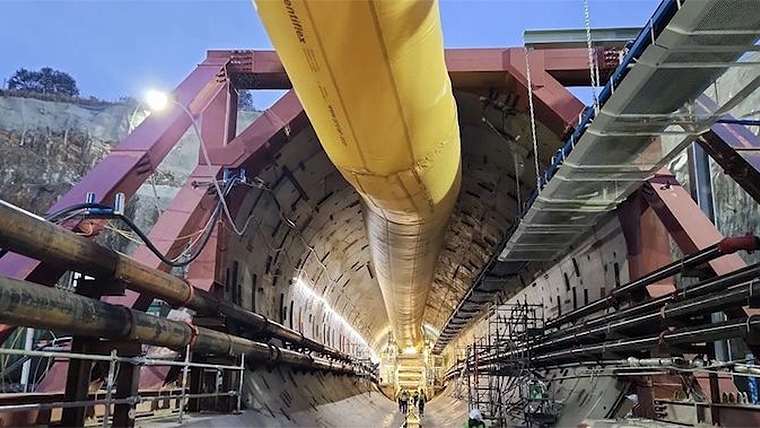
The standout disaster is what’s known as ‘Snowy 2.0’, a federal pumped-hydro storage project. (The name is a reference to the original Snowy Hydro scheme, a massive series of dams and power stations which was built in the 1950s and 60s.)
Snowy 2.0 is a renewables project which when (if?) finished will operate like a giant battery to stabilise the electricity grid. The closest equivalent in NZ is the suggested Clutha Pumped Hydro Project on Lake Onslow.
Snowy 2.0 was first proposed in 2017 as part of the then Australian federal government’s climate change policy. First rough estimates of the cost were around A$2 billion with operation starting in 2021.
Over the years both the expected cost and the timeline have blown out.
The latest cost estimate from Snowy Hydro Ltd is $25 billion and the project’s forecast start date is now 2029. Furthermore, the cost of connecting Snowy 2.0 to the transmission system is estimated to be $12 billion.
Unsurprisingly, there’s been widespread criticism as this disaster has unfolded. For many it demonstrates both the federal government’s inability to manage complex projects and its recklessness with taxpayer funds.
Cynics would argue that the focus of the Coalition government in 2017 was on the political benefits associated with announcing Snowy 2.0 rather than a proper analysis of its technical and engineering challenges.
The International Centre for Complex Project Management provides a useful perspective on what’s gone wrong. It concludes that Snowy 2.0’s ‘true legacy lies in what it reveals about the consequences of underestimating complexity in national infrastructure’.
New Zealand infrastructure planners would also be wise to study the decade-long ‘Big Build’ program undertaken by the Labor government in the state of Victoria – more than $100 billion of transport projects including the Suburban Rail Loop.
While Big Build is certainly delivering valuable infrastructure, three major problems have emerged. The first is billions of dollars in cost overruns, the recurring theme in so many government infrastructure projects in Australia.
The second, and related, problem is corruption in the construction industry. In 2024 reports emerged of criminal infiltration of the Construction, Forestry and Maritime Employees Union (CFMEU) and corruption around Victoria’s Big Build. A subsequent review into CFMEU activity suggested organized crime had cost the Victorian government as much as $15 billion on its infrastructure program.
The state government was left with little choice but to hold a royal commission. The result – the ‘Royal Commission into the Integrity of Major Public and Civil Infrastructure Construction Projects in Victoria’ – is now underway.
The third problem with Big Build has been its dramatic impact on Victoria’s finances. In the year to 30 June 2020 the state’s net debt was less than $44 billion. By 30 June this year state net debt had more than trebled to over $160 billion – more than New South Wales and Queensland combined.
By 2030 Victoria’s debt will be around $200 billion. And with interest rates rising that spells trouble for the state budget.
The combination of massive cost blowouts, widespread corruption, and spiraling debt will almost certainly bring down the Labor government in the Victorian election this weekend. The Big Build that was once a political winner has become electorally toxic.
But it’s not all bad news for infrastructure in Australia. New South Wales presents a very different picture to Victoria.
Sydney has seen a raft of new infrastructure projects in recent years. These include
- the Western Sydney International Airport that opened last month,
- the Sydney Metro, a fully automated, driverless 66km rapid transit rail network with new underground CBD stations and a new harbour rail tunnel, and
- WestConnex, a 33km traffic-light-free motorway and tunnel network and Australia’s largest road tunnel infrastructure project.
2026 has also witnessed the opening of the $800 million New Sydney Fish Market and the $900 million Powerhouse Parramatta Museum.
The Western Harbour Tunnel, a new harbour road crossing, and Sydney Metro West, a new 24km underground railway from the CBD to western Sydney, are currently under construction.
How is New South Wales achieving all this while maintaining its triple-A Moodys credit rating, two notches ahead of its southern neighbour? There’s no single answer, but asset sales, federal government grants, public/private partnerships, motorway tolls, and developer contributions all have a role to play.
And almost certainly better project management than in Victoria.
*Ross Stitt is a freelance writer with a PhD in political science. He is a New Zealander based in Sydney. His articles are part of our 'Understanding Australia' series.
We welcome your comments below. If you are not already registered, please register to comment
Remember we welcome robust, respectful and insightful debate. We don't welcome abusive or defamatory comments and will de-register those repeatedly making such comments. Our current comment policy is here.