
The economic laws of supply and demand are starting with the rises in dairy prices affecting local costs, and local consumers reacting by reducing consumption.
Strong overseas demand for dairy products will keep prices high in the meantime, but if big production increases eventuate in the US and India as predicted, price falls could happen.
With many of our agricultural commodities at high or record prices it would be disappointing if price increases restricted consumption of food produced in this country. Traditions of good cheap food produced locally are part of what NZ is.
The challege for agriculture and sustainability is to produce the volumes needed with a cost structure that gives good profits for reinvestment.
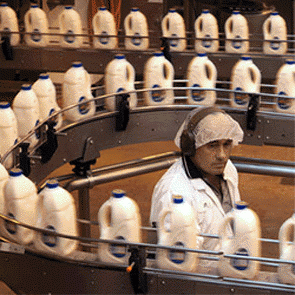
The price of milk has become too rich for many households' taste with dairy giant Fonterra reporting a "dramatic" fall in sales. The price of a two litre bottle of milk has jumped 15c to $4.30-$4.50 after two price rises in the past five months, the result of strong global dairy commodity prices reports Stuff. Fonterra Brands managing director Peter McClure, an industry veteran, says it is the highest milk price he can remember, and has led to a fall of about 1 per cent in milk sales in the past three months.
This is more significant than it sounds given milk sales have been growing solidly at 2-3 per cent for five years, boosted by Kiwis' love affair with coffee, he says. McClure has seen shoppers shy away from buying milk during previous price spikes but says sales have recovered quickly in the past. This time the decline is continuing. He could not rule out another round of price rises in March after Fonterra directors last month raised their milk payout forecast for the season to farmers from $6.60/kg milksolids to $6.90 on the back of continuing strong international prices.
Sales of 1kg family blocks of cheese have also dropped off after reaching $10, with shoppers reaching for smaller blocks, McClure says. Butter has soared by more than 50 per cent to around $5 for 500gms, but sales volumes are holding steady thanks to the "incredible impact" of householders' appetite for television cooking and celebrity chef shows, he says.
Fonterra Brands and Goodman Fielder are the big cheeses of the New Zealand domestic dairy product manufacturing market. However Goodman Fielder buys its milk from Fonterra, which controls around 89 per cent of the country's raw milk supply, so is subject to the same price rises as its competitor Fonterra Brands.
We welcome your comments below. If you are not already registered, please register to comment
Remember we welcome robust, respectful and insightful debate. We don't welcome abusive or defamatory comments and will de-register those repeatedly making such comments. Our current comment policy is here.