
Dairy
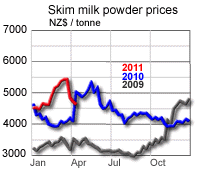
The season winds down in a spell of good autumn weather, as farmers try and squeeze the last drops out of this year’s high prices. Fonterra reports cheese is to be added to the other six products offered in their globaltrade auction process, where they now sell 25% of their total production.
After their joint farming venture with Nestle in Chile failed, Fonterra is expanding it’s Chinese farm operations with plans for up to 20 units to help satisfy the Asian demand for milk. They also signaled that the giant Edendale plant is nearing capacity, and another plant is needed, reflecting that the huge growth of dairying in the south has not reached it’s potential yet.
The price of milk is still an issue with consumer groups, although statistics show that values in real terms were higher in 1994 and 2002.But volatility is predicted in all commodity prices and some commentators are suggesting prices have peaked, as has been reflected in the latest auction price.
Sheep
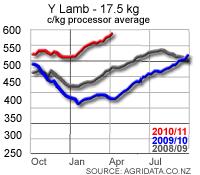
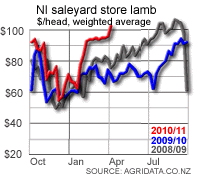
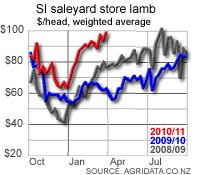
Lamb markets firmed further this week, with price levels in the UK affecting volumes sold, but other European markets taking up that surplus even at these record levels. Smaller yardings of prime lambs at saleyards are firming in price in both islands, as the local trade values increase to $6.80 per kg. Good volumes of store lambs have appeared as autumn cools grass growth, but prices have hit yearly highs, as finishers target late winter, early spring shortages of export lamb.
Many sheep farmers have at last had a profitable year and are repaying debt, and refilling nutrient deficits in their soils with overdue fertiliser. A new livestock catastrophe insurance was offered to sheep farmers as a result of the major spring losses suffered by some last year. The trigger for a claim would be a 15% loss including immature stock, and may attract younger indebted farmers not so immune to risk pressures.
Based on the upward trend of these charts lambs upward spiral may not be finished yet, although processors are warning store lamb buyers of consumer resistance to these high prices.
Beef
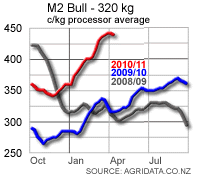
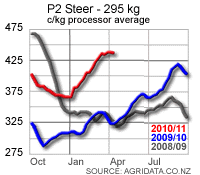
The stronger currency eased beef schedules off recent highs but fundamental world shortages and high grain prices underpin the market, and make prospects good for the medium term. Calf sales have strengthened considerably from early sales and now seem to better reflect the optimism in the beef sector.
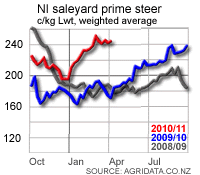
Saleyard prime steer prices are 40% up on the same stage last year but local consumers will determine how much more they will be prepared to pay, come the late winter early spring period. These charts suggest that maybe the high prices maybe peaking but the currencies ride will have a big influence on that.
Wool
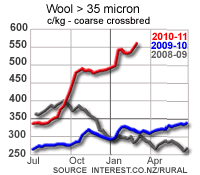
Auction prices eased as the stronger currency put exporters under extra pressure, as they adjusted to this spectacular rise in values. The big volumes of coarse crossbred wools are now over twice the price than they were a year ago, and with the record prices for lamb have revitalized the sheep industry.
A small volume of mid micron wool was offered at the sale and indicator prices rose for these types, to a record 976 cents per kg.Wool analysts suggest that a correction will come soon, and the recent rapid rise in the currency will hasten this.
Deer
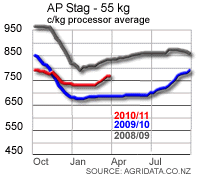
The schedule prices movement of the last month has stalled, but has encouraged some to look at early killing of dry hinds identified at weaning. Sales of weaners in the south are similar to last year in the $4.50-$5/kg LWT range, behind the few heavier auctioned elk cross animals, that have sold a dollar per kg dearer in Canterbury.
The velvet season washes up with very little stock on hand and prices stable on last year, with demand from China expanding into traditional Korean grades and helping diversify the market.
We welcome your comments below. If you are not already registered, please register to comment
Remember we welcome robust, respectful and insightful debate. We don't welcome abusive or defamatory comments and will de-register those repeatedly making such comments. Our current comment policy is here.