
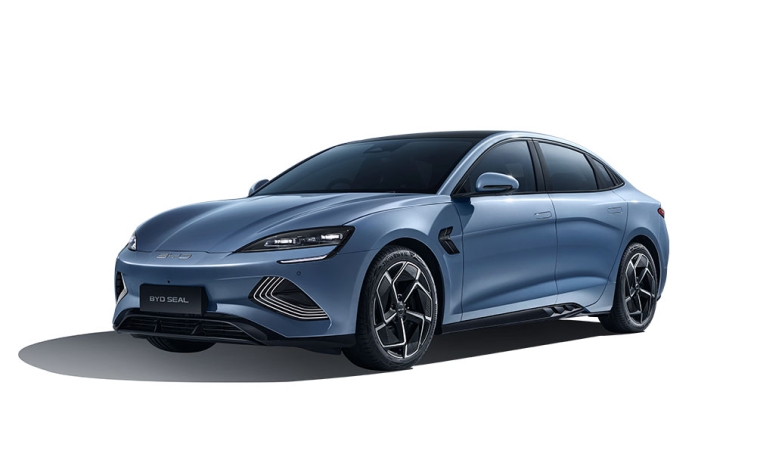
Electric vehicles (EVs) will become cheaper to make than their comparable internal combustion engine counterparts by 2027, analyst firm Gartner estimates, but it could lead to more expensive repairs and higher insurance premiums.
This is due to new, innovative manufacturing methods for EVs such as using gigacastings that build the vehicle floor pan in just two parts instead of 171 different ones, Gartner said in its Top Automotive Trends for 2024 report.
This reduces the time and cost of building vehicles dramatically, as it eliminates some 1600 welds.
Batteries are being used as structural elements in EVs as well, and a centralised architecture reduces wire harness complexity as fewer electronic control units (ECUs) are required. Car makers such as Mercedes-Benz and Geely-owned Volvo Group are introducing gigacastings. Gartner said Toyota is going a step further by setting up production lines that eliminate conveyor belts, with the cars moving by themselves along the assembly lines.
The above manufacturing process improvements will lead to production costs for EVs to drop much faster than initially expected, Gartner said.
Gartner researcher Pedro Pacheco said this is a consequence of new car makers wanting to heavily redefine the status quo in automotive production. This could spell trouble for established vehicle brands.
“They brought new innovations that simplify production costs such as centralised vehicle architecture or the introduction of gigacastings that help reduce manufacturing cost and assembly time, which legacy automakers had no choice to adopt to survive," Pacheco said.
Compared to BMW, Mercedes-Benz, and Volvo, relative newcomer Tesla has a much lower costs of goods sold per car at US$36,300 for the 2023 financial year, with the weighted competitor average being US$46,521. Chinese makers that are quick to adopt new technology, and which benefit from a massive home market and government incentives will add to the competitive pressure.
Battery prices are also on a downward trajectory and expected to almost halve by the end of this year. Giant Chinese battery makers Contemporary Amperex Technology Ltd (CATL) and Biyadi (BYD) which hold almost two two-thirds of the market look set to slash the cost for lithium-ion units substantially, which could bring in lower cost EVs.
Li-ion #batteries from CATL and BYD dropping as low as $56/kWh. 🔋
— Tony Seba (@tonyseba) January 20, 2024
"Currently, VDA-sized #LFPcells are selling for less than RMB 0.5/Wh [USD $69.53/kWh]. Leapmotor's vice president Cao Li recently said in an interview that the company's procurement cost for LFP cells has dropped… https://t.co/QasXsLvqtJ
Cheaper EVs that cost more to repair
In a swings-and-roundabouts way, the new manufacturing methods for EVs might lower retail prices, but at the expense of substantially higher repair costs and associated insurance premiums.
Gartner noted that the gigacasted floor pans may have to be replaced entirely in the case of vehicle crashes. Unlike traditional welded car floor pans, vehicles with gigacasted ones can't have be repaired by stretching their chassis back to the original shape, Gartner said.
Batteries that are part of vehicle structures can cause repair headaches as well. "... damage or malfunction in a cell can easily force the replacement of the entire battery, which is something that is also quite costly."
This in turn could have serious consequences such as lower vehicle desirability in terms of total cost of ownership, higher insurance premiums and even increased total write-offs as the repair costs exceed total residual value.
Slower EV growth ahead
Gartner estimates this year's market penetration for EVs will continue but slow down compared to 2023, as government incentives such as New Zealand's Clean Car Discount are being removed. In New Zealand, new EV registrations almost ground to a halt in January and February this year, the first two months without government subsidies.
This may lead to some EV startups going under, as they struggle to develop competitive vehicles, Gartner said.
Gartner calls this a new phase for EVs, but added there are still plenty of opportunities left in the market for car makers that endure.
We welcome your comments below. If you are not already registered, please register to comment
Remember we welcome robust, respectful and insightful debate. We don't welcome abusive or defamatory comments and will de-register those repeatedly making such comments. Our current comment policy is here.