
The New Zealand government sees batteries in electric vehicles as playing a key role in the country's energy future, with regulatory work underway to enable it.
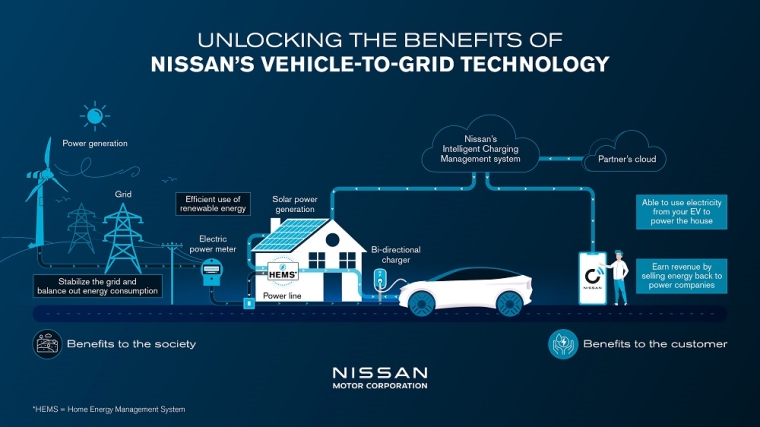
EVs store electric energy in their batteries. If they're capable of bidirectional charging, and many are already, they can also send power back to the electricity grid, or people's homes or other devices. This provided the home EV chargers are compatible with bidirectional charging, and the smart meters support the technology.
Energy minister Simon Watts told interest.co.nz that energy security and affordability are his key priorities, and bidirectional charging, also known as V2G or vehicle to grid, is one of the options being considered for that.
"Consumer generated energy storage using batteries and or electric vehicles will play a key role in New Zealand’s future energy system, and I understand “vehicle to grid” will increasingly become a reality as EV manufacturers enable this in their vehicles and networks," Watts said.
"I believe there should not be any barriers to consumers doing this now if their vehicles and electricity networks enable it," Watts said.
"The Government has a range of regulatory work underway to support smart EV use, including vehicle to grid in future; I encourage the sector to work together to look into how to enable this," he added
Australia recently released a roadmap for bidirectional EV charging, looking ahead to 2030
Issued by the federal government's Australian Renewable Energy Agency (ARENA) in cooperation with the Reliable Affordable Clean Energy research centre (RACE for 2030), the roadmap sees several uses for bidirectional charging.
EV batteries can be used as energy storage, supplying backup power for homes and businesses in case of electricity outages. This instead of dedicated home batteries.
Once V2G technology becomes readily available, EV users may be able to reduce their power bills by using the car batteries to match dynamic electricity pricing.
The batteries can also be used for grid support, helping to stabilise supply during peak demand times by feeding back into the network.
ARENA chief executive Darren Miller pointed to estimates of 1.5 million EVs being on Australian roads by 2030.
Even if just 10% of those EVs adopted V2G, Miller said it would meet 37% of Australia's National Energy Market's (NEM) total storage needs.
Several car makers are looking at introducing V2G, including Nissan, which said last year it has achieved UK certification for the technology, and plans to launch it there and in Europe.
We welcome your comments below. If you are not already registered, please register to comment
Remember we welcome robust, respectful and insightful debate. We don't welcome abusive or defamatory comments and will de-register those repeatedly making such comments. Our current comment policy is here.