
Charging speed for electric vehicles (EVs) doesn't have to be a bugbear if you can plug in at home, perhaps with a 7.2 kilowatt or higher rated supply point. The battery charges up overnight, ideally using cheaper off-peak energy.
However, out and about, it's a definite bonus if you find a high wattage charger and your car supports its speed. There's only so much time in this world, and waiting to charge your car if you're in a hurry gets old quickly.
Charging speeds (or the power rather) continue to go up. Whereas 50 kilowatt chargers not so long ago seemed massive, you can now aim for 150 and 300 kW capable ChargeNet stations, for vehicles that support that level of power delivery. Overseas, Tesla last year unveiled its SuperCharger V4, which is capable of 500 kW.
Recent headlines say Chinese battery and car maker BYD is now talking about building a network of megawatt (1000 kW) chargers, which is next level. At that level of power delivery, a 400 kilometre top-up would only take five minutes on supported cars. It's liquid-fuel kind of speed, and you can appreciate why the EV industry wants to bring in megawatt charging.
Megawatt or 10C (the C stands for capacity, and 10 indicates a full battery in six minutes) charging has been in the works for a while now.
New Zealand's actually gone down the megawatt route already, Liz Yeaman, the managing director of the Charging Interface Initiative for Australia and New Zealand, told interest.co.nz.
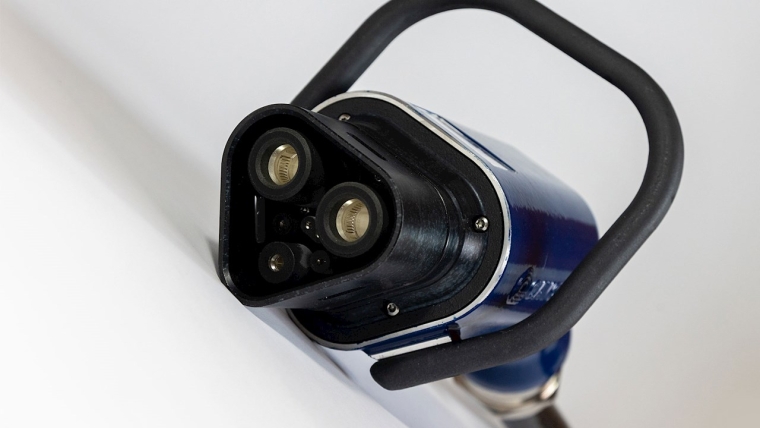
CharIN is the global association that promotes standards for EV charging. It has 300 members, and has been developing the MegaWatt Charging System (MCS) since 2018.
MCS can provide really chunky charging rates of up to 3.75 MW, and we're trialling just that locally for electric ferries and lorries.
"There are MCS projects already well advanced in New Zealand" Yeaman said.
"Auckland Transport and CharIN member ABB will be installing a MCS charger in Half Moon Bay this year to charge the new Auckland electric ferries," Yeaman added.
Meanwhile CharIN member Kwetta is a Napier-based company that manufactures high power EV chargers and is developing an MCS charger for trucks and buses, ranging from 200 kW to 1.2 MW.
Kwetta's tech seems to have impressed overseas investors who have put in $10.5 million in Series A funding, for the company's overseas expansion.
BYD's Super-e platform with fast cars and megawatt charging
The megawatt charging is part of BYD's upcoming Super-e Platform that promises insanely powerful cars that the Chinese maker claims can do 0-100 in two (2) seconds. At that level of acceleration, maybe it's time to look into g-force seats and compression suits for EV drivers?
A megawatt is of course a massive amount of energy. There are some caveats dropping all that energy into an EV, including new 1500 Volt car battery technology with silicon-carbide (SiC) power chips being needed.
Naturally, BYD has a semiconductor unit as well to manufacture the SiC chips.
Liquid cooling is required, and batteries as well for the chargers for grid stability, similar to what we've seen Counties Energy deploy in Mercer ,albeit most likely with much higher capacity for the higher rated BYD units.
The Super-e presentation suggests the chargers will be 1000 Volt and 1000 Ampere output; that's up from the 400 and 800 Volt systems available today. Details are unclear at the moment but it may be that BYD's megawatt chargers will need two plugs, one on each side of the car, to get the full capacity.
Here's a clip from CarNewsChina showing the charging speed which, if the video is genuine, is mindblowingly fast:
The mains power feed to megawatt charging stations will need to be substantial as well, limiting the choice of locations for them.
All in all, the above sounds like it might be an expensive proposition, one that's still at the prototype stage but BYD is reportedly planning 4000 megawatt charging stations in China. Related to the above, and probably more relevant for EV users at this stage, is the actual charging experience. EV reviewer Gavin Shoebridge isn't the first to say this:
We can talk about charging breakthroughs all day long but until EVs are as easy to fill up as petrol cars we will always be fighting an uphill battle. I'm sick of installing apps and getting RFID error messages. Why can't I just use my credit card??? pic.twitter.com/LolooYiJIh
— Gavin Shoebridge (@KiwiEV) March 18, 2025
... and it really is something the industry needs to sort out fast. Standing at a charging station staring at a mysterious app authentication error that you can do nothing about is enough to make adults stuff potatoes up their noses in rage.
We welcome your comments below. If you are not already registered, please register to comment
Remember we welcome robust, respectful and insightful debate. We don't welcome abusive or defamatory comments and will de-register those repeatedly making such comments. Our current comment policy is here.