
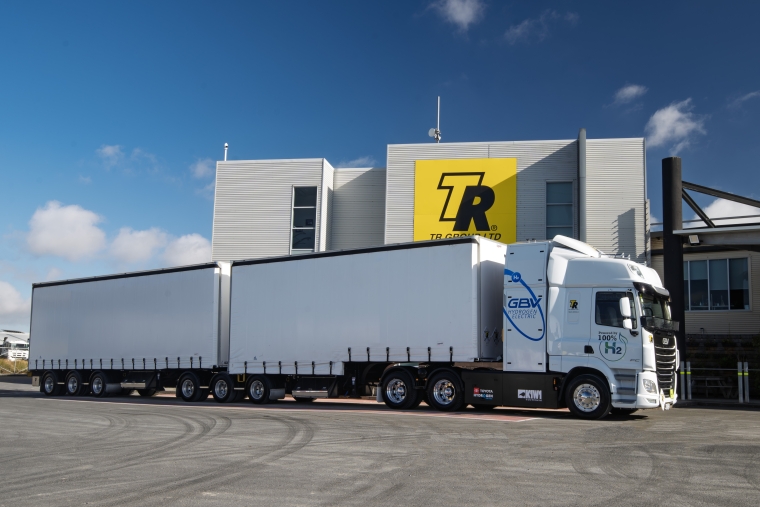
The "hydrogenation" (not the right word) of transport continues in New Zealand. This time it's Toyota New Zealand which has joined with TR Group and Global Bus Ventures (GBV) in Rolleston, to launch a hydrogen powered 50-tonne prime mover that hauls trailers.
GBV's no-emission hydrogen lorry is built on DAF CF 530 that is fitted with two Toyota 85 kilowatt (kW) fuel cells, so 170 kW in total. Onboard hydrogen storage is 52 kg and there's also a 124 kWh battery.
An electric motor mated to a six-speed gearbox supplies 350 kW of power, with a hefty 2400 Newton metres of torque for moving heavy loads.
This adds up to a tested 450 to 500 kilometre range, the three companies said. What's more, refuelling times are comparable to diesel fill-ups at 15 minutes. As you can tell, the truck looks like a regular lorry minus the icky diesel fumes.
TR Group, which rents out trucks and trailers, will operate the 50-tonne lorry, and will add another 16 to its fleet, along with four Hyundai Xcient fuel cell electric vehicles (FCEVs); the company's general manager Brendan King said several H W Richardson fuel-cell CH2NGE dual-fuel trucks will be added to the mix as well.
The trucks are supported by a government programme, and Hiringa Energy that began when the Labour-led coalition was in power.
Hiringa Energy's chief executive Andrew Clennett reckons hydrogen is "more viable than ever" now, and that having a New Zealand-based truck integrator makes it even more so.
Some 95% of North Island freight routes are covered by the Hiringa refuelling network; that's green hydrogen as well, which HE says is zero-emission.
NZ preps hydrogen-electric flights as well
Last month, we covered the Australian efforts to build fuel-cell powered planes, with Deakin University and AMSL Aero developing the Vertiia box-wing plane with 1000 km range, 300 km/h speed and 500 kg payload.
Now, Stralis Aircraft, Fabrum and clean energy hub Ara Ake are collaborating to get hydrogen-powered aviation off the ground in New Zealand as well.
Stralis is an Australian company, and it intends to integrate New Zealand firm Fabrum's tanks and fuel systems into its aircraft. Here's the Stralis Aircraft SA1, which is billed as "the world’s first 50-seat aircraft optimised for hydrogen-electric technology. Designed to fly 3000km it will achieve ~50% lower operating costs than comparable aircraft."
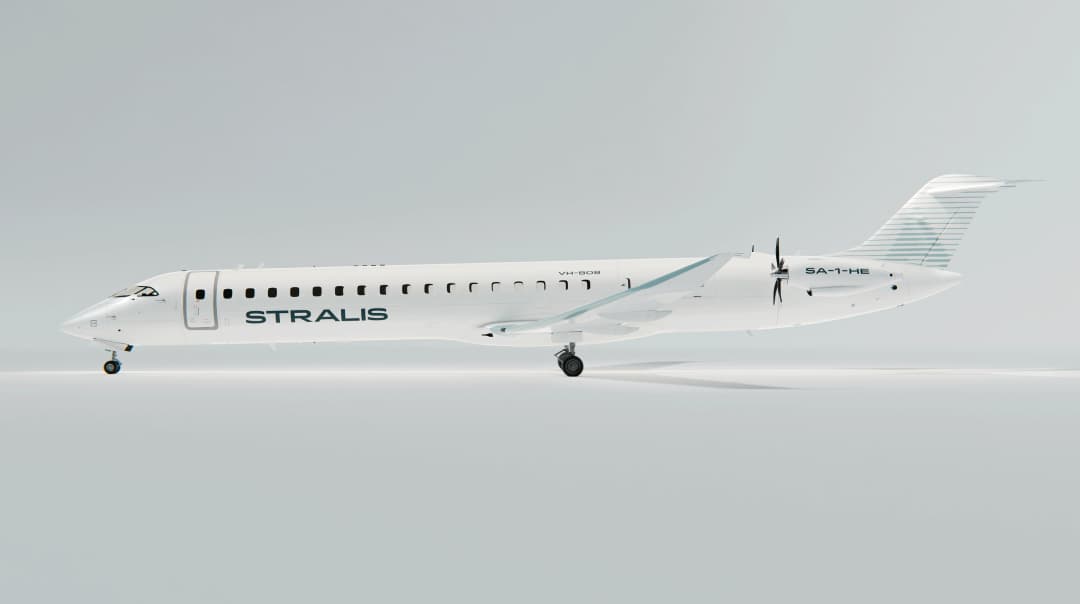
If that range is achievable, the SA1 would seem to be ideal for New Zealand routes.
Ara Ake meanwhile supports the project, and Fabrum has announced a hydrogen testing facility at Christchurch International Airport.
Stralis claims its fuel-cell technology is designed to be lighter than existing alternatives, and potentially enable planes to fly 10 times further than battery electric planes; and, at a lower cost than fossil fuel flights.
The key here is green hydrogen made with renewable energy, which the three organisations say has three times the energy density of sustainable aviation fuel (SAF), and more than 100 times that of batteries.
If the above projects pan out commercially, they should go a long way towards the decarbonisation of land and air transport.
We welcome your comments below. If you are not already registered, please register to comment
Remember we welcome robust, respectful and insightful debate. We don't welcome abusive or defamatory comments and will de-register those repeatedly making such comments. Our current comment policy is here.