
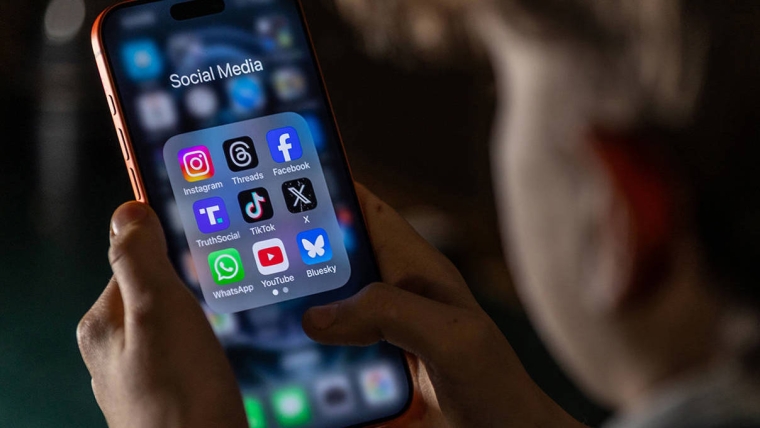
When I joined Facebook in 2009, I believed in the mission that founder Mark Zuckerberg espoused: to connect and empower people around the world. We all know how that turned out. Meta, now the parent company of Facebook, Instagram, and WhatsApp, is focused on generating as much engagement as possible, which has led to platforms that addict, enrage, misinform, and polarise users.
I worked at Facebook for 15 years before becoming a whistleblower. I was in the rooms where smart people built and marketed the features that encourage compulsive use—infinite scroll, autoplay, algorithmic feeds. These design choices were made deliberately, with the goal of maximising profit above all else.
Fortunately, the world is waking up to the harms caused by social media, especially to young people. In early July, an independent panel presented its final report on how the European Union can keep children safe online to European Commission President Ursula von der Leyen, with a legislative proposal expected after the summer.
While several EU countries plan to adopt a blanket age ban, the report advocates banning the toxic design features directly—a strategy that both scientific consensus and public opinion support. If governments really want to keep kids safe, they must require social-media platforms to prove their safety—as is already required of food companies and car manufacturers—to gain access to the teenage market.
The blanket-ban approach treats addictive social media as inevitable. It isn’t. It is the product of years of corporate lobbying and governments’ reluctance to regulate. Equally important, such an approach is ineffective. Australia pioneered the world’s first social-media ban for minors when it barred users under 16 from holding accounts last December. In March, the eSafety Commissioner’s compliance report found major enforcement gaps and no reduction in cyberbullying or image-based abuse reports. In April, more than half of 12- to 15-year-olds still had active accounts.
As a result, Australia has also begun to target the toxic features proven to erode kids’ health and well-being. Similarly, Canada, Spain, Brazil, and Germany are waking up to the importance of putting the onus on tech companies to ensure their platforms are designed safely.
More governments must turn their attention to banning the design features that harm kids and then holding tech firms to strict, third-party-verified safety standards. Over 170 organisations have signed a petition calling for this safety-by-design approach, and UK charities have released guidance on what these standards could look like. Moreover, this position has gained broad public support. In a recent poll of five European countries, three-quarters of adults surveyed said that they wanted a “safe-by-design” approach to social media, making platforms inaccessible to children until their safety is proven.
The debate has also entered the courtroom. In February, the European Commission warned TikTok to change its addictive design or face fines up to 6% of turnover. More recently, a preliminary decision by the Commission found that Meta failed to assess the addiction risks from infinite scrolling and attention capture, putting the firm in breach of the Digital Services Act (DSA). In the United States, four states are seeking US$1.4 trillion in penalties from Meta for designing Facebook and Instagram to addict young users.
Interoperability is another reform worth fighting for. If social-media platforms share data, users can switch to safer alternatives without losing their network. That way, they won’t be trapped when a platform is, say, bought out by a far-right billionaire who turns it into a cesspit of extremism.
Ultimately, all reforms depend on strong enforcement mechanisms. Governments have tried to regulate social-media platforms using voluntary commitments and laws like Australia’s, with fines for violations. But the world’s most profitable companies might simply absorb those penalties as a cost of doing business. The consequences must be significant enough that they can’t be priced in.
Europe, which has a track record of shaping the global regulatory environment, now has the opportunity to lead the world in creating effective, meaningful guardrails for children’s online safety. It is promising that von der Leyen—who, despite experts’ warnings, had committed to a blanket age ban for much of the past year—has signaled a new direction, saying that “the rule in Europe is safety-by-design” when announcing the independent panel’s final report. And while that report recommends age restrictions, it frames them as temporary pending the redesign of addictive and harmful features. It also puts the burden of proving social media’s safety on tech firms, rather than regulators.
The EU already has a head start on a safety-by-design approach: the DSA provides a legal basis and proof of concept. The special panel cited recent enforcement action under the DSA against TikTok for its addictive features, as well as ongoing proceedings against Snapchat, X/Grok, and Meta.
With this shift in the political wind, the EU must now enshrine in law a safety-by-design approach, recognising it as the only viable solution to social-media platforms that were built without regard for the harms they cause. That means expanding this framework in the forthcoming Digital Fairness Act, expected later this year, rather than tinkering at the edges of the rules.
If a social-media platform is stripped of infinite scroll, engagement-optimised defaults, and constant push notifications, it is likely much safer for young people. By contrast, an age ban leaves the platform itself unchanged, only delaying its harmful effects. A safety-by-design solution would reduce exposure to a product proven harmful to kids and teens and reshape market incentives, creating space for safer platforms to compete.
The EU requires most products entering the bloc to be safe by law. Social media should be no different.
*Kelly Stonelake, a former Meta executive turned whistleblower, is an advocate for children’s online safety.Copyright: Project Syndicate, 2026, published here with permission.
We welcome your comments below. If you are not already registered, please register to comment
Remember we welcome robust, respectful and insightful debate. We don't welcome abusive or defamatory comments and will de-register those repeatedly making such comments. Our current comment policy is here.