
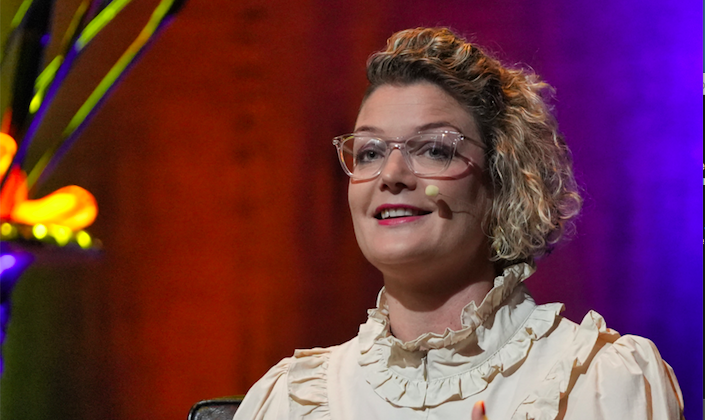
In February 2020 entrepreneur Jessica Manins thought the company she co-founded had cracked the United States.
Beyond Studio's virtual reality game Oddball had been picked up by amusement park firm Two Bit Circus.
The press release went out on February 29. One day earlier New Zealand reported its first case of Covid-19.
The firm had raised money, it had received a research and development grant from Callaghan Innovation, Beyond had done the research and development and netted the ultimate first client, "selling it into the biggest place you can sell into in the US", which Manins expected would lead to a flood of interest.
Which it did. Manins says celebrities played Oddball and loved it, the Wellington-based company had approaches about making exclusive content for other arcade chains. Beyond seemed to be on a roll.
But then, pandemic.
"It was like, 'oh my god, this is happening'," Manins says. "We literally got on the plane after flying over [to the US] with my co-founder, Anton. We got back into New Zealand, and we had seen the signs. If you come from China, you need to not go through the gates. And we're thinking, 'what's going on?' Something about this Covid thing, whatevs. And then two weeks later the whole world just shut down. I had a phone call from my first investor, and he just said, 'it's over.'"
Manins says she didn't believe it was over. But the investor pointed out Beyond's game needed to be played in entertainment centres, and its physical market was gone — while potential customers were being told to stay home.
The next phone call Manins fielded was the cancellation of a contract. The call after that was to cancel a sponsorship deal Beyond had to tour its game around the country.
Then Manins was the one making calls. She says she called everyone she knew trying to find money, trying to keep going, trying to just extend the funding runway a little bit longer. For even one month.
"If I could get through Covid, and the lockdown, maybe we could make it," she says. "But I couldn't. So I had to make the decision to let all of the team go. I had to bring them all up on Zooms, because we're at home, and just say, we were out of cash. It's over ... At that time, there were just six of us, but as an early stage start-up they were with us from day one on this ride. It's pretty gutting."
From there it was a scramble to try and find some kind of deal. Manins says she remembered that Weta Workshop's Richard Taylor had played Beyond's game and loved it. Beyond approached Weta and managed to wrangle a deal to build a game people could play while they were stuck at home, called Combonauts.
"And with that, I managed to raise some more money and then I had to build a whole new team up again."
The former team had moved on and found new jobs. But Beyond was back from the brink.
In addition to inking a deal with Weta, Beyond turned its commercial space in central Wellington into a gaming space where people could play Oddball. Manins worked every weekend with her son at her side taking thousands of people through the game to keep much-needed cash coming in.
She said you quickly learn in challenging times who is really rising with you as a founder, who will stick with you through the tough times, and who will fade into the background.
"That was a pivotal point in my my journey, where I realised I needed to find the right people. Surround yourself with brilliant, kind, people."
Manins was one of the speakers at Electrify Aotearoa, a founders conference for women and non-binary people which was held in Auckland on August 1.
Run by Christchurch start-up booster Ministry of Awesome, Electrify says it is New Zealand's must-attend conference for aspiring women entrepreneurs, founders, and the many people helping build a strong wahine start-up community.
More start-ups please
Ministry of Awesome chief executive Marian Johnson said New Zealand needed to more than double the number of high-growth start-ups.
The fastest way to achieve that was to ensure “our most talented women innovators receive the support and capital investment they deserve”, she said.
“All around the world, the numbers of women founders are rising and their level of success is growing but we are still only a tiny minority swimming in a sea of dudes in hoodies and hamstrung by weak recognition of our capability and potential economic impact.”
Johnson said women’s under-representation as start-up founders was shaving $22b off New Zealand's potential economic growth, based on 2019 research by the Boston Consulting Group which estimated a 3%-to-6% uplift in national GDP when start-up gender parity was achieved.
A report released in June authored by Startup Genome and the Global Entrepreneurship Network calculated the value of New Zealand’s start-up ecosystem at $9.13 billion. This number was reached by working out the value of exits and start-up valuations from July 1 2020 to December 31, 2022.
Brisbane was closest in terms of ecosystem valuation of our Oceania peers, with a start-up ecosystem valued at $8.87b with Sydney and Melbourne well ahead, valued at $77.76b and $24.82b respectively.
The Startup Genome report, released in partnership with the Ministry of Business, Innovation and Employment, found the rate of female founders in New Zealand at 26% was one of the higher rates globally, and had increased from 16% since its previous survey in 2017.
“Female founders have credited an evolving culture and the emergence of informal meetups with other female founders as factors in this growth. As more start-ups led by women succeed — such as Thematic, a Y Combinator-backed SaaS company, or Sharesies, an investment platform that has raised more than $50 million — female start-up participation in New Zealand should continue to rise,” the report said.
The 2023 Global Startup Ecosystem Report ranked the top 30 global start-up ecosystems, with the US’s Silicon Valley ranked number one and New York and London sharing second.
New Zealand doesn’t make that list, but rather appears on a list of “emerging ecosystems” where it holds the number 20 spot. This improved ranking was attributed to an increase in business exits valued at more than $50 million “and a new unicorn, Lodestone Energy, valued at $1.3b”.
Between 2020 and 2022 the report found early-stage funding raised by New Zealand start-ups almost doubled compared to the previous 36-month period.
Another report, released on August 1 by the Government-appointed Startup Advisory Council, called Upstart Nation, found New Zealand’s start-up density was half that of our global peers.
The Start-up Advisory Council report made a number of recommendations to “transform New Zealand into a thriving hub for innovative upstarts”.
These included removing tax from unrealised gains from employee share option programmes, introducing tax incentives to promote investment and the Government spending an additional $500m venture funding through its New Zealand Growth Capital Partners’ Elevate investment fund.
Minister for Research, Science and Innovation, Ayesha Verrall, says the report identified challenges and opportunities facing many start-up businesses across the country.
“A thriving start-up ecosystem will make a significant contribution to the shift to a high-wage, low-emissions economy and we are committed to continuing to fostering growth, innovation and job creation,” Verrall says.
Verrall says the Government will take time to carefully consider the Council’s report and their recommendations to support and strengthen the environment for New Zealand start-ups.
We welcome your comments below. If you are not already registered, please register to comment
Remember we welcome robust, respectful and insightful debate. We don't welcome abusive or defamatory comments and will de-register those repeatedly making such comments. Our current comment policy is here.