

Interest.co.nz is unpacking how AI will change your everyday life - the risks, the opportunities, and what to actually expect. Our series brings you the policymakers, experts and industry leaders from New Zealand and overseas.
By Anna Whyte
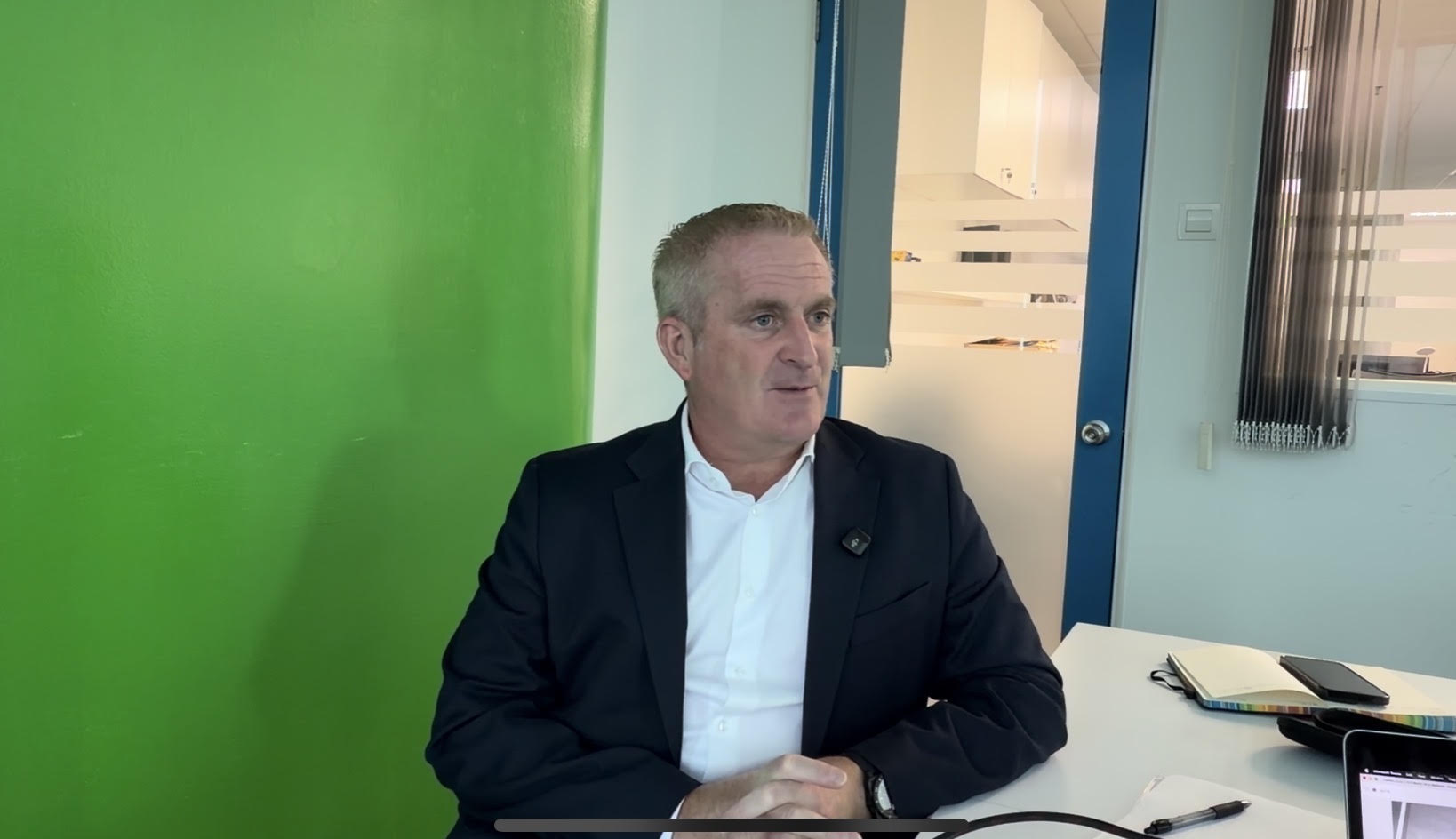
Artificial Intelligence (AI) is developing at monumental pace and many companies are struggling to keep up. I visited YCP Renoir Consulting in Kuala Lumpur, a consultancy that works with companies across South East Asia on how to practically implement AI, and interviewed Malaysia CEO Darren Kenneally, head of transformation Max Ferrin, and Dinesh Naidoo, the operations manager handling data and digital AI.
What's working with AI?
There's what's going on in the movies, and then there's what you can do in real life, Kenneally says.
“Let's not get carried away by what we see in the movies and what we can do three or five years down the line, because three or five years down the line, something else will come in place that's completely different already. What's working really are companies that are identifying what they can do with AI and the technology it brings in the short term - in a very pragmatic way.
“It's all about people and what people can do with AI to improve their productivity, improve their knowledge, improve their understanding... it's all about what can we do now."
What's with the hype?
Naidoo said in any new technology release, you go through “a little bit of a hype cycle… we find ourselves in the AI hype cycle, as it were right now, where everybody is rushing to implement AI solutions".
It also leaves the door wide open for ‘AI experts’.
“Because you don't have the established solutions out there, everybody is suddenly an AI expert.
"If you look on the job boards out there, on LinkedIn, for example, everybody's got an AI job title," he says.
Ferrin said in his experience, the hype around AI feels similar to other advances in the IT industry over the last 20 years such as robotic process automation.
“Don't get me wrong, I believe that AI... it is a bit of a hype at the moment, but I believe that is a different type of hype as well.
"I believe that is more embraced politically across organisations, especially at the CEO level... but what I see, especially when talking to the CE level, is that they are implementing what I call technology for the sake of technology. They don't have a real understanding of how AI would bring real value on return on investment.”
Kenneally said while everyone was jumping on the AI bandwagon, not enough companies or people were fully aware of what they would use it for.
“There's a lot of fear there as well. There's a good side of AI, and then there's the bad side of AI.
"A lot of companies are worried about data integrity, because the more AI applications you're using, the more data potentially goes out... There are so many things that are positive, and there's a few things, a negative that the companies need to take on board and think through as well.”
What actually works for companies implementing AI?
Naidoo says what companies are doing well is that they are starting with a use-case problem first.
"So, normally what happens is companies go and they follow vendor-led IT systems.
"When it comes to AI, they understand that their unique problems can be used as the business case for change, so they're focusing on the business problem," he said.
But, they also need to be asking, "do we have mature data to be able to use AI? Do we have the governance in place to be able to utilise AI?"
How do I keep up with AI changes?
If you try to keep up with the integral change, you always be behind, Naidoo says.
"You almost have to ask yourself, what's going to still be here in five years from a technology perspective.... you have to move a little bit ahead of the game.
"The second thing is that you need to have people within your organisation that are AI champions already, and you can't have it as an external vendor-thing. If you keep relying on external analysis in your problem, you're never going to move at the rate that everybody else is. Having tech evangelists within your own organisation, incentivising training within your own organisation is important..."
And what about jobs?
There's a lot of talk about AI taking people's jobs.
"In Singapore, they've taken a different approach," Naidoo says. "They've subsidised up to 90% skills-future grants for local citizens to train who have passed the retirement age and are now getting back into the workforce because they've got AI training as well."
Ferrin said Singapore was "embracing from the get-go that AI is going to be disruptive technology, and they want to ensure that the workforce is ready for that to come... It's not just investing on digital solutions per se, but also preparing the workforce for the challenge."
Kenneally says in Malaysia, they are starting to see AI impact some jobs in the administrative, repetitive tasks area, but it has not hit hard yet - certainly not the kind of job cuts happening in Silicon Valley.
But, there is a fear about what happens down the line. For some, "if you don't adapt and you don't embrace AI as part of your job, then you're probably going to lose it."
That leads to the question, where will AI be in 2030?
"AI... it's going to be here, and it's going to remain here," Ferrin says.
"It's going to be a topic for the next five years to come. I believe that's given, and I believe that it's more a matter of how deep AI solutions will be intrinsically linked to being in processes and being in ways of working, and how that's going to be impacted.
"Not just repetitive actions or activities ... but it's going to be becoming more intelligent...
"I compare AI solutions one year ago, and look into AI solutions today, and you can sense that they have been growing exponentially, and I believe that that's not going to stop anytime soon," says Ferrin.
*This article was produced with the assistance of funding from the Asia New Zealand Foundation.
We welcome your comments below. If you are not already registered, please register to comment
Remember we welcome robust, respectful and insightful debate. We don't welcome abusive or defamatory comments and will de-register those repeatedly making such comments. Our current comment policy is here.