
By Bernard Hickey
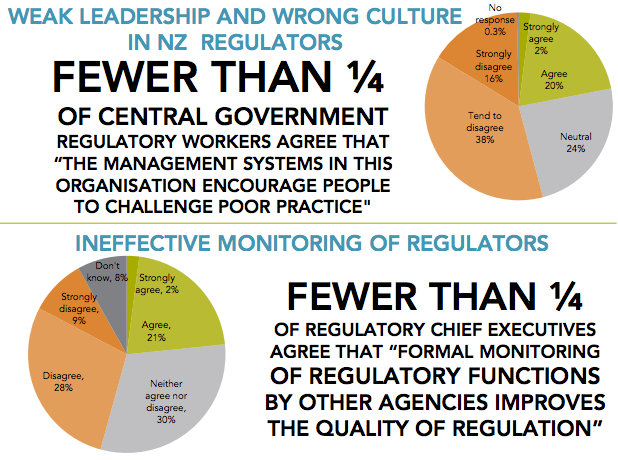
The Productivity Commission has released its final report into regulatory institutions and practices, recommending a raft of changes to ensure legislation is up to date, not too prescriptive and not storing up disasters such as the leaky buildings crisis or the finance company collapses.
"Regulation is the Cinderella of government powers," Commission Chair Murray Sherwin said in releasing the 540 page report .
"It plays a critical role in modern society, shielding people from harm, allowing New Zealanders to trade and invest with trust and confidence, and protecting the environment," Sherwin said.
"When regulation fails, the effects can be severe, as shown by the leaky buildings and financial markets crises. But despite these risks, regulation does not get the attention and care it deserves," he said.
The Commission found two thirds of regulator Chief Executives said they worked with legislation that was out of date or not fit for purpose. Only 23% of 1,526 businesses surveyed found regulatory staff knowledgeable or skilled, while only 25% said regulators understood the issues.
More than half of all bills reviewed by the Law Commission last year had significant problems. Between 2009 and 2014 New Zealand produced four times more statutes than Britain, which has 14 times New Zealand's population.
The reports key findings and recommendations included:
- New Zealand used often-prescriptive detail in primary legislation rather than regulation, which meant it often became out of date or not fit for purpose because of a lack of parliamentary time to update legislation.
- New Zealand does not have strong processes for reviewing legislation, which created a 'set and forget' problem for legislation.
- Regulators tended to focus too much on managing risks to their own organisation at the expense of managing harm to the community.
- The policy and Parliamentary processes for testing new regulation needed to be tightened.
- New Zealand needed a more professionalised regulatory workforce.
- A high-powered minister was needed to manage a system-wide improvement in legislative review and regulatory performance.
- An increase in resources in Treasury and Parliament to review out of date legislation and improve new legislation before it is enacted.
There is much more detail in the Commission's excellent collection of infographics, summaries and recommendations here.
We welcome your comments below. If you are not already registered, please register to comment
Remember we welcome robust, respectful and insightful debate. We don't welcome abusive or defamatory comments and will de-register those repeatedly making such comments. Our current comment policy is here.