
Content supplied by BNZ
The US, UK and Australia together account for over 60% of retail spending by Kiwis at offshore sites.
Between June 2013 and June 2014 the NZ exchange appreciated 9.0% against the US dollar, 9.8% against the Australian dollar and has been flat relative to the UK pound.
The movement relative to the US dollar is particularly significant:
- The United States accounts for approximately 30% of retail spending by Kiwis at offshore sites.
- Online purchases by Kiwis from other countries are sometimes priced in US dollars.
When the NZ dollar appreciates against another currency, it will mean less NZ dollars are required to purchase items priced in the other currency, all else being equal.
So, when looking at trends in online shopping by Kiwis at overseas sites, it is possible that exchange rate movements can mask or accentuate the underlying trends in the volume of goods being purchased.
Value of spending vs Volume of transactions 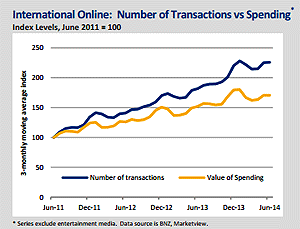
The bottom two charts compare the trend in number of online retail transactions with the trend in the value (in NZ dollars) of online retail spending. Both series refer to shopping by Kiwis at offshore websites.
Entertainment media transactions have been excluded, because the very high number of low-value transactions could distort the analysis.
The growth in transaction volumes has clearly outpaced the growth in spending, particularly over the past year.
The charts support the idea that growth in online shopping from international sites is still very strong, with volumes up by more than 20% compared to a year ago.
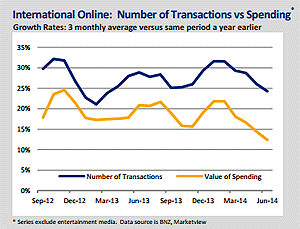
Please note that this is only a partial analysis, because there are other significant factors that can have an influence, such as changes in the mix of spending. However, additional analysis we have done also points to strong underlying growth in international volumes.
---------------------------
You can read the full BNZ Online Retail Report for June 2014 here.
We welcome your comments below. If you are not already registered, please register to comment
Remember we welcome robust, respectful and insightful debate. We don't welcome abusive or defamatory comments and will de-register those repeatedly making such comments. Our current comment policy is here.