
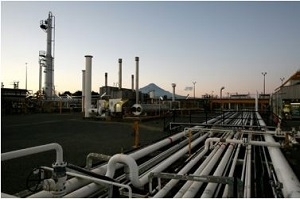
Storm clouds are casting shadows over the Government’s announcement it’s opening up 525,500 square kilometres of land and sea for oil and gas exploration.
The Minister of Energy and Resources Simon Bridges this week welcomed companies to place their bids for exploration permits in this year’s Block Offer.
Yet the invitation comes only three months after New Zealand’s leading oil and gas producer, Shell, announced it was considering shutting shop here after 105 years. It also comes three months after the Government revealed companies committed to spending 96% less in last year's Block Offer compared to 2014.
Shell in December announced it had to streamline its global portfolio given the “current environment”.
The Shell Group’s profit slumped 80% in 2015 off the back of the price of crude oil dropping below US$30, from around US$110 a barrel in June 2014.
Shell New Zealand’s country chairman Rob Jager said, “Shell is focusing on large growth opportunities, with deep water and integrated gas as growth priorities.
“The Shell business in New Zealand is a great, but a small part of the global Shell business and hence the decision to undertake a strategic review at this time.”
This begs the question, how is Shell considering a withdrawal from the New Zealand market affecting the sector – oil being our fourth largest export worth $2.2 billion?
The issue stretches far beyond Shell
Woodward Partners analyst John Kidd says he isn’t at all surprised by Shell’s call to review its interests in New Zealand.
“These sorts of things do happen from time to time. Companies do re-visit their portfolios, and some reach views there’s no longer a fit for what they do. That’s oil and gas – it’s nothing unusual, it happens routinely. It’s just happening more now with the oil price so low,” Kidd says.
He says he hasn’t heard from other companies looking to sell their assets in New Zealand – rather they are restructuring their businesses and easing back on exploration drilling.
Yet he warns we should be prepared to see a number of changes in the sector locally over the next 18 months, as companies review their commitments in light of the slumping global oil price.
TAG Oil, New Zealand Oil and Gas and Beach Energy for example have just announced they are surrendering their Kaheru permit because the “current global energy market could not support drilling the prospect before the commitment date of May 2016”.
TAG's CEO says its relinquishment of the block is the last of several divestments, which have reduced its future liabilities. It’s now in “growth mode” and plans to participate in the 2016 Block Offer.
Kidd says, “In this environment, your ability to support your overhead is paramount, and when you don’t have the cash flow or balance sheet to support your work programme, then you must look at all your options.”
The complexity of a Shell sell-off
As it reviews its New Zealand business, Kidd says Shell will be considering other companies’ appetites to buy its assets.
“Shell’s the biggest player here – its assets are very valuable and for someone to come in and buy those assets would require a big cheque book, which rules out most of the sector now.”
Kidd says another complexity is the fact Shell’s assets are so different from one another.
He describes buying Pohokura – New Zealand’s largest gas resource located off the Taranaki coast – as “buying cash flow”. The issues is whether Shell will be able to get a reasonable price for it given the current market conditions.
Then there’s the big Maui gas field, which has been in full production since 1979. Maui is nearing the end of its life, so a buyer will be have to invest in a huge decommissioning project in the near-future.
Kapuni is Shell’s other major asset, which Kidd describes as being attractive to a buyer after cash flow as well as buying an investment programme.
Adding another layer of complexity, Shell manages the above assets through joint ventures with OMV (not Kapuni) and Todd, which are both large established companies.
He says there are likely to be provisions for joint venture partners to increase their equities in the businesses.
Kidd suggests Shell’s assets could also be sold individually, as they could attract different buyers.
“It’s going to be a question for Shell, what interest is shown in the assets, in what valuation and whether it’s going to be better than the status quo.”
An Australian-based utilities investor, First State Investment, had a big enough cheque book to buy the Maui natural gas pipeline from the Maui Mining Companies (84% owned by Shell) at the end of last year. The pipeline, which transports 78% of the natural gas produced in New Zealand, had a price tag of NZ$335 million. First State Investments has also recently agreed to buy Vector's gas business for nearly NZ$953 million.
Companies seek long-term, low cost investments
Kidd doesn’t maintain talk of Shell leaving New Zealand will deter companies from bidding in the 2016 Block Offer.
He notes it takes years to get to the costly drilling stage of exploration and possibly production, so there won’t be too much holding companies back from bidding for acreage now.
He says we still saw a reasonable outcome from the 2015 Block Offer, with companies expressing interest in exploring, but not making large spend commitments.
“They don’t want to spend money on even seismic surveying, let alone drilling,” Kidd says.
Yet he maintains tough economic times won’t stop explorers getting first dibs on “virgin acreage” in places outside of Taranaki.
“I think that could actually be quite appealing for companies, because you can get large pockets of acreage here cheaply. Yes it’s frontier, it’s high risk but the economic risk you’re taking on is risk which is eight to 10 years in the future. Your five-year window is very low cost desktop studies, reviewing 2D.
“The Block Offer process could still attract quite a bit of interest from the majors for that reason.
“New Zealand is absolutely a wonderful place to do business. It’s as close to zero risk politically as you can get.”
As for the oil price, Kidd says the market’s pointing towards it picking up to the mid to late US$40s by the end of the year, and making its way up to US$70 in the medium term.
“The theme is lower for longer. It’s not a case of anyone expecting some sort of dramatic recovery over the next six to 12 months. The expectation is very much around excess capacity being worked from the system and the market pricing itself much more on a short-run basis.”
We welcome your comments below. If you are not already registered, please register to comment
Remember we welcome robust, respectful and insightful debate. We don't welcome abusive or defamatory comments and will de-register those repeatedly making such comments. Our current comment policy is here.