
US Federal Reserve Chair Kevin Warsh recently announced a new task force that will “survey the pace, the reach, [and] the economic impact of new general-purpose technologies, including AI, and explore the implications for the Fed” as it pursues its “employment and inflation mandates.” Notably absent from Warsh’s statement was any mention of the impact of AI on financial stability, the Fed’s de facto third mandate.
The Fed has shown some awareness of the risks AI poses for financial stability. In April, Warsh’s predecessor Jerome Powell, together with US Treasury Secretary Scott Bessent, convened a meeting to assess how advanced AI models could affect cybersecurity in the banking system. But even this approach was far too narrow.
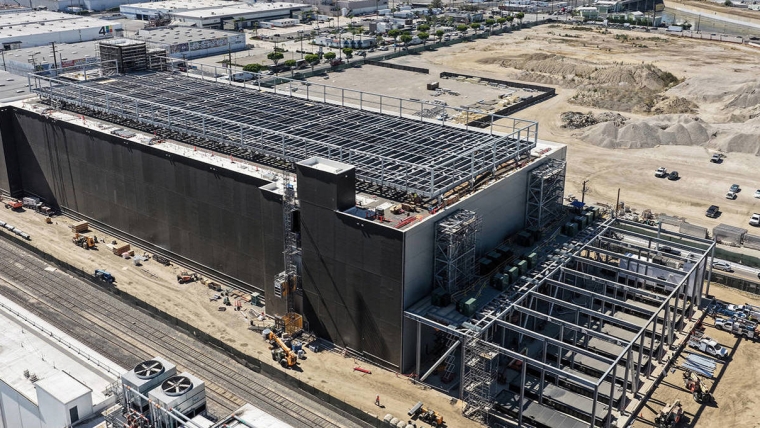
In the United States, both the financial system and asset markets have become a one-way bet on AI. If current trends persist, outstanding AI data-center debt will surpass mortgage debt by the end of this decade. The Fed should now be asking whether the revenues from these data centers will generate enough cash to repay creditors on time.
That question is often conflated with two others: whether AI is a bubble and whether it is a transformative technology. One might be tempted to position this as a dichotomy—AI is either a bubble or a transformative technology—but this would be a mistake. The US railroad boom of the 19th century ended in the Panic of 1873, and the telecom and dot-com boom of the 1990s culminated in a stock-market crash. In both cases, the technology was genuinely transformative, but creditors and shareholders were wiped out anyway, because investment outpaced any plausible near-term return.
Likewise, when it comes to AI, technological success will not guarantee financial success. The revenues AI will generate remain uncertain, but borrowers’ repayment schedules are fixed. AI tools can be widely adopted, and a data center can be heavily used, without producing enough cash to service their owners’ debts. The financial-stability concern arises from the mismatch between speculative future revenues and present contractual obligations.
The arithmetic is daunting. David Cahn of the venture capital firm Sequoia estimates that this year’s roughly $750 billion in hyperscaler AI capital expenditure will need to generate about $1.5 trillion in end-customer revenue over the life of the equipment to pay for itself. By his calculation, the entire AI buildout since the 2022 launch of ChatGPT now carries a cumulative payback minimum of some $3 trillion. Anthropic is rumored to have annualized revenues of around $60 billion.
The consulting firm Bain & Company calculates that funding the compute needed to meet anticipated AI demand by 2030 will require some $2 trillion in new annual AI revenue. Given that a bubble is what happens when an asset’s price far exceeds the cash flows it generates, such projections seem to support warnings that AI is indeed a bubble.
Already, funding for the AI buildout has shifted decisively from the tech giants’ cash flows to capital markets. Circular financing arrangements abound: chipmakers invest in AI labs, which use the money to buy chips, and cloud providers fund the startups that rent their servers. The result is a positive feedback loop between rising valuations and capital expenditures.
Chip giant Nvidia has emerged as a backstop for the “neoclouds,” allowing thinly capitalized cloud providers to raise private financing on attractive terms. Tech giants accumulate massive off-balance-sheet liabilities through joint ventures and leasing structures. And a growing share of the capital comes from private credit funds, which often lend to projects affiliated with their own sponsors.
Unlike the railroads or fiber-optic cables produced by earlier manias, this investment does not leave behind durable assets. Chips comprise roughly half the cost of an AI data center, and they are effectively unusable after 3–5 years. The collateral might lose value faster than the debt is repaid.
Moreover, the broad-based productivity gains and labor-market effects that AI is widely expected to deliver are not yet visible in the data. A recent Fed staff note concludes that this is because AI remains in its “buildout” phase. But a productivity surge will also require businesses to make immense internal investments to reengineer their processes. Nevertheless, markets are already pricing in robust earnings growth, driven in part by AI-driven productivity gains, raising concerns about an “earnings bubble.”
Most discussions of the downside risk of the ongoing AI boom have focused on the stock market. But the bigger risk is to credit markets. We now have a “market-based” financial system, in which credit is intermediated less by banks than by bond markets, securitization vehicles, and nonbank lenders. The danger is not a 1930s-style run on bank deposits, but a 2007-style run on the shadow banking system: doubts about credit quality trigger a contraction in short-term funding, and borrowers must sell into a falling market, leading to further price declines.
With short-term funding markets seizing up, the Fed would come under enormous pressure to backstop nonbank lenders and data-center debt, just as it backstopped money-market funds in 2020, at the start of the COVID-19 pandemic. But AI is even less popular today than Wall Street was in 2007. A bailout of both would likely destroy what remains of Fed independence.
There is a chance that massive AI capital spending will be vindicated, generating the revenues required to service trillions of dollars in debt. In that case, however, the implied labor-market dislocation would be without historical precedent. It is the coin-flip of nightmares: heads is financial instability, and tails is a biblical employment shock.
In any case, financial stability must be central to the Fed’s AI agenda. Even if this time proves to be different technologically, it might not be different financially.
Brian Judge is Research Director of the Program on Finance and Democracy at the University of California, Berkeley. Copyright: Project Syndicate, 2026, and published here with permission.
We welcome your comments below. If you are not already registered, please register to comment
Remember we welcome robust, respectful and insightful debate. We don't welcome abusive or defamatory comments and will de-register those repeatedly making such comments. Our current comment policy is here.